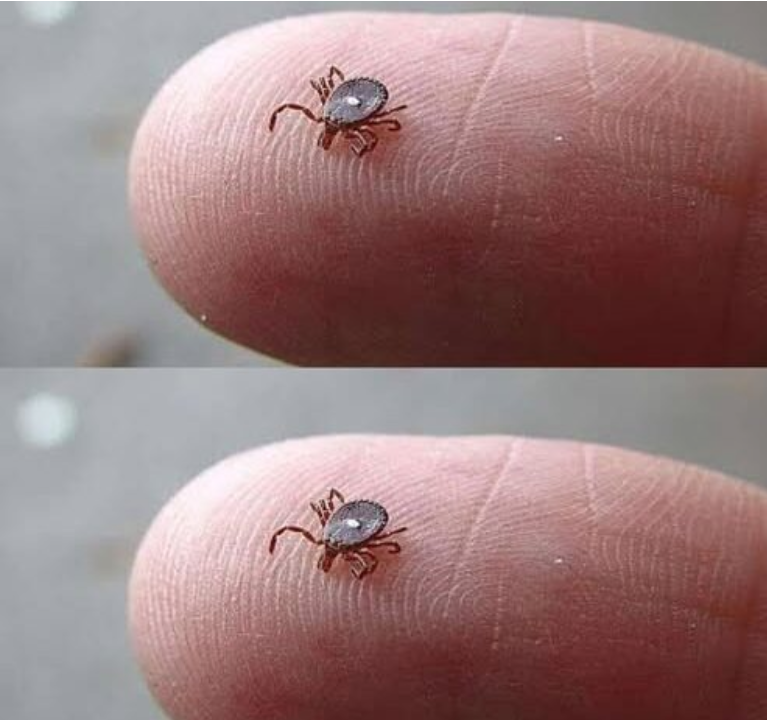
The shift from an ordinary afternoon of yard work to a state of sheer physiological terror happened in a fraction of a second. It is one of those peculiar aspects of human experience: our most profound changes in perspective often occur during the most mundane tasks. One moment, I was wrestling with a stubborn lawnmower, the scent of freshly cut grass and gasoline filling the air; the next, the world narrowed to a single, horrifying point on my ankle. Clinging there with unnerving persistence was a lone star tick. It did not resemble an insect so much as a tiny parasitic invader, determined to make my body its host.
The immediate reaction to a tick bite is rarely about physical pain; it is about the absolute psychological intrusion. The realization that a foreign organism has bypassed your defenses and embedded itself into your biology triggers a primal alarm. My brain, if not my voice, screamed silently. That tiny, white-dotted predator felt like the barrel of a loaded gun pointed directly at me. In 2026, when people are acutely aware of chilling medical alerts and potential systemic health crises, a tick bite is no longer merely a nuisance. It represents a possible entry point to serious complications—Lyme disease, Rocky Mountain spotted fever, or alpha-gal syndrome, which can trigger permanent red meat allergies.
Removing the tick demanded precision my shaking hands struggled to provide. Using tweezers to grasp the head without leaving any mouthparts behind, I replayed every horror story I’d heard about vector-borne illnesses. Tales of undiagnosed fevers and chronic fatigue became my internal soundtrack. Once detached, I followed standard protocols: cleaning the site with antiseptic, preserving the specimen in a glass jar, and trying to project a calm, “compassionate realism” for my dog, who observed the ordeal with a confused tilt of the head.
The following days were a strange, bifurcated existence. Outwardly, I maintained normal routines—meetings, errands, the many tasks of a typical Wednesday in March. Beneath the surface, however, I existed in silent, detective-like dread. I memorized every detail of the bite site, scanning for the telltale “bullseye” rash. Every minor ache or fleeting chill became a potential symptom, a rehearsal for disaster on my own nervous system.
Yet over the week, a shift occurred. The paralyzing panic gave way to informed awareness—the light of truth. Fear, I realized, while biologically adaptive, is an inefficient long-term tool. I replaced spiraling thoughts with research: the tick’s behavior, geographic disease prevalence, symptom timelines. I moved from victimhood to active awareness.
This transition mirrors how we must navigate life in 2026. Just as the world contends with absolute tensions in the Persian Gulf or shifting diplomatic landscapes, individuals must approach personal health with measured realism. I fortified my yard, implemented tick-prevention for pets, and promoted body literacy within my family. The best defense is not fear, but methodical observation and preparation.
The lone star tick became a microcosm of broader anxieties. In an era where the distance between routine life and a medical emergency is frighteningly small, the solution is the same: replacing silent dread with actionable knowledge. The terror beside the lawnmower reminded me of fragility; the aftermath reminded me of resilience.
The quiet relief I now feel does not come from a world without ticks—they remain a persistent part of nature—but from being an informed participant in my own health. The bite was a provocation, a signal to pay attention to the many small details previously overlooked.
Ultimately, the story of the lone star tick is one of reclaiming control. The threat was neutralized through knowledge and careful action. The bite has healed, but the awareness it sparked is permanent. My yard is no longer a place of hidden monsters, but a managed ecosystem. Fear never entirely disappears—it serves as a whisper with weight—but vigilance is now tempered with confidence, born from taking the lead in my own life. Whether future crises roar like air raids or whisper like a tick, I will be ready, and I will face them with courage.
The transition from panic to control is the ultimate promise kept to oneself. While the world remains unpredictable, we can absolutely control our response. As the sun sets on another March evening, with the mower put away, a sense of peace settles in: the detective work is done, and the answer—for now—is health.