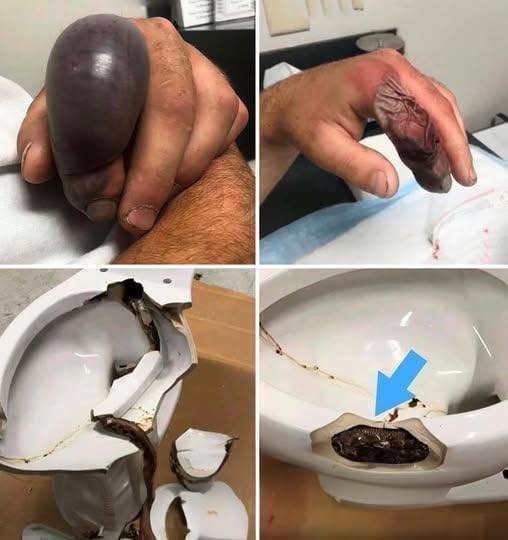
The idea of a snake rising from the bowl of a toilet is often brushed off as an exaggerated urban myth — the kind of unsettling tale meant to scare rather than inform. Yet for a small number of people around the world, this frightening scenario has proven to be very real. Although such encounters are rare, they reveal an unexpected overlap between human-built environments and wildlife behavior, reminding us that nature can still intrude into even the most private spaces. From humid neighborhoods in Thailand to remote regions of South Africa and parts of the southern United States, documented cases of “toilet snakes” have shown that the threat, while uncommon, does exist.
Snakes are biologically well-equipped to navigate plumbing systems. Experts explain that their flexible bodies, comfort in darkness, and ability to move through narrow, damp spaces make sewer pipes and drains feel less like artificial structures and more like underground passageways. During extreme weather conditions — such as flooding, heavy rainfall, or intense heat — snakes may seek shelter, moisture, or prey in cooler, enclosed areas. Toilets, which connect directly to underground piping and contain standing water, can unintentionally become entry points.
One of the most widely reported incidents occurred in Thailand, where urban expansion has increasingly overlapped with the habitat of large pythons. In this case, a man was attacked by a python that had traveled through the plumbing system and emerged while he was using the toilet. The resulting injuries were severe and required emergency medical treatment. Images and reports of the incident spread rapidly online, reinforcing the unsettling reality that wildlife can occasionally breach the boundaries of modern living.
Venomous species have also been involved. In South Africa, a tourist suffered a serious injury after being bitten by a highly venomous Cape cobra in a restroom at a rural nature reserve. The snake’s neurotoxic venom turned the encounter into a life-threatening emergency and highlighted the increased danger in regions where lethal snake species are common. The incident led to heightened awareness and additional safety measures in similar facilities.
These encounters are not limited to tropical regions. In parts of the United States, particularly Texas and Florida, non-venomous snakes have been found inside toilets and bathrooms. While these snakes rarely pose a physical threat, the psychological impact of such an encounter can be lasting. Similar cases have been reported in Australia, where pythons sometimes enter homes through vents or damaged pipes and later appear in bathrooms, requiring professional removal.
Beyond physical injuries, the emotional consequences can be significant. Victims often describe lasting anxiety and fear associated with using the bathroom — a space typically associated with privacy and safety. Psychologists note that this type of trauma is especially challenging because it affects an unavoidable daily activity. Many survivors develop habits such as inspecting the toilet before use or keeping lights on at all times.
Experts explain that most snake entries occur due to structural vulnerabilities, including cracked pipes, uncovered septic systems, or open vent pipes. Snakes may also follow prey like rodents into plumbing systems. Their ability to hold their breath and swim allows them to bypass water traps that would stop other animals.
While alarming, professionals stress that preventive measures can greatly reduce the risk. Regular plumbing maintenance, sealed vent pipes, secure septic lids, and the installation of one-way valves can help block access. In high-risk areas, keeping bathrooms sealed and windows screened adds another layer of protection.
Ultimately, these rare but disturbing incidents serve as a reminder that human environments are still connected to the natural world. Even with modern infrastructure, wildlife adapts and finds opportunities to coexist — sometimes uncomfortably close. Awareness, proper maintenance, and informed caution remain the most effective defenses, proving that preparedness is far more useful than panic when confronting nature’s unexpected surprises.