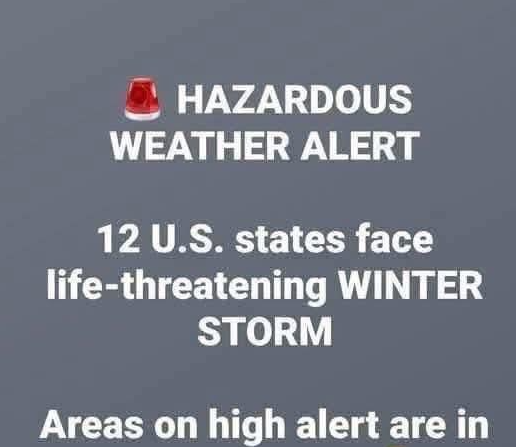
A dangerous winter storm is approaching the Mid-Atlantic, and forecasters are urging residents to take the threat seriously. Unlike typical snowstorms that announce their arrival with loud, dramatic flurries, this system is marked by ice—quiet, deceptive, and often much more destructive. Even a thin layer of freezing rain can quickly turn everyday routines into hazardous situations, from slippery highways to downed power lines.
The National Weather Service predicts the storm will affect large areas of Maryland, Virginia, West Virginia, and Pennsylvania, with the highest risk concentrated in north-central and western Maryland, northwestern Virginia, eastern West Virginia, and central to western Pennsylvania. Meteorologists are warning that prolonged freezing rain, combined with gusty winds, could cause widespread travel disruptions, power outages, and property damage.
Ice storms differ from snowstorms in ways that often catch people off guard. Snow reduces visibility and slows travel, but ice forms an invisible layer that robs tires of traction and turns sidewalks into skating rinks. Roads that seem merely wet can become impassable in seconds, especially on bridges, overpasses, and untreated secondary roads. Emergency officials emphasize that many winter accidents happen not during heavy snow, but when people underestimate the danger of light freezing rain.
As the storm moves in, a steady stream of moisture is colliding with cold air near the surface, creating ideal conditions for freezing rain. Liquid precipitation falls through warmer air above and freezes as soon as it hits the ground, coating trees, power lines, vehicles, and buildings with ice. Even a quarter-inch of ice is enough to snap branches and knock out power, and larger accumulations can cause widespread, long-lasting outages.
Utility companies have already staged repair crews and equipment in anticipation of power outages from downed lines and snapped poles. The added weight of ice on trees and wires, combined with wind, could cause failures that affect entire neighborhoods. Officials warn that restoring power could take time, especially in rural or mountainous areas where access is limited and damage can be extensive.
Transportation agencies are also preparing for the storm’s impact. State departments of transportation have pre-treated major highways where possible, but freezing rain can overwhelm even the best preparations. Salt and brine lose their effectiveness once ice forms, and plow trucks are largely useless without snow to clear. Authorities stress that the safest course of action is to avoid travel altogether during peak icing conditions, especially overnight and in the early morning when temperatures are lowest.
Airports across the region are closely monitoring conditions. Ice accumulation on aircraft surfaces can quickly ground flights, causing delays and cancellations that ripple through the system. Schools and local governments are bracing for closures or shifts to virtual learning, knowing that buses and student drivers are particularly vulnerable on icy roads. Many decisions are being made on a case-by-case basis as conditions evolve.
Emergency management officials are urging residents to prepare early, rather than react when it’s too late. Basic supplies—enough food and water for several days, refilled medications, flashlights, and extra batteries—should be gathered now. Mobile devices should be fully charged, and portable power banks can be lifesavers during power outages. Generators should only be used with extreme caution, following all safety guidelines to avoid carbon monoxide poisoning.
Those who rely on electrically powered medical equipment are encouraged to notify their utility providers and caregivers in advance. Many power companies maintain priority restoration lists for medically vulnerable customers, but those systems work best when information is updated ahead of the storm. Residents are also urged to check on elderly neighbors or anyone with mobility issues, as icy conditions can make it difficult for them to get help if needed.
Outdoors, residents should secure loose objects, protect outdoor faucets, and avoid parking vehicles under trees or power lines. Ice-covered branches can fall suddenly, causing damage or injury. If it’s unavoidable to walk outside, officials recommend wearing shoes with good traction and moving slowly, as every surface may be slick.
The psychological aspect of ice storms is significant. Because the storm may arrive quietly, with light rain rather than dramatic snowfall, many people may be tempted to carry on with normal activities. Emergency officials warn against this mindset. Ice storms are among the most dangerous winter weather events because they can disguise their severity until it’s too late.
Conditions are expected to improve by late Thursday as temperatures rise and precipitation tapers off. However, the end of the freezing rain doesn’t signal an immediate return to normal. Cleanup and recovery can take longer than the storm itself. Fallen trees, blocked roads, and damaged infrastructure can linger for days, and melting ice can refreeze overnight, creating renewed dangers.
Past Mid-Atlantic ice storms have caused some communities to go days without power, heat, or reliable transportation. Those experiences have shaped current warnings, which emphasize caution over convenience. No errand or commute is worth the risk of getting stranded on an icy road or injured in a fall.
The consistent message from meteorologists and emergency managers is clear: treat this storm with respect. Prepare early, stay informed through official updates, and limit exposure until conditions improve. While ice storms may not be loud or dramatic, their impact can be severe and long-lasting.
In a region where winter weather can shift unpredictably, this storm serves as a reminder that preparation is not panic—it’s common sense. Even a thin layer of ice can grind daily life to a halt, and those who plan ahead are far better positioned to weather the disruption safely.