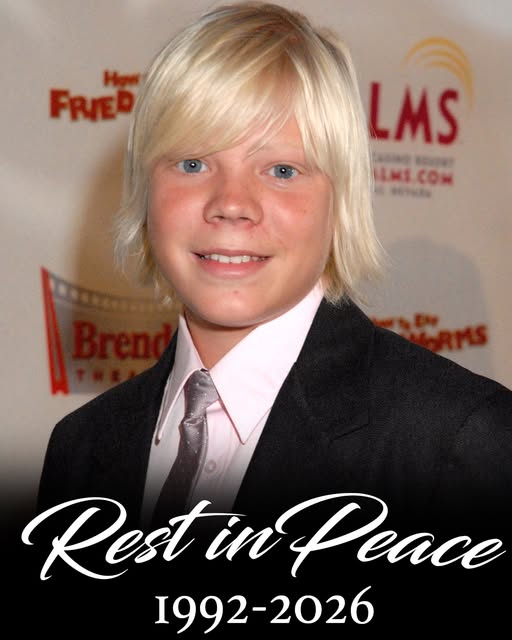
The bright lights of Hollywood often cast long and complicated shadows, especially for those who enter the industry before they are old enough to drive. For Blake Garrett, a gifted performer who won audiences over in the mid-2000s, the path from child stardom to adulthood was shaped by both early success and a deeply personal search for peace. On Sunday, February 8, 2026, that journey came to a sudden and tragic end. Blake passed away in Tulsa, Oklahoma, at the age of 33, leaving behind a legacy of early cinematic achievement and a story of resilience his family hopes will not be overshadowed by the circumstances of his death.
Born and raised in Austin, Texas, Blake showed an early affinity for performance. From the moment he could walk, there was a natural charisma about him—an ease on stage that could not be taught. He became a familiar face in local theater productions, performing in classics such as Aladdin, The Wizard of Oz, Annie, and Grease. Even in ensemble roles, he stood out for his quiet professionalism and genuine joy for performing.
By the age of ten, his talent had carried him to the national stage. He joined the touring production of Barney’s Colorful World, traveling across the United States and performing for thousands of families. While demanding for such a young performer, the experience became a foundation for his growth and a stepping stone into film and television, where he soon attracted the attention of casting directors in Los Angeles.
In 2006, Blake was cast as “Plug” in the film adaptation of How to Eat Fried Worms. The movie became a nostalgic favorite for a generation, and Blake’s performance as part of the central ensemble contributed to its success. The cast’s chemistry earned them a Young Artist Award, cementing his place in 2000s family cinema. To audiences, he was a memorable on-screen presence; to those who knew him, he was a thoughtful young man with depth beyond his years.
Like many child actors, Blake faced a difficult transition into adulthood. After stepping away from the industry, he eventually settled in Oklahoma in search of a quieter, more grounded life. In recent years, his family says he focused on rebuilding himself and maintaining sobriety—a journey he approached with discipline, pride, and daily commitment. For him, it was not just recovery, but a personal act of rebuilding and renewal.
His final months, however, were marked by serious health challenges. According to his mother, Blake suffered from severe, debilitating pain and was diagnosed with shingles. While often temporary, the condition can lead to complications, especially under physical and emotional strain. His family believes these complications contributed to his sudden passing, though official autopsy results are still pending.
News of his death at 33 has prompted an outpouring of tributes from former co-stars, fans, and members of the Austin theater community. Many remember not only his work on screen, but also his kindness, humor, and quiet resilience off camera.
For his family, the focus remains on remembering the fullness of his life. They hope he is remembered as the child who brought joy to theater stages, the young actor who helped bring a beloved film to life, and the man who fought for and achieved personal recovery. His story stands as a reminder that transformation is always possible, and that strength often lies in persistence through struggle.
As loved ones prepare to say goodbye, they reflect on the totality of his 33 years. Blake Garrett was more than a former child star—he was a son, a brother, and a friend whose life extended far beyond the screen. His passing is a profound loss, but his journey leaves behind a message of resilience and quiet hope that will continue to resonate in the communities he touched.