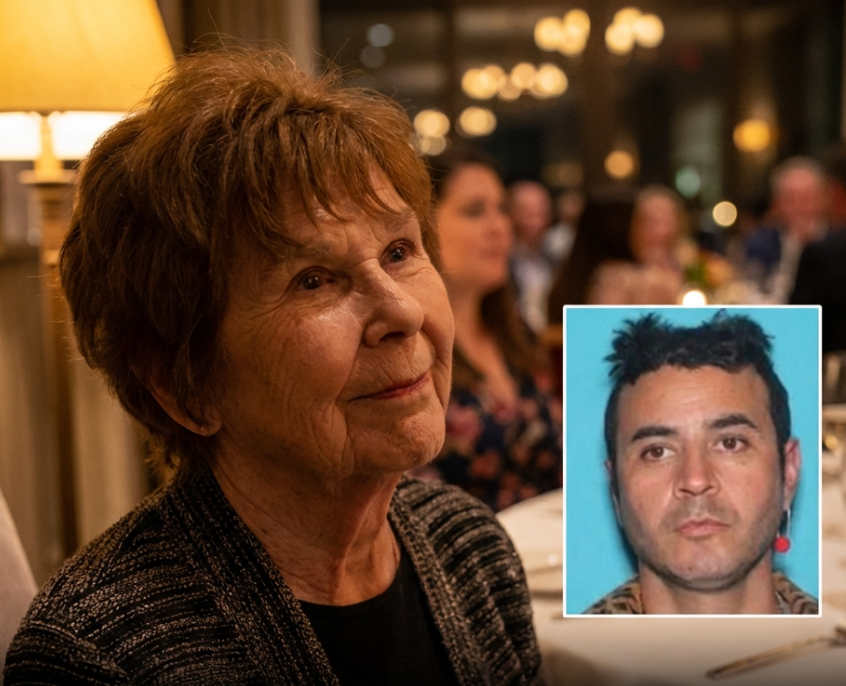
The moment the arrest was announced, a fragile surge of hope rippled through the public. For a brief, almost unbearable instant, people believed it might mean that Nancy Guthrie was finally coming home. After weeks of anguish, uncertainty, and unanswered questions, the word arrest felt like a lifeline—proof that the nightmare had reached a turning point. Families who had followed the case closely held their breath, imagining a door opening, a phone ringing, a miracle unfolding. But that hope collapsed almost as quickly as it appeared. What authorities revealed next was not a rescue or a breakthrough, but something far more unsettling: the arrest had nothing to do with saving Nancy. Instead, it exposed a darker truth about how human cruelty can thrive in the shadow of public grief.
Federal investigators say the reality was uglier, colder, and deeply disturbing. According to court documents, as Nancy Guthrie’s disappearance dominated headlines and her loved ones pleaded publicly for answers, one individual chose not empathy, but exploitation. Rather than seeing a family in crisis, Derrick Callella allegedly saw an opportunity. Investigators believe he followed media coverage of the case closely, absorbing the details not out of concern, but calculation. While the nation watched in collective worry, he reportedly began searching for ways to insert himself into the story—not to help, but to profit.
Authorities allege that Callella tracked down contact information connected to the family and initiated a campaign of psychological torment. Federal filings describe a series of ransom-style text messages demanding payment in bitcoin, sent at the most vulnerable possible moment. These messages, cold and deliberate, reportedly suggested knowledge and control he did not possess. In at least one instance, investigators say he even placed a brief phone call, amplifying the fear and confusion already engulfing the family. For a daughter desperately searching for her missing mother, every vibration of a phone carried unbearable weight. Callella’s alleged actions, authorities argue, weaponized that desperation, turning raw hope into a tool of manipulation.
What makes the case especially chilling is its timing. The messages reportedly arrived while Nancy’s children were publicly begging for help, clinging to any sign that their mother might still be alive. The alleged extortion attempt did not just exploit information—it exploited emotion. Investigators characterize it as a cruel hoax, one that offered no real information, no proof of life, and no path to resolution. Instead, it injected fresh terror into an already unbearable situation, forcing the family to confront the possibility that someone was toying with their grief for personal gain.
Federal officials have been careful to draw a clear line between this arrest and the unresolved disappearance at the heart of the case. They stress that Callella is not believed to have any involvement in Nancy Guthrie’s suspected abduction. The charges against him are not about solving where Nancy is or what happened to her; they are about accountability for exploitation. In the eyes of investigators, this case represents a necessary stand against a specific kind of cruelty—one that preys on tragedy, visibility, and hope.
Yet even as charges are filed, the larger mystery remains untouched. Nancy Guthrie, an 84-year-old mother, is still missing, gone without a trace. There has been no confirmation of her whereabouts, no definitive answers about her fate. Her daughter, Savannah Guthrie, has used her public platform not for spectacle, but desperation—pleading for proof of life, for truth, for any sign that her mother has not vanished into silence. Behind the scenes, federal agents continue the painstaking work of sorting credible leads from deliberate hoaxes, compassion from opportunism.
The arrest may bring a measure of justice, but it does not bring closure. It does not return Nancy to her family, and it does not resolve the aching uncertainty that hangs over the case. Instead, it highlights a painful reality: in moments of public tragedy, there are those who step forward to help—and those who step forward to exploit. As the investigation into Nancy Guthrie’s disappearance continues, the nation is left with a sobering reminder that accountability can punish cruelty, but it cannot undo it. Hope, once ignited, can be crushed—but the search, and the waiting, go on.