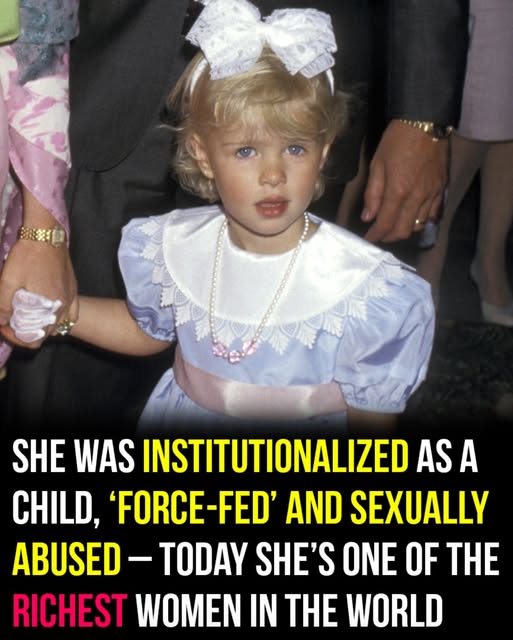
For a long time, she was one of the most instantly recognizable women in the world. Her name became synonymous with luxury, excess, and a glossy, pink-tinted version of celebrity that dominated the early 2000s. From the outside, her life appeared effortless—private planes, couture closets, reality television, and a carefree party-girl image that seemed untouched by consequences. What the public rarely saw was the pain beneath that surface, or the emotional cost of becoming the person everyone expected her to be.
Born in 1981, Paris Hilton was raised between Beverly Hills, the Hamptons, and extended stays at New York’s Waldorf-Astoria. Her environment was undeniably privileged, yet her internal world told a very different story. Relatives have described her as a tomboy with a deep love for animals and dreams of becoming a veterinarian. She saved her allowance to buy exotic pets—monkeys, goats, even snakes—and once famously allowed one to roam freely through a hotel suite.
Despite the wealth surrounding her, her upbringing was highly restrictive. She has since described her household as strict and deeply conservative. Dating was forbidden. Makeup was off-limits. School dances and typical teenage freedoms were denied. Etiquette lessons were mandatory, part of a larger plan to shape her into a proper debutante. None of it felt authentic to her. She has said she felt suffocated by expectations that didn’t reflect who she truly was.
By her teenage years, she began rebelling. She skipped classes, snuck out at night, and searched desperately for a sense of freedom. At fourteen, she was groomed by a teacher—an experience that deeply damaged her sense of trust and boundaries. When her parents later discovered her kissing an adult man, fear took over. Believing she was spiraling and needing intervention, they made a decision they thought would save her.
They sent her to a residential “troubled teen” program in Utah.
Years later, Paris would describe that moment as the point where her childhood truly broke. In interviews and documentaries, she has referred to the facility as one of the most abusive places imaginable. What she experienced there, she says, had nothing to do with care or rehabilitation—it was cruelty.
She has spoken about being forced to sit in silence for hours, screamed at, threatened, and physically abused. According to her, humiliation was routine. Privacy was nonexistent. Strip searches were common. Students were given unidentified medications that left them drained, detached, and barely functioning.
“It felt like I was losing my mind,” she later recalled.
She was too afraid to speak up. Staff warned her that if she told anyone, she would be labeled a liar and punished more harshly. Cut off from support and stripped of power, she survived by staying quiet.
Leaving the school did not end the damage. The trauma followed her into adulthood in ways she couldn’t immediately understand. For decades, she suffered from recurring nightmares—visions of being taken in the night, searched, imprisoned once again. Even now, she struggles with sleep, rarely resting for more than a few hours at a time.
For years, her way of coping was performance.
She created a persona that felt safe to hide behind: the flawless, carefree Barbie figure—always smiling, always partying, never affected. The public rewarded that image with fame, money, and attention. And it conveniently discouraged deeper questions.
“I kept playing that role because I knew it’s what people wanted,” she later admitted.
At the same time, she was unknowingly navigating life with undiagnosed ADHD, at a time when the condition—especially in girls—was widely misunderstood. Her energy and creativity were treated as behavioral problems instead of being supported. She has said that with proper understanding and diagnosis, her life path might have been completely different—and she likely never would have been institutionalized.
Eventually, silence became unbearable.
Speaking out about her past was frightening, but it marked a turning point. She has described telling her story publicly as the most healing experience of her life. It wasn’t just about her own recovery—it became a moral obligation.
“I can’t sleep at night knowing children are still being abused like this,” she said.
From that moment on, her public identity shifted. She began advocating for reform within the troubled teen industry, demanding regulation, oversight, and accountability. She redirected her platform away from image and toward exposure—shining a light on an industry that thrives on fear, secrecy, and silence.
“I became the person I needed when I was a little girl,” she said.
Today, her life bears little resemblance to the stereotype once attached to her name. In her forties, she has built a global business empire worth billions. Her brands, fragrances, and licensing ventures have generated over four billion dollars in revenue. She has invested in technology, established a successful DJ career, and maintained her media presence—this time entirely on her own terms.
She has also spoken honestly about happiness and healing. She married entrepreneur Carter Reum and became a mother to two children through surrogacy after years of IVF. She has shared that trauma played a role in her inability to carry a pregnancy, explaining that her body and nervous system never fully recovered from her teenage experiences.
Motherhood has softened—but not erased—her perspective on her parents. While she does not excuse the harm caused, she has said becoming a parent helped her understand the fear behind their decisions: the panic, the loss of control, the instinct to protect—even when that instinct leads to damage.
Today, her story is no longer framed by scandal or caricature. It is a story of survival, accountability, and transformation. The image that once overshadowed her has been replaced by something far more powerful: a woman who reclaimed her voice and used it to protect others.
Her childhood was stolen. Her silence was enforced.
But the story did not end there.
Now, the world knows her name for a very different reason.