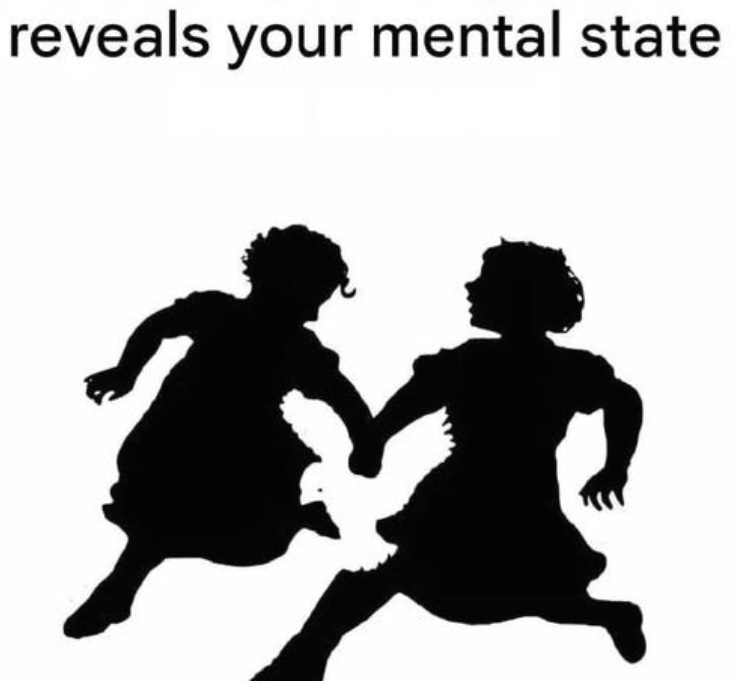
Within the complex workings of the human mind, communication rarely follows strict logic. Instead, it often speaks through symbols, contrasts, and imagery that reveal what we may not consciously acknowledge. Psychologists have long argued that perception is not purely objective; what we notice first often reflects our inner emotional state. This idea is at the heart of a viral visual perception test that gained widespread attention in early 2026. Using a single black-and-white illustration, the test encourages self-reflection, suggesting that what a person sees first may indicate whether they are currently longing more for personal freedom or meaningful connection.
At the center of the trend is a classic bistable image—an illustration designed to hold two interpretations at once. Some viewers immediately notice the outline of a dove in flight, wings extended against a stark backdrop. Others instead see two young girls running together, holding hands in a moment of shared joy. Although both images coexist, the brain tends to prioritize one, often influenced by the viewer’s emotional and psychological condition at that moment.
If the first image you perceive is the solitary dove, it may point to an underlying desire for independence. Throughout history, the dove has symbolized peace, transcendence, and the ability to rise above limitations. In the demanding climate of 2026—where work pressures, digital connectivity, and social expectations often overlap—many individuals experience a subtle sense of restriction. Seeing the dove first may reflect a craving to break free from those constraints.
Importantly, this desire is rarely about physically escaping one’s surroundings. More often, it signals emotional suffocation—a feeling of being weighed down by responsibilities, strained relationships, or constant performance demands. Psychologists suggest that recognizing these “anchors” is the first step toward relief. Creating intentional solitude, stepping back from digital noise, or engaging in creative expression such as writing, art, or music can provide an internal sense of release. In this way, freedom becomes less about distance and more about reclaiming emotional space.
On the other hand, if the image of the two girls running together appears first, it may reveal a different emotional priority. This interpretation highlights the human need for closeness, companionship, and shared experience. The girls, connected by their hands and movement, symbolize trust, unity, and joy rooted in relationship. Noticing them first may suggest a longing for deeper connection or a feeling that current relationships have become distant or superficial.
In a time when many interactions occur through screens and curated online personas, the image of shared movement without filters speaks to our need for authentic presence. Addressing this desire may involve strengthening personal bonds—making time for direct conversations, reconnecting with loved ones, or becoming part of a supportive community. Unlike the solitary dove, this image emphasizes safety found in togetherness and the emotional security that comes from mutual understanding.
The popularity of this visual test also reflects a broader shift in 2026 toward more intuitive approaches to mental well-being. Rather than relying solely on clinical definitions, many people are exploring reflective tools that invite gentle self-examination. Exercises like this provide an accessible way to consider emotional needs without judgment, encouraging curiosity about one’s inner landscape.
At the same time, the modern world remains filled with unresolved mysteries and collective concerns that shape public consciousness. For instance, the ongoing case of Nancy Guthrie has drawn intense attention, with a brief three-word text message at the center of widespread speculation. Much like a visual illusion, interpretations vary—some perceive urgency, others misdirection. The case demonstrates how meaning often depends on perspective and the limited information available.
Similarly, the widely discussed story of the “Saturday Biker”—a man who quietly visited a woman’s grave at the same hour each week—illustrates how perception can mask deeper truths. What appeared to be a simple act of respect eventually revealed a more complicated reality, reshaping how those involved understood the past. In both examples, observers interpreted events based on assumptions, highlighting how easily surface impressions can obscure hidden narratives.
Ultimately, whether examining an abstract image or interpreting real-life events, perception tends to reveal more about the observer than the subject itself. The tension between independence and connection defines much of the human experience. At times we yearn to soar alone; at others, we seek reassurance in companionship. Recognizing which need is more prominent at a given moment allows for more intentional choices in how we structure our lives and relationships.
The visual test should not be viewed as a diagnosis but as a prompt for reflection. It offers a pause—a brief opportunity to consider what the mind may be signaling beneath daily routines. In a fast-moving and often overwhelming era, even a single moment of inward attention can provide clarity. Asking, “What do I truly need right now—freedom or connection?” may be a small question, but it carries transformative potential.