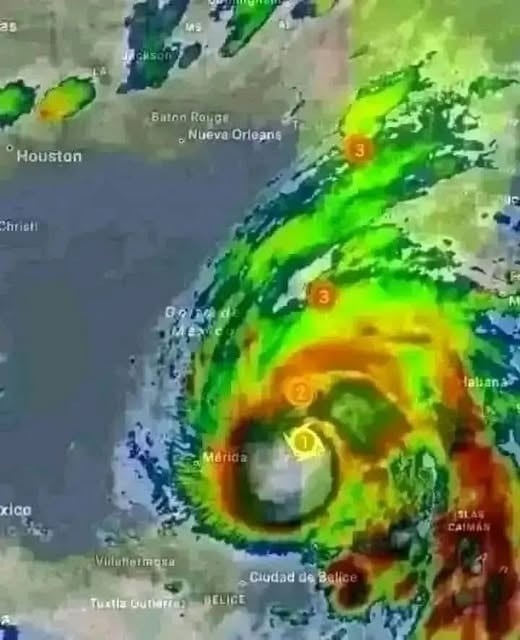
The natural world is currently confronting residents of the Caribbean and the Southeastern United States with an exceptionally rare and multifaceted set of challenges, combining environmental phenomena in a way that is almost unprecedented in modern records. In recent weeks, the region has seen a convergence of seismic, meteorological, and atmospheric forces that are testing human resilience, emergency preparedness, and community cohesion like never before. Across thousands of miles, multiple hazards are occurring simultaneously: strong earthquakes shaking the islands, torrential floods transforming streets into rivers, vast Saharan dust clouds reducing visibility and impacting air quality, and tropical systems in the Atlantic showing signs of rapid intensification, all threatening coastal and inland communities. This combination of events is not merely a headline—it represents a complex and evolving crisis demanding immediate awareness, proactive preparation, and coordinated response efforts.
At the heart of this situation is the Caribbean, a region long celebrated for its natural beauty yet painfully vulnerable to natural forces. In Trinidad, a significant earthquake recently rattled local communities, shaking homes, schools, and businesses, leaving residents on high alert for aftershocks that could cause even more damage. While engineers and disaster response teams are working to assess structural safety, the psychological toll of repeated seismic activity cannot be understated. Residents are reminded that even a moderately sized aftershock has the potential to collapse weakened buildings and exacerbate the impact of previous damage. Meanwhile, Central America continues to reel from relentless flooding caused by weeks of heavy rainfall. Entire neighborhoods have been submerged, roads rendered impassable, and emergency services stretched to their limits. The saturated soil amplifies the risk of deadly mudslides, particularly in hilly or mountainous regions, creating a precarious environment where the line between safety and disaster is extremely thin.
Adding to these already serious threats is a massive plume of Saharan dust, which has traversed the Atlantic Ocean and cast a persistent, orange haze over much of the Caribbean. While dust transport from Africa is a known meteorological event, the scale and density of this particular plume have triggered widespread health alerts. For vulnerable populations, including children, the elderly, and those with respiratory conditions such as asthma or COPD, the fine particulate matter represents a tangible health danger. The haze has also impacted transportation, reducing visibility for both air travel and maritime navigation, and adding another layer of complexity to already strained emergency operations. Scientists emphasize that this phenomenon highlights the interconnectedness of global weather systems—reminding us that events on one continent can have immediate, tangible effects on communities thousands of miles away.
Yet, the most urgent threat remains the tropical activity forming over the Atlantic. Tropical Storm Flossie has begun to intensify unusually quickly, propelled by higher-than-average sea surface temperatures. Meteorologists warn that this storm, already projected to strengthen, may merge with other nearby disturbances, posing compounded risks for coastal regions stretching from the Caribbean up to the Southeastern United States. Areas like Florida, Georgia, and the Carolinas—states with well-documented hurricane histories—must remain vigilant. Potential hazards include life-threatening storm surges, flash floods, and wind gusts strong enough to topple trees, damage infrastructure, and disrupt power grids. These overlapping threats illustrate what experts call “compound disasters,” where multiple natural events occur simultaneously or in rapid succession, overwhelming response capacity and magnifying the overall impact.
The danger of such compounding disasters cannot be overstated. Emergency teams are often forced to prioritize one crisis over another, while limited resources are stretched across wide geographical areas. For instance, personnel engaged in flood rescue may face obstacles posed by dust storms, or be rerouted to earthquake-stricken zones, delaying vital interventions. Communication networks may fail under the weight of simultaneous events, further complicating evacuations, medical assistance, and logistical coordination. Experts emphasize that in these scenarios, the proactive involvement of residents themselves becomes critical. Every household should have an actionable emergency plan, accessible evacuation routes, and ready supplies.
Preparation, therefore, is not optional—it is essential. Emergency management agencies across the Caribbean and Southeastern U.S. have urged residents to monitor reliable sources for real-time updates on storm tracks, seismic advisories, and air quality alerts. Go-bags stocked with a minimum three-day supply of water, essential medications, non-perishable food, and copies of vital documents can be lifesaving. Knowing multiple evacuation routes is crucial, as main roads may quickly become impassable due to flooding, debris, or landslides. Residents are also encouraged to secure property: tie down outdoor items, reinforce windows, and ensure vehicles are fueled and ready. Communities must extend a helping hand to vulnerable neighbors, particularly the elderly, disabled, or those without access to digital alerts. Mutual assistance strengthens resilience and may be the difference between life and tragedy.
The current environmental convergence also carries an important social dimension. Natural disasters disproportionately affect those living in precarious conditions—whether due to economic hardship, aging infrastructure, or limited mobility. Public health guidance for periods of dense dust includes minimizing outdoor activity, using air filtration systems, and wearing masks where needed. At the same time, families in the projected path of tropical storms are urged to prepare evacuation plans and ensure children and elderly relatives are safely accounted for. Community solidarity and awareness are as vital as any emergency kit.
In the face of these extraordinary conditions, the overarching message is clear: vigilance saves lives. The Caribbean and Southeastern United States are currently contending with the combined force of earth, air, water, and wind. By understanding the interconnected risks and acting decisively, residents can reduce vulnerability and enhance their safety. Historical precedent shows that while humans cannot control natural forces, careful preparation, clear communication, and collective responsibility significantly alter outcomes. As tropical systems advance, the earth shakes, rains fall relentlessly, and dust clouds obscure the horizon, the region must draw upon every available resource—personal, communal, and institutional—to weather the convergence of threats. The coming days will test endurance, adaptability, and solidarity, and the call to action has never been more urgent. Stay informed, stay ready, and stay connected, because in this volatile period, preparation is not just advisable—it is essential.