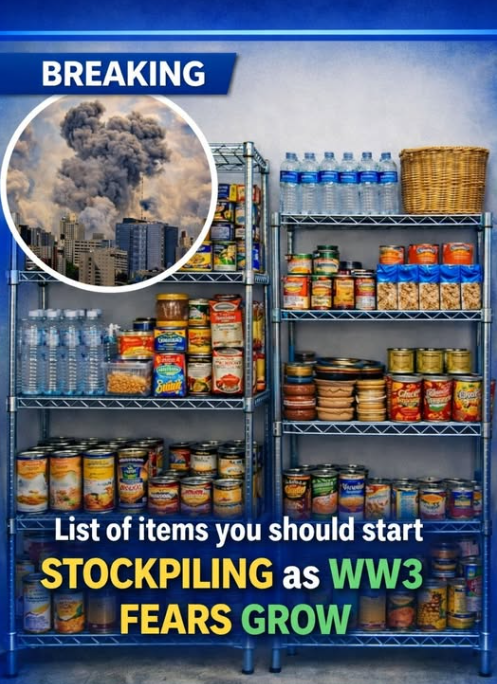
Living Small, Preparing Big: The 72-Hour Rule in 2026
In the rapidly changing landscape of 2026, the concept of “home” has evolved far beyond its traditional role as shelter. For many, it has become a carefully designed stronghold of self-reliance, a space that balances comfort with resilience. Headlines around the world frequently feature stories of infrastructure vulnerabilities, sudden power outages, cyber disruptions, and geopolitical tensions. What was once a theoretical concern—the fragility of electricity grids, clean water supplies, and digital communications—has become a reality that shapes daily decision-making. Within communities of tiny house enthusiasts, minimalist living advocates, and self-sufficiency proponents, a new philosophy is emerging: “living small” is being paired with rigorous emergency preparedness, turning compact dwellings into efficient, survival-ready spaces. Experts now emphasize an urgent guideline: every household should maintain at least 72 hours of essential supplies to navigate the critical window when modern services may fail unexpectedly.
The Origins and Importance of the 72-Hour Rule
The so-called “72-hour rule” is far from a modern invention. Its origins lie in decades of disaster management experience, spanning hurricanes, earthquakes, floods, and large-scale power grid failures. Emergency planners consistently observe a clear pattern: during the first three days of a crisis, formal emergency services—police, fire, and medical rescue—are often stretched to the breaking point. Responders must prioritize life-threatening situations such as collapsed structures, widespread fires, or severe injuries, leaving the general population to manage immediate survival needs independently. A household that is prepared to function autonomously during these initial 72 hours not only protects itself but also allows first responders to concentrate on the most critical emergencies, indirectly supporting the community at large.
The 72-hour window is not arbitrary; it is a practical reflection of system interdependencies. In today’s world, the networks that support daily life are deeply intertwined. Water treatment plants require electricity to pump and purify water. Communication networks rely on the same power supply to keep cell towers and servers operational. Transportation and fuel distribution depend on digital payment systems to move goods efficiently. When one of these critical threads is disrupted—whether by a technical failure, cyberattack, or natural disaster—the others can unravel in hours. A power outage is rarely just a temporary inconvenience. Without electricity, taps run dry, mobile networks go silent, and grocery stores experience empty shelves as supply chains grind to a halt.
Compact Spaces, Maximum Efficiency
For residents of tiny houses or small apartments, emergency preparedness is a matter of efficiency rather than sheer volume. The cornerstone of any survival strategy is clean drinking water. Human physiology dictates that people can survive only a few days without hydration, yet water is frequently the first service to fail during outages. Experts recommend storing at least one gallon per person per day for drinking and basic sanitation. In a 72-hour scenario, a family of four would need a total of twelve gallons—an amount that can be stored effectively using vertical space, under-bed containers, or modular storage units designed for compact dwellings.
Food is the second critical component. A “survival pantry” should include high-calorie, non-perishable items that require minimal preparation. By 2026, freeze-dried and shelf-stable nutrition has become significantly more palatable and nutritionally complete than the rations of previous decades. These provisions are designed to sustain energy levels and morale even without access to a stove, microwave, or refrigerator. Alongside food, reliable sources of light—LED lanterns, headlamps, and spare batteries—ensure safety and visibility without the fire risk associated with candles.
Information: The Invisible Lifeline
Equally important during outages is access to information. When the internet disappears and cell towers exhaust backup power, uncertainty and rumor can quickly escalate panic. Battery-powered or hand-crank emergency radios remain the most dependable lifeline. These devices receive real-time weather alerts from the National Oceanic and Atmospheric Administration (NOAA) and other emergency broadcasts, bypassing fragile digital networks. Knowing the status of the crisis and anticipating service restoration are critical for maintaining psychological resilience during uncertain conditions.
Preparedness, therefore, extends beyond material supplies. It encompasses mindset. Being ready does not mean “expecting the worst,” but rather acknowledging the reality of today’s interconnected, fragile systems. Just as a tiny house resident audits every item to maximize utility, an emergency-ready household audits risks to minimize vulnerability. Simple measures—like keeping a small cash reserve, maintaining a first-aid kit, or designating emergency contact protocols—can transform a family from passive bystanders into active participants in their own safety.
The Global Context of Preparedness
The relevance of the 72-hour rule is amplified by today’s global climate. Infrastructure failures, cyberattacks, and geopolitical volatility are no longer hypothetical scenarios—they are recurring challenges that households must anticipate. Whether living in a 300-square-foot architectural marvel or a traditional suburban home, the principles remain the same: secure water, food, light, and information to bridge the first critical days of a crisis.
The “Tiny House Zone” philosophy, which emphasizes intentionality and minimalism, dovetails perfectly with emergency readiness. Living with less does not mean compromising safety; it means being deliberate about every possession and ensuring that each item has a vital purpose. A compact, well-planned 72-hour supply kit is the ultimate expression of this philosophy—a high-utility, portable insurance policy against sudden disconnections from modern infrastructure.
Practical Steps for Households
Implementing the 72-hour rule can be both simple and effective:
Water: Store at least one gallon per person per day for drinking and hygiene, using stackable or under-furniture containers.
Food: Maintain a three-day supply of high-calorie, non-perishable foods that require minimal preparation.
Lighting and Power: Stock LED lanterns, headlamps, and extra batteries. Consider solar chargers for small devices.
Information: Keep a battery-powered or hand-crank radio tuned to NOAA and local emergency channels.
Health and Safety: Maintain a first-aid kit, essential medications, and basic hygiene supplies.
Financial Preparedness: Keep a modest amount of physical cash for use when digital payment systems fail.
By adopting these measures, households ensure that the first 72 hours of a crisis are navigable, calm, and safe.
Conclusion: Small Homes, Big Preparedness
As we move through 2026, the intersection of minimal living and emergency preparedness has never been more critical. Tiny houses and intentional living spaces illustrate that efficiency, forethought, and discipline are not just lifestyle choices—they are survival skills. Preparing for three days of self-sufficiency is a practical, achievable step that safeguards individuals, families, and communities.
By embracing the 72-hour rule, households turn uncertainty into readiness, fragility into resilience, and minimalism into meaningful self-reliance. When the lights go out, taps run dry, or communication networks fail, a prepared home ensures that families are not left scrambling—they are waiting calmly, equipped, and ready to navigate whatever challenges arise.