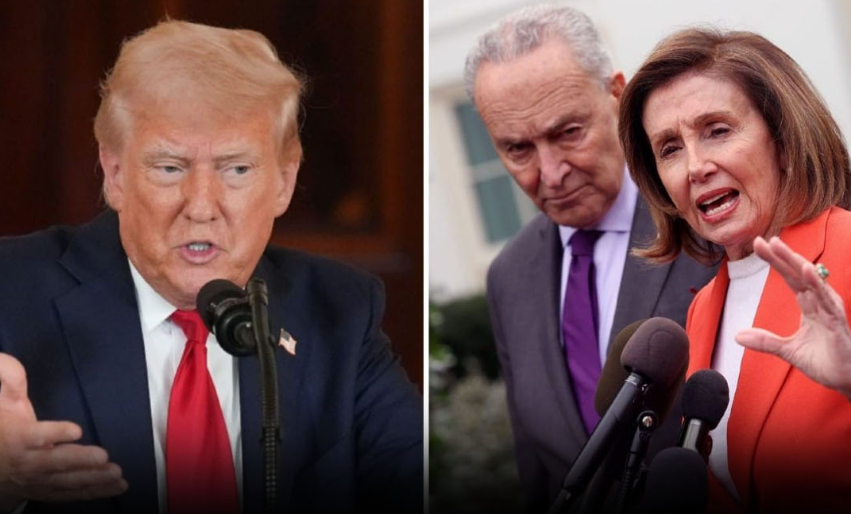
Trump’s numbers weren’t supposed to move. Political analysts had written him off, pollsters had declared the map effectively frozen, and conventional wisdom insisted that nothing short of a catastrophic event could shift the delicate balance of voter sentiment. Year after year, his approval ratings had become a statistical plateau: the base solid, the opposition fierce, and the undecideds stubbornly skeptical. Yet, as the autumn air cooled, gas prices fell to levels not seen in over a year, and holiday spending roared back with surprising strength, a subtle but unnerving shift began to stir beneath the surface. Trump’s approval, inch by painstaking inch, crept upward. It was barely noticeable in isolation, almost imperceptible if you looked only at single polls. Yet across multiple surveys, a pattern emerged: his numbers were moving in a way that hadn’t been predicted, challenging the narrative of a frozen political landscape. At the same time, most voters insisted they still despised him, or at least found him frustratingly polarizing, creating an odd duality: resentment mixed with cautious optimism. Democrats, sensing danger, scrambled to hijack the narrative, to steal back control of the story surrounding the economy, framing it as their triumph even as the optics seemed to favor the former president.
The truth is, Trump’s modest rise is tethered to something brutally simple, almost primal: people finally feel a little less squeezed. For too long, the relentless inflation, sky-high rent, and endless stories of corporate price gouging had created a sense of perpetual economic anxiety. Even small relief—dropping gas prices, a few more dollars in the weekly paycheck, or seeing the store shelves fuller than they had been in months—can feel like a tangible lifeline. It doesn’t erase the memory of hardship, and it certainly doesn’t undo years of economic strain, but it softens the edge of anger. In politics, perception often outweighs policy, and Trump has long understood the power of perception. Now, he is trying to weld that fragile relief to his own image, promising looser regulations, cheaper prescription drugs, and tax breaks that sound immediate and personal. Every minor improvement—a tank of gas costing a few dollars less, a discounted grocery item, a small paycheck increase—is being positioned as a whisper of Trump’s influence, as if these fleeting reprieves were proof that he alone can deliver.
Democrats, of course, are acutely aware of the danger. They are frantically reframing the story, turning a modest economic uptick into a delayed reward of policies they implemented while warning voters about the fragility of this newfound stability. Their argument is layered: yes, prices are falling, but it is the dismantling of prior protections that allowed such relief to appear; yes, the shelves are stocked, but the next storm of inflation, housing crises, or layoffs could arrive at any moment. They emphasize that Trump’s proposed “fixes” are often temporary, sugar highs that leave bitter crashes in their wake. AI-driven job losses, surging rents in urban centers, and wage stagnation all remain lurking threats, and Democrats aim to remind voters that relief without long-term structural support is nothing more than a fleeting illusion.
Voters themselves are caught in an uncomfortable limbo. On the one hand, there is the tangible sense of economic reprieve: a small but meaningful lightening of the financial load that has been grinding households down for years. On the other, there is skepticism—cautious awareness that history has often swung the pendulum back toward hardship. People remember that a paycheck that feels slightly larger today can be eaten away tomorrow by rising rent, utility bills, or unforeseen medical costs. In this sense, the calm feels real, but so does the storm on the horizon, a persistent reminder that the appearance of stability is often as fragile as it is fleeting.
Trump’s strategy in this environment is almost surgical. He recognizes that voter behavior is rarely driven by ideology alone. Personal experiences, particularly those related to money, jobs, and daily survival, dominate the electorate’s decision-making process. Lower gas prices, a resurgence of holiday shopping, or even a headline announcing an uptick in consumer confidence can be reframed as evidence that Trump’s policies—his approach to trade, regulation, and taxation—are the invisible hand guiding this temporary reprieve. Messaging is carefully calibrated: his speeches reference immediate benefits, anecdotes about the “everyday American,” and reminders that past administrations failed to deliver similar relief. Each story is crafted to reinforce the idea that what people feel in their wallets and in their homes is directly connected to his influence, regardless of the larger systemic forces at play.
Meanwhile, Democrats must balance urgency with nuance. They cannot dismiss the small victories people are experiencing without appearing callous, yet they must simultaneously warn that the surface-level calm masks deep structural vulnerabilities. Their challenge is to convince voters that the relief they see today is not a product of luck or coincidence, but a consequence of deliberate, long-term policy work that Trump now seeks to undo. It is a difficult story to tell: how do you make invisible systemic fixes resonate when the opposition can attach themselves to tangible, immediate improvements that people feel personally?
The result is a political landscape in which calm and chaos coexist. Economically, things may feel a bit lighter for ordinary Americans, but the underlying forces—automation, rising debt, geopolitical instability, climate pressures, and systemic inequality—remain unchanged. Politically, Trump is attempting to convert a minor uptick into a compelling narrative of competence and relevance, while Democrats race to remind voters of the fragility of this reprieve. Voters, in turn, are caught between fear and relief, cynicism and hope, uncertainty and instinct. Every news cycle, every new data point, and every anecdote from a neighbor becomes a microcosm of the broader tension: the desire for stability colliding with the instinct to distrust easy answers.
In the end, this slow, almost imperceptible shift in Trump’s numbers highlights a fundamental truth about American politics: perception, emotion, and the rhythm of everyday life can outweigh even the most entrenched ideological divides. A few dollars saved on fuel, a few hours spent with loved ones shopping without worry, or a quiet sense that the economy is slightly less punishing can ripple through the electorate in ways pollsters struggle to quantify. What appears as a minor uptick in approval ratings may, in reality, be the product of millions of subtle, lived experiences—the slow, cumulative effect of perceived relief, magnified by messaging, media framing, and the constant churn of political narratives.
As gas prices continue to fall and households cautiously spend, the tension in American politics is less about immediate policy and more about the story voters tell themselves. Trump’s rise, modest as it is, is a reflection of lived experience merging with media narratives. Democrats’ frantic efforts to reframe the tale, combined with voters’ conflicting perceptions of relief and risk, create a volatile equilibrium. Beneath the surface of charts, graphs, and conventional wisdom, a dynamic is unfolding: approval ratings that were expected to be static are inching upward, hinting at a subtle yet meaningful shift in the political landscape. The calm feels real—but the storm on the horizon remains undeniable. And as Americans navigate their daily lives, they are participating in a quiet tug-of-war between perception and reality, hope and fear, and the unpredictable forces of politics, economy, and human psychology.