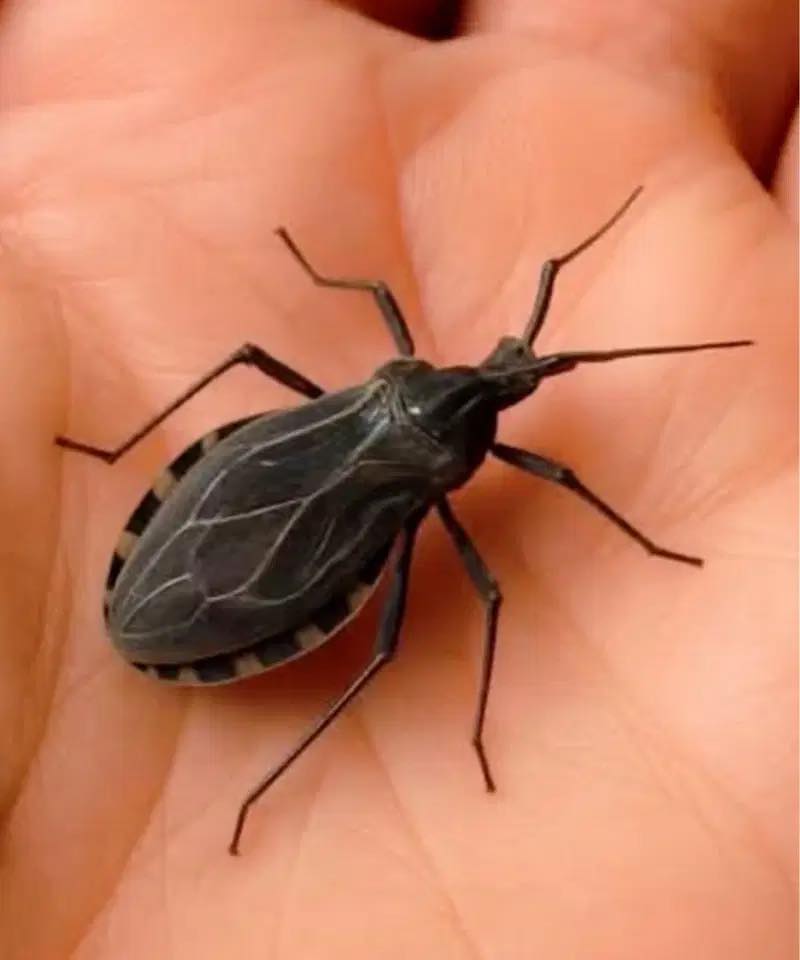
What no one tells you is that this seemingly inconsequential event, the bite from a tiny insect, may be the start of something much bigger than a fleeting illness. The kissing bug, named for its tendency to bite near the face, carries a parasitic disease known as Chagas disease, caused by the Trypanosoma cruzi parasite. Unlike many other pests, the kissing bug doesn’t announce its attack. You won’t even feel its bite. And the true danger lies in what happens after: it feeds on your skin, then leaves behind its feces—often containing the parasite—that can easily enter your body through a tiny scratch, a rub of the eye, or an unnoticed touch to the bite. At that moment, the parasite slips inside, beginning a slow and insidious infection that can go unnoticed for years.
Most people are unaware of the initial infection. The early signs are incredibly subtle and easy to miss. You might notice a mild swelling around your eye—perhaps you don’t even realize it’s related to the bite. Or there could be vague symptoms like fatigue, a low-grade fever, or swollen lymph nodes—nothing that feels urgent or concerning enough to seek medical advice. These are the kinds of symptoms that could be written off as the flu, a cold, or just general exhaustion. But here’s the catch: this early phase of the infection, though it may appear mild, is actually the calm before the storm.
As time passes, the acute symptoms tend to fade, and many people feel like they’ve recovered. They move on with their lives, assuming that the worst is over. But the parasite doesn’t disappear—it quietly hides in the body, often taking years or even decades to cause significant harm. Over time, it can damage vital organs, especially the heart and the digestive system, leaving a trail of destruction that is invisible and silent. While the infection itself might be dormant, the parasite continues its work in the background, unnoticed, until serious health problems begin to surface.
The most devastating effects of Trypanosoma cruzi can manifest much later in life, typically as heart arrhythmias, heart failure, or severe digestive issues such as problems with swallowing or bowel movements. But by the time these symptoms appear, many individuals have no idea what is causing them. The connection to that minor, forgotten bite is long buried, lost to the passage of time. And by then, the damage may be irreversible.
The problem is compounded by the fact that the majority of people who contract Chagas disease—particularly those living in or traveling to areas where kissing bugs are common—are completely unaware of the risk. The parasite may lay dormant for years, without ever triggering the kind of alarm that would prompt someone to seek medical attention. And even when symptoms do appear, they are often mistaken for something else—an arrhythmia mistaken for stress or a digestive problem chalked up to a bad diet. By the time the diagnosis is made, it may be too late to reverse the damage that has been done.
For anyone who lives in or has visited regions where kissing bugs are known to thrive, especially in parts of the Americas, it’s crucial to stay vigilant. If you notice unusual swelling, a persistent flu-like illness, or eye inflammation after a possible bite, it’s important to seek medical attention right away. Early testing and diagnosis can make all the difference in stopping the parasite before it can cause irreversible damage. When caught early, the infection can often be treated with medication that prevents it from progressing into a lifelong, debilitating condition.
Chagas disease is a silent and insidious threat, one that thrives in the shadows and is easily overlooked. But with the right knowledge and vigilance, it’s a danger that can be prevented—or at least treated before it becomes a lifetime burden. If you’ve been exposed to kissing bugs, or if you live in areas where they are common, take the time to educate yourself about the symptoms and risks of Chagas disease. Early intervention can save your heart—and your life.