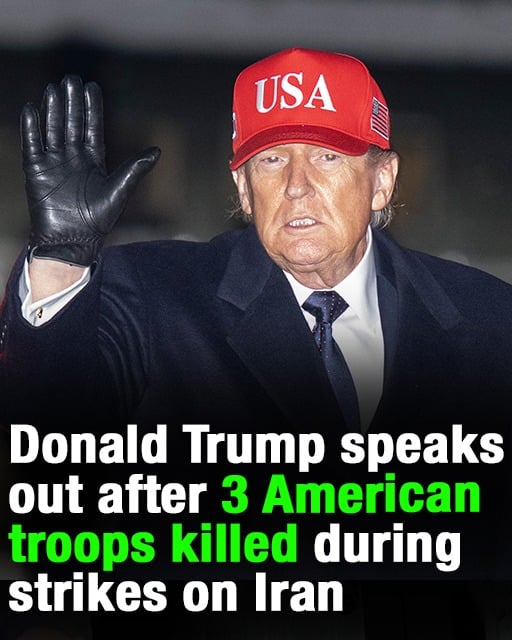
American flags are already being folded. Sirens still echo over Iranian cities, wailing through streets littered with debris. The acrid smell of smoke clings to the air, and fires flicker in the distance, casting a grim orange glow over neighborhoods that just hours ago were alive with the ordinary rhythms of life. And President Trump is vowing this is only the beginning. His words, broadcast over every major network and amplified across social media, leave little room for doubt: the strikes are both a message and a prelude. Three U.S. troops are dead, hundreds of Iranians reportedly killed, and Washington calls it “righteous,” framing it as a moral imperative rather than a mere act of war. Families on both sides brace for the next knock on the door, the next notification that shatters routine existence, the next ripple of grief that no amount of political justification can soften.
The strikes on Iran reopen every scar of the past half-century: hostage crises frozen in memory, proxy wars fought in shadow, nuclear ambitions looming as existential threats, and the persistent belief — repeated in war rooms and news cycles alike — that bombs can somehow impose peace. The rhetoric in Washington is familiar and rehearsed: “righteous mission,” “ultimate sacrifice,” “exhaustive diplomacy.” But for those on the ground, for civilians and soldiers alike, the reality is immediate, intimate, and devastating. Homes lie in ruins. Streets are littered with shattered glass and splintered wood. Hospitals overflow with the injured. Grief is indiscriminate; it cares nothing for which flag flies above a city square or military base.
For the families of the three Americans killed, Trump’s promise of “vengeance” offers little solace. It is a cold, distant comfort against the unchangeable truth: a loved one will never walk through the door again. Parents, siblings, and spouses are left navigating a void that no administration can fill. In Iran, funerals for hundreds of civilians unfold under skies still scarred by the roar of foreign jets and the distant crackle of anti-air defenses. Children clutch grieving parents, mourners kneel in streets blackened by smoke, and yet life continues in the midst of chaos — markets reopen, teachers return to classrooms, but every smile is shadowed by loss.
The geopolitical stakes are immense. Washington celebrates the strikes as a demonstration of resolve, projecting power to allies and rivals alike. Tehran frames them as an unforgivable violation, a strike against not just leadership but national pride and identity. Analysts across the world debate the consequences: Will the U.S. achieve a tactical advantage, or has it ignited a broader conflagration that will draw in regional actors, embolden proxies, and destabilize an already volatile Middle East? The calculus is as murky as ever, but the human cost is already crystal clear.
Across the globe, reactions are polarized. Some call the operation a necessary show of strength, proof that American power can enforce deterrence and protect interests abroad. Others denounce it as reckless, a precipitous leap into yet another generational conflict that could engulf millions in violence. Families, civilians, and soldiers on both sides confront a new normal of uncertainty, trauma, and the sudden intrusion of death into the everyday. History will weigh the strategy, measure the gains against the losses, and debate the morality of the action. Yet for those living through it — for those who cannot rely on strategic analysis or televised summaries — the consequences are tangible, unyielding, and profoundly personal.
Even as Washington pronounces moral clarity, sirens continue to echo, flags are folded, and families tally the cost in tears, rubble, and unanswered questions. Every street in Tehran, every base in southern Iran, every American home where the dead are mourned, serves as a reminder: war is never abstract. The rhetoric may call it “righteous,” but the streets, the skies, and the grieving hold a harsher truth. The next steps are uncertain, but the imprint of this weekend will linger for generations, defining a moment when political decisions collided violently with human lives, leaving no one untouched.