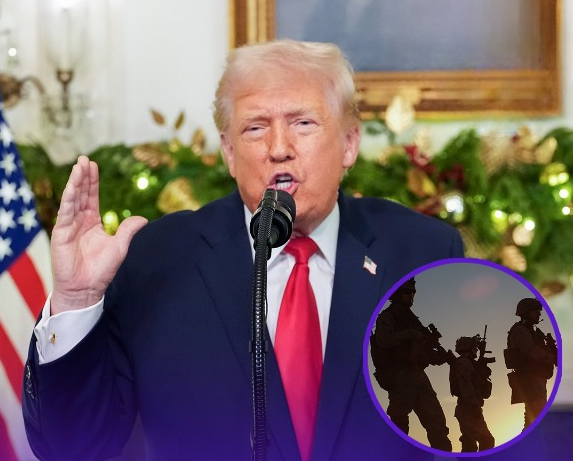
In a move blending historical symbolism with major fiscal policy, President Donald Trump has announced a “warrior dividend” for U.S. military personnel. On December 17, 2025, the President delivered a televised address from the White House outlining a one-time payment of $1,776 for every active-duty and reserve service member. The specific amount references the nation’s founding year, emphasizing American pride and national security. Marketed as a festive “Christmas gift,” the initiative has sparked discussion about federal budget priorities, trade tariffs, and military compensation strategies.
Distributing this dividend involves roughly $2.57 billion in federal funds. Defense Secretary Pete Hegseth directed the Pentagon to deliver payments through the existing Basic Allowance for Housing (BAH) framework. By categorizing the dividend as a housing supplement, the administration ensures a smoother rollout, avoiding the legislative challenges typical of a separate stimulus. This strategy aims to provide immediate financial relief to 1.28 million active-duty troops and 174,000 Selected Reserve members.
Economically, the payment draws on a mix of revenue, including proceeds from import tariffs and Republican-led tax reforms. Injecting $1,776 into over a million households is expected to boost consumer spending, acting as a secondary stimulus for the holiday season. From a wealth management perspective, the move represents a targeted approach to economic redistribution.
Trump’s address also critiqued previous administrations, accusing them of prioritizing foreign aid over support for U.S. “warriors.” By framing the dividend as a corrective measure, the administration emphasizes an “America First” approach, strengthening its base among military and aerospace communities while addressing the rising cost of living for service members.
The timing comes amid market volatility and mixed public opinion. Recent polling suggests his economic approval rating has dipped to 33 percent, with overall approval at 39 percent. For political analysts, the warrior dividend is a high-stakes attempt at reputation management, offering a tangible benefit to a respected population segment. Its success may depend on whether it is seen as a genuine investment in service members or a temporary distraction from inflation concerns.
The Pentagon’s use of the housing supplement framework addresses long-standing issues for military families facing high living costs. In areas like San Diego or Northern Virginia, the $1,776 payment offers meaningful, if temporary, relief from rising rents and mortgage expenses. This focus on “quality of life” aims to improve recruitment and retention within the all-volunteer force.
The checks are scheduled to arrive by Christmas Day 2025, creating a strong emotional impact for service members and their families. While critics question the legality and long-term fiscal impact, supporters view it as an innovative form of national-level social responsibility. The historical “1776” branding reinforces patriotism, turning a routine payment into a symbolic gesture, and making the story highly shareable across digital media platforms.
Economists continue to debate whether the $2.57 billion could have been better spent on defense technology or VA healthcare infrastructure. Supporters argue that direct payments to service members are the most effective way to address immediate economic pressures. The outcome of this debate may influence the legislative agenda in 2026 as both parties prepare for election-year politics.
Ultimately, the warrior dividend marks a significant moment in U.S. military compensation history. It is a bold experiment in monetary policy, combining executive authority with supply-side economic strategy. Whether it improves the quality of life for 1.45 million service members or serves as a temporary financial relief, its impact is undeniable. As troops see a $1,776 deposit in their accounts, the initiative symbolizes the intersection of patriotism, politics, and personal finance, making the 2025 holiday season a memorable one where historical symbolism met modern economic strategy.