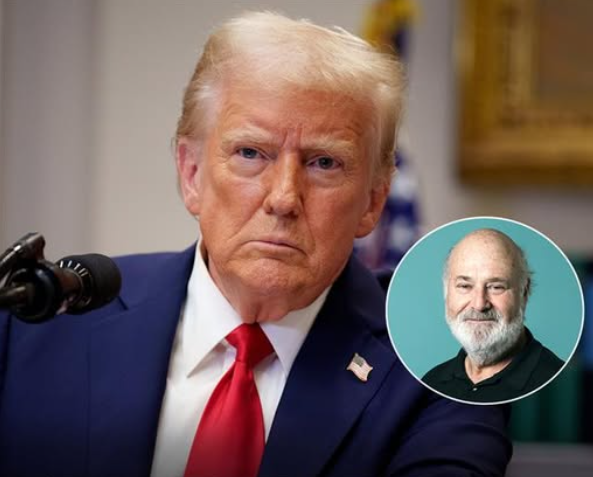
The intersection of an extraordinarily tragic personal loss and the high-stakes, often mercurial world of presidential politics has generated a maelstrom of national and international controversy following the devastating deaths of legendary filmmaker Rob Reiner and his wife, Michele Singer Reiner. This tragedy, while deeply personal in nature, has been caught in the unforgiving glare of public scrutiny. The entertainment industry, grappling with the loss of a visionary whose creative imprint on American culture is indelible, mourns the death of the director behind iconic films such as The Princess Bride and A Few Good Men. Yet, amid this mourning, a parallel narrative has unfolded: one marked by extreme political polarization and public outrage over the intersection of grief, media commentary, and presidential behavior.
The events surrounding the couple’s death are harrowing. On December 14, 2025, law enforcement authorities arrived at the Reiners’ Brentwood estate to investigate a scene of “domestic violence double homicide.” Both Rob, 78, and Michele, 68, were discovered deceased, having succumbed to fatal knife wounds. Early forensic reports confirmed the lethality of the injuries, leaving investigators with a grim puzzle and a community in shock. Attention quickly turned to the couple’s 32-year-old son, Nick Reiner, who was subsequently taken into police custody. Media outlets, from TMZ to Variety, reported that the incident stemmed from an intense familial dispute at a holiday gathering hosted by Conan O’Brien, with witnesses describing Nick as behaving erratically and displaying signs of longstanding mental health challenges compounded by substance abuse.
In the immediate aftermath of this shocking act, the nation anticipated a moment of solemn reflection and collective mourning. Instead, President Donald Trump, 79, took to his digital platform, Truth Social, issuing comments that many deemed highly inappropriate and deeply offensive. Rather than offering the condolences traditionally expected in such a tragedy, Trump framed the incident through the lens of political ideology, suggesting that Reiner’s “anti-MAGA” activism and public criticisms of his administration had contributed to a “mind-crippling disease” he has frequently labeled “Trump Derangement Syndrome” (TDS). In his post, Trump claimed Reiner had been “driven crazy” by his obsession with the administration, a statement that sparked widespread outrage and debate about the boundaries of presidential commentary on private family tragedies.
The backlash was rapid and crossed typical partisan lines. Even stalwart Trump supporters expressed unease, with notable GOP figures breaking ranks. Georgia Representative Marjorie Taylor Greene, a frequent defender of Trump’s social media communications, publicly distanced herself from the President’s remarks. She emphasized that the deaths of Rob and Michele were the result of a deeply personal and tragic family incident that should be treated with privacy and respect, above the fray of partisan politics. Similarly, Kentucky Representative Thomas Massie criticized the President’s commentary, labeling it “inappropriate and disrespectful” and asserting that any dialogue about the tragedy should center on the human loss rather than political rhetoric.
For political analysts, commentators, and reputation management experts, this incident has revealed an unusual dynamic: internal dissent within the Republican Party at a moment when unity might otherwise be expected. Social media became a forum for morally driven criticism, with former Trump voters expressing disappointment, urging the President to recognize the humanity inherent in moments of profound loss, and reflecting on the ethical responsibilities of leadership during an ongoing homicide investigation. Despite this, Trump doubled down, invoking old narratives of alleged foreign influence and dismissing Reiner as a “friend of Russia” and a politically “deranged” figure—demonstrating his well-documented tendency to frame events in a personal and politically charged lens, even under the gravest circumstances.
Rob Reiner’s own legacy, both artistic and political, further complicates public discourse. As a cinematic icon, he was celebrated for creating works that remain culturally and emotionally resonant. Equally significant was his role as a political advocate, particularly as an outspoken critic of the Trump administration. Interviews with mainstream media outlets often featured Reiner questioning the President’s qualifications and moral compass, with one 2017 interview with Variety labeling Trump as the “single most unqualified human being” to occupy the presidency. This historical tension has now become inseparable from discussions of Reiner’s life and untimely death, with biographers and cultural historians noting that his commitment to democratic values, social justice, and civic engagement was as integral to his identity as his contributions to film.
The media and economic ramifications of the controversy are extensive. Keywords such as “Rob Reiner murder update,” “Trump Truth Social backlash,” and “Nick Reiner arrest details” have dominated search engines, resulting in massive spikes in web traffic to news outlets, political blogs, and true crime podcasts. This phenomenon reflects the modern, sometimes unsettling, interplay between tragedy, media monetization, and political spectacle. Legal scholars have begun weighing in as well, questioning whether presidential comments on digital platforms during ongoing investigations could influence public perception and potentially interfere with a fair trial, raising complex issues about the ethical limits of executive speech.
Within the entertainment industry, however, a more human-centered response persists. Colleagues, friends, and fans of Reiner have concentrated on memorial tributes, philanthropic donations, and the continued celebration of his artistic achievements. Productions such as Spinal Tap II, which Reiner was actively directing, have become symbols of his enduring creative vision. Streaming platforms have reported notable increases in viewership of his classic films, demonstrating a cultural resilience and collective desire to remember the Reiners for their contributions rather than the political controversy surrounding their deaths.
As the Los Angeles District Attorney’s office prepares the case against Nick Reiner, forensic evidence and eyewitness testimony are expected to dominate proceedings. Defense strategies may explore mitigating factors including mental health challenges, substance dependency, and potential diminished capacity, issues that Nick himself has alluded to in personal writings. The case exemplifies the intersection of mental health advocacy, criminal responsibility, and media scrutiny, positioning it as a focal point of national attention akin to a politically charged legal drama.
Ultimately, the “Trump versus Reiner” narrative epitomizes the fractured state of the American socio-political landscape in 2025. It illuminates a culture in which personal tragedy is filtered through partisan lenses, and where political allegiances frequently overshadow empathy for loss. While Reiner’s artistic legacy remains untarnished, the broader public debate underscores the tension between the brutal realities of human experience and the spectacle of political theater. This collision of grief, civic responsibility, and media sensationalism will likely inform public and electoral discourse for years to come. The Reiner family’s story—tragic, complex, and politically charged—serves as a cautionary example of how deeply private loss can be amplified into a national conversation about leadership, morality, and the enduring necessity of civil discourse.