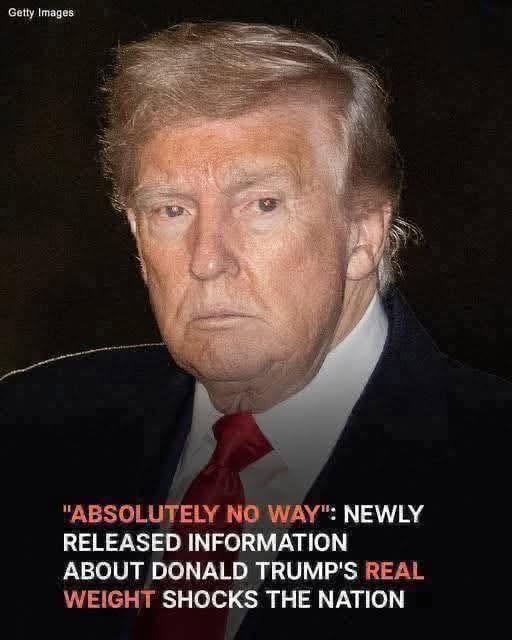
The news hit like a political earthquake, sending shockwaves through Washington and far beyond it. Four felony charges. A former president of the United States now standing at the center of a criminal storm unlike anything modern American politics has witnessed. The language alone feels seismic—“conspiracy,” “defraud the United States,” “obstruction.” These are not the words typically associated with Oval Office legacies. Yet now they hang over Donald Trump like a shadow that refuses to lift, dark and immovable. Prosecutors insist this was not confusion, not chaos, not the messy aftermath of a bitter election. They argue it was something far more deliberate: a calculated plan, a coordinated effort that struck at the very foundation of American democracy.
According to the indictment, Trump crossed a boundary that no modern president has dared approach. The allegations outline a multi-layered scheme: conspiring to defraud the United States government, obstructing and attempting to obstruct the official certification of an election, and infringing upon rights explicitly guaranteed by the Constitution. At the heart of the case lies a chilling claim—that the peaceful transfer of power, a cornerstone of American governance for more than two centuries, was not simply questioned or protested, but intentionally targeted. Prosecutors describe a pressure campaign, efforts to advance alternate slates of electors, and attempts to influence officials at both state and federal levels. The implication is stark: that the system itself was tested not by accident, but by design.
The weight of that accusation cannot be overstated. The peaceful transfer of power has long been viewed as America’s defining democratic ritual—proof that political rivalry ends where constitutional order begins. If that principle was knowingly undermined, even attempted, the implications stretch far beyond a single man or a single election cycle. They strike at the legitimacy of institutions that millions depend on to function without fear or favor. This is no longer just about speeches, rallies, or partisan narratives. It is about whether the constitutional framework can withstand internal strain from its highest officeholder.
Supporters of Trump see the charges through a radically different lens. To them, this is persecution disguised as prosecution—a politically motivated attempt to sideline a powerful figure who remains deeply influential. They argue that the legal system is being weaponized, that disagreements over election procedures have been criminalized, and that the charges reflect partisan hostility rather than objective justice. Critics, however, frame the case as long-delayed accountability, a necessary step to reaffirm that no individual—no matter how powerful—is above the law. Between those poles lies a vast, uneasy middle: citizens who may feel fatigue, confusion, or quiet dread about what comes next.
Because this case transcends party loyalty and cable-news spin. It forces a question that cuts to the core of democratic governance: Can the rule of law truly bind the most powerful among us? Can a system built on checks and balances hold steady when tested at its highest level? Courtrooms are meant to weigh evidence dispassionately, to strip away spectacle and focus on facts. Yet the spectacle here is unavoidable. Every motion filed, every hearing scheduled, every legal argument advanced reverberates across a nation already deeply divided.
If a jury ultimately decides that a president attempted to subvert democracy to retain power, the consequences will be historic and irreversible. If a jury does not, the political and social fallout may be just as profound. Trust—in elections, in institutions, in justice itself—hangs in the balance. The outcome will shape not only the future of one man, but the boundaries of executive authority for generations to come.
Whatever the verdict, one truth feels certain: the country that enters this trial is not the same country that will emerge from its final, irrevocable judgment. The legal process may deliver clarity, or it may deepen divisions. But it will leave a mark on American history that cannot be undone—a defining chapter in the ongoing test of whether democracy can endure its most powerful challenges.