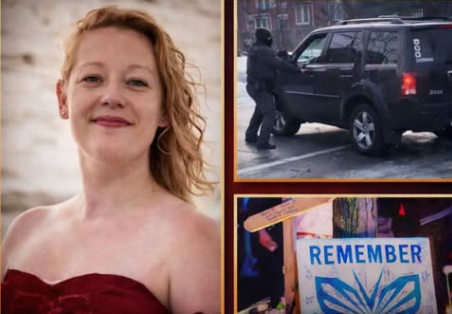
Minneapolis woke to a scene that seemed ripped from a nightmare: blood on the snow, a shattered SUV, and a story that refused to make sense. A mother, a poet, a woman known for her kindness and warmth, lay dead on a frozen street. A federal officer involved in the shooting remained free. And before the facts could even settle, Washington had already taken sides. Governor Kristi Noem declared the incident an act of terrorism. Neighbors and friends called it murder. Between these clashing narratives stands a family forever altered, a video capturing moments that will haunt the city, and a community that refuses to be silenced or misled. The pain is raw, the grief palpable, and the questions seem endless.
Renee Nicole Good’s death has become far more than a tragic encounter on a Minneapolis street; it has evolved into a stark collision between two irreconcilable versions of reality. Federal officials insist that Renee “weaponized” her SUV and left an ICE officer with no choice but to fire his weapon. According to this narrative, the use of lethal force was necessary, justified, and unavoidable. Yet those closest to her—the family, friends, neighbors, and local civil rights leaders—paint an entirely different picture. To them, Renee was a gentle, terrified woman, a poet and musician, a mother devoted to her children and deeply connected to her community. She was someone who extended care rather than confrontation, warmth rather than violence. The dichotomy between these portrayals has divided not just the city but the nation, revealing the deep fractures in how stories are told, heard, and believed.
In the days following her death, Powderhorn Park has transformed into a living memorial. Candles flicker against the cold, cardboard signs bearing her name sway in the winter breeze, and the hum of mourners’ voices forms a quiet insistence: her life cannot be reduced to a political talking point. The air is thick with grief—her wife’s anguished cries echo through the streets, a mother’s disbelief is visible in every movement, and a child who suddenly finds himself without parents struggles to grasp a world that has abruptly changed. These intimate, human moments stand in stark contrast to the polished statements from press conferences and the rapid-fire posts on social media. The raw reality of loss is impossible to ignore, even as politicians and officials argue over narratives and blame.
As investigations begin, Minneapolis and the nation face pressing questions. Who decides the truth when official accounts and community testimony conflict so dramatically? How does a city process grief and outrage when the story of a single life can be twisted into justification or vilification? One fact remains undeniable: a life once defined by words, music, compassion, and care ended violently, abruptly, and tragically. Renee Nicole Good’s story is no longer just hers—it belongs to the city, to her grieving family, and to every person who refuses to let her death fade into abstraction. Every second of that day, every detail captured on video, every eyewitness account must be examined. The city demands transparency, accountability, and, above all, recognition that a real human being with a rich, meaningful life has been taken from them.
Minneapolis now stands as a community at a crossroads, caught between grief, anger, and a demand for justice. Streets lined with vigils and silent observers bear witness to the tension between power and humanity. The political narrative may spin outward, but the personal story—the mother, the poet, the neighbor, the friend—is what will linger in hearts and memory. It is a stark reminder that every life lost is more than a statistic, every death more than a headline, and that a city—and a nation—must confront the human cost of policy, action, and unchecked authority.