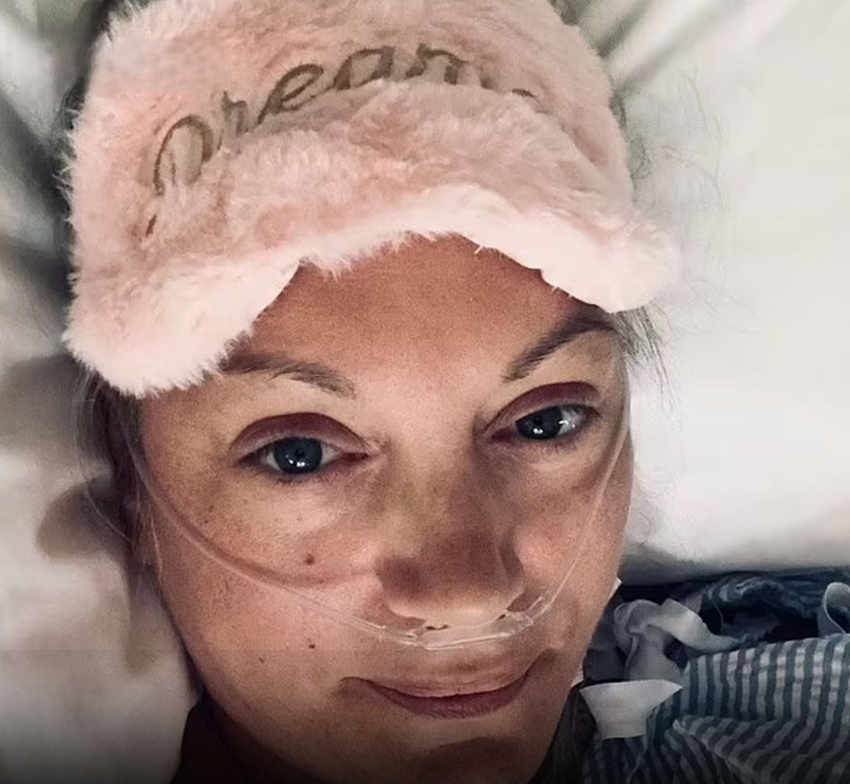
November 7, 2019 is a date permanently burned into my memory—the moment my life split cleanly into two eras: BBC—Before Bowel Cancer—and everything that followed. A heavy, stunned silence filled the car as my husband and I slowly exited the hospital parking lot in Melbourne. Minutes earlier, I had sat hunched forward, head in my hands, listening as a highly respected gastrointestinal surgeon calmly confirmed what I had feared most. A biopsy had revealed that the large mass in my colon was cancerous. Worse still, a CT scan showed the disease had already spread to my liver.
“I’m afraid that means it’s stage-four bowel cancer,” he said, then added, perhaps to soften the blow before the weekend, “But… um, don’t worry. I’m fairly confident it’s treatable.”
Although I would later learn that some people with stage-four cancer do beat the odds—and are even cured—in that moment, all I could think was that my time was likely measured in months, not years.
My thoughts spiraled. Christmas was only weeks away—would this be my last? My children were nine and eleven. How would they survive without me? In the middle of that emotional chaos, I reached instinctively for the one thing that promised answers: my phone.
As we drove home—toward the moment we would have to tell our children—I typed into Google:
“What causes bowel cancer?”
The results listed the usual risk factors, and I examined them one by one. Was I over fifty? No. Obese? No—like many mothers I carried extra weight, but not that much. A smoker? Never. A family history of bowel cancer? None. A low-fiber, ultra-processed diet? Quite the opposite—I ate plenty of vegetables, fruit, legumes, and oats. Sedentary? No. A heavy drinker? Just a couple of glasses of Pinot Noir on a Friday night.
None of it made sense.
Why me? Why now? At forty-four, I didn’t fit the profile at all.
“What the hell!” I blurted out, breaking the silence in the car.
Still searching for logic, I dug deeper. That’s when I noticed a recurring pattern in the research—study after study linking red and processed meat to increased risks of serious illness and early death. Bacon, salami, frankfurters—foods many of us eat without a second thought—kept appearing in the data.
I knew the link between processed meat and bowel cancer wasn’t new, but I had never fully grasped how significant the risk was, especially for someone my age.
At first, I reassured myself. I didn’t eat much processed meat. I usually chose fish, chicken, or cheese over packaged ham. But once I looked honestly at my habits, cracks appeared in that narrative. Bacon at brunch. Bacon added to soups “for flavor.” Christmas Eve gammon—an enormous leg, scored carefully and slow-cooked, a tradition I cherished as a Hampshire expatriate. The leftovers I loved even more. And the countless times I’d been tempted by the smell of sausages grilling outside the local supermarket.
Could those choices—small on their own but repeated over years—have triggered my cancer?
I knew I would never have a definitive answer, but the possibility that I might have unknowingly contributed to my own illness—and my family’s suffering—was devastating. It would have been far easier to blame something entirely beyond my control.
Anger followed grief. I began reading medical journals and industry reports and quickly realized how much the multi-billion-dollar meat industry prefers consumers not to know. Outrage gave way to purpose. As a journalist, I felt compelled to investigate and expose the economics behind processed meat production.
One study involving nearly half a million adults stopped me cold. It concluded that people with high processed-meat consumption face an increased risk of early death, particularly from cardiovascular disease and cancer. Then there was the 2015 declaration from the World Health Organization, which classified processed meat in the same cancer-risk category as asbestos and tobacco. The WHO also stated that eating just 50 grams a day—one sausage, two slices of ham, or a few rashers of bacon—raises the risk of bowel cancer by 18%.
Cancer Research UK estimates that 13% of the 44,000 bowel cancer cases diagnosed annually in Britain are linked to processed meat. Even more alarming, rates among people aged 25 to 49 have risen by nearly 50% since the early 1990s—all while bacon sandwiches remain a national staple.
The Role of Nitro-Preservatives
While curing meat with salt is ancient, modern processing depends heavily on nitro-preservatives, especially sodium nitrite. These chemicals extend shelf life, prevent deadly bacteria like botulism, and give cured meat its familiar pink color. They are cheap, effective—and deeply problematic.
I was horrified to learn that sodium nitrite is also used in antifreeze, pipeline corrosion prevention, insecticides, and dyes. Though not carcinogenic on its own, when cooked or digested it forms N-nitroso compounds (nitrosamines)—powerful cancer-causing agents. These compounds damage DNA, disrupt intestinal cells, and create the mutations that lead to cancer.
Despite the risks, the industry clings to nitrites because without them, processed meat turns gray, spoils quickly, and becomes unprofitable. Long shelf life and long-distance transport simply wouldn’t be possible.
Survival, and a New Purpose
After my diagnosis, I endured years of radiation, chemotherapy, and four major surgeries. The cancer kept returning. By early 2024, options were running out—until I was offered a liver transplant, a risky and still-uncommon procedure for advanced bowel cancer.
I waited six agonizing months for the call. It came one warm evening. A donor liver had arrived by private jet. One family’s loss had become my chance to live.
The nine-hour surgery was successful. I woke up cancer-free. I placed my hands over my incision and silently thanked the donor and their family.
Recovery was brutal—complications, infections, repeated hospital stays—but I am alive.
I will never eat processed meat again. The smell alone now makes me sick. Neither does my husband or my children. Complaints about missing pepperoni pizza ended the moment I explained the cancer link.
Nitrite-free options are beginning to appear, but they are rare. We cannot rely on corporations to fix this—change must come from government regulation, clear warning labels, and public education.
Consumers also have power. Just as free-range eggs became standard, safer meat will only become the norm when demand forces it.
I survived. Many don’t. Hundreds of thousands die each year from a disease that is often preventable. That reality is unacceptable—and it’s time we acted accordingly.