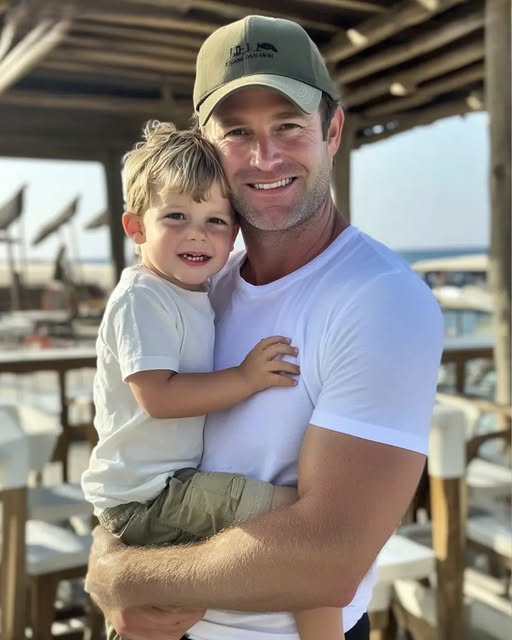
Grief hit me like a freight train, arriving far too early in my life. At just 34 years old, I found myself suddenly a widower, grappling not only with the emptiness left by the death of my wife Stacey but also with the responsibility of raising our five-year-old son, Luke. Stacey had passed just two months earlier, taken from us in what everyone called a sudden and tragic accident. I still remembered the last time I kissed her goodbye, the faint scent of lavender clinging to her chestnut hair, the softness of her cheek against mine. A few hours later, a phone call from her father shattered the fragile illusion of safety I had left.
“She’s gone,” he said, his voice breaking, yet somehow detached.
I was in Seattle at the time, attending a work conference, when the call came. Words failed me. I could barely process them. “No… that’s impossible,” I whispered into the receiver, clinging to denial for as long as I could. But the cruel reality set in fast. Stacey had been killed in a car accident—a drunk driver, they said. Just like that, my world stopped spinning. I boarded the next flight home in a daze, barely able to comprehend walking into our empty house. Her parents had already arranged the funeral.
“We didn’t want to wait,” her mother said, avoiding my gaze. “It was better this way.”
I was too numb to argue, too crushed to protest. The chance to say goodbye, to hold her one last time, had been stolen from me. Grief, I realized, wasn’t just an emotion; it was a fog that clouded every thought, every decision, and every movement.
Two months later, the house felt like a mausoleum. Stacey’s clothes hung untouched in the closet, and her favorite mug sat lonely by the sink, a silent witness to her absence. Luke struggled, too, grappling with a reality far too heavy for his age. Every innocent question about why Mommy couldn’t come home pierced my heart.
“She can’t talk to us anymore, buddy. Mommy’s in heaven now,” I whispered, forcing a calm I didn’t feel.
The walls of the house seemed to close in, filled with memories and echoes of laughter that no longer existed. Desperate to escape, I suggested a beach trip—a few days away from the constant reminders of loss. Luke’s face lit up for the first time in weeks, and we packed our bags with a fragile hope that the sun, the sand, and the sound of waves might provide a small sense of healing.
The first days were filled with the simple joys of the beach: building sandcastles, collecting seashells, and laughing at the way the waves soaked our feet. For a fleeting moment, I allowed myself to believe we could move forward, even if just slightly. But on the third day, that fragile illusion shattered.
Luke came running toward me, his small face glowing with excitement.
“Dad! Look! Mom’s back!”
My stomach dropped. I turned, following his pointing finger, and there she stood. Her back to us at first, the familiar chestnut hair and height of my wife made my heart leap in disbelief. As she slowly turned around, my mind refused to accept the truth.
It was Stacey.
Her eyes met mine briefly before she grabbed the arm of a man beside her and disappeared into the crowd. Shock immobilized me. How could this be? Had I buried my wife—or had I been deceived in the cruelest way possible? That night, I called Stacey’s mother, demanding answers. Her explanation was cold and vague: her body had been too damaged to view, they had told me, and I had believed them. I had mourned the impossible, trusting what I thought was fact.
The next morning, I scoured the beach, desperate for any trace of Stacey. Hours passed, each one heavier than the last, until a voice I knew all too well spoke behind me.
“I knew you’d look for me,” Stacey said.
This time she stood alone, but there was a coldness in her eyes, a distance that hadn’t been there before.
“How?” I managed to choke out, the word small against the tidal wave of betrayal.
She confessed. An affair. A pregnancy that wasn’t mine. And with the help of her parents, she had faked her death. “We thought it was best,” she said, tears streaking her face, but the words cut deeper than any blade. Months of grief, of sleepless nights comforting Luke, of navigating a life that felt hollow—all a lie.
Luke, unaware of the conversation between adults, ran up at that moment.
“Mommy?”
His voice, innocent and trusting, broke me anew. I scooped him into my arms, shielding him from the devastating truth for as long as I could. Back in our hotel room, he bombarded me with questions, his small voice trembling. How could I possibly explain that his mother had abandoned us under the guise of tragedy?
“Luke,” I whispered, holding him tight, “I love you enough for both of us. You’ll always have me, buddy.”
In the weeks that followed, I sought legal counsel and secured full custody of Luke. Stacey made no move to contest, and a gag order prevented her from publicly discussing her deception. Sitting in my lawyer’s office to sign the final documents, I felt a quiet resolve settle over me. The law recognized me as Luke’s sole guardian; the woman I had loved, however, was gone forever.
We relocated to a new city, seeking a fresh start. The healing was slow, but each day, Luke’s laughter grew a little louder, our routines a little steadier. One afternoon, I received a message from Stacey, begging for another chance to reconnect with Luke. My finger hovered over the screen before I deleted it. Some bridges, once burned, can never be rebuilt.
I turned to Luke, pulling him close.
“I love you, buddy,” I whispered.
“I love you too, Daddy,” he replied, smiling.
In that moment, I knew we would be okay. We had each other, and that was all that mattered. Some endings aren’t what we expect, but they open the door to new beginnings. Our life, though fractured, was ours to rebuild—and this time, nothing could take us apart.