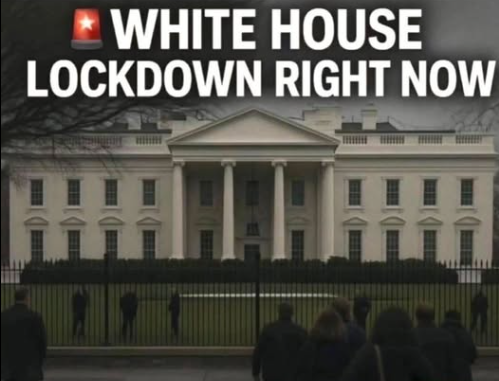
Hundreds of voices rose into the chilly Washington night, and none of them sounded safe. What had begun as reports of U.S. military action — including airstrikes in Venezuela and the capture of Venezuelan President Nicolás Maduro and his wife by U.S. forces — had quickly escalated fear into fury across the nation and around the world. A moment that might once have been discussed in terms of strategy and legality had instead turned into something raw, chaotic, and deeply personal for millions.
Protesters pressed against barricades, their breath visible in the cold air, chanting not for victory or triumph, but for limits — for legal boundaries, souverignty, and a democratic line that they feared had been crossed. Was this justice for alleged criminal conduct, or the rehearsal of something far darker? The question hung heavy in the air.
People carried cardboard signs, their messages both simple and conflicted. Many in the crowd despised Maduro’s authoritarian leadership and welcomed accountability for years of alleged abuses and corruption. Maduro had been indicted in the United States on charges including narcoterrorism and drug trafficking — serious accusations that the U.S. government argued justified action beyond traditional diplomacy.
Yet, even among those who opposed Maduro’s regime, there was palpable unease about how the capture unfolded. This wasn’t a distant vote or economic sanction; it was an unilateral military strike on a sovereign nation without clear international or congressional authorization, aimed at removing its leader. Critics pointed to warnings from legal experts who argued that such an operation stretched or even violated constitutional war powers and international law.
The protesters outside the White House were not chanting support for any political leader. They were chanting for restraint — for limits on executive authority, for respect for sovereignty, and for a America that abides by its own laws and long‑standing global norms. Signs read “Congress Decides War,” “Sovereignty Matters,” and “No Empire.” Their voices rose with a blend of uncertainty, anger, and concern.
Supporters of the U.S. action argued that Maduro’s long tenure had been marked by repression and economic collapse, and that years of diplomatic pressure had failed to produce change. They saw the operation as overdue accountability for abuses and a step — however controversial — toward ending decades of corruption and hardship in Venezuela.
But critics — legal scholars, human rights advocates, and foreign governments — saw something else: a dangerous precedent. If one presidency could unilaterally order airstrikes and remove the head of another nation without international mandate or congressional approval, what would stop future leaders from applying that same authority elsewhere, from Latin America to Asia and beyond? Would this moment weaken the very democratic safeguards the U.S. claims to uphold?
Across world capitals, reactions were swift and sharply divided. Mexico, Colombia, Brazil, and the EU urged restraint and respect for international law, warning that forced intervention risked regional instability and a humanitarian crisis. The United Nations echoed those concerns, calling for de‑escalation and adherence to the UN Charter’s prohibition against the threat or use of force absent Security Council authorization.
Meanwhile, Russia and China condemned the operation as a blatant violation of sovereignty, accusing the United States of hegemonic behavior that undermines global peace and security. Their statements reflected a broader geopolitical tension over influence in Latin America — tensions that extend well beyond the borders of Venezuela itself.
Amid the political and diplomatic storm, the streets of Washington remained filled with voices that did not feel safe. This was no longer just a protest about foreign policy; it was a protest about trust — trust in the rule of law, trust in democratic processes, and trust in a system that had long held war powers as something too significant to be exercised without visible consent.
By nightfall, nothing had been resolved: not the legality, not the morality, not the broader cost of the decision. What remained, echoing through the darkened streets of the capital, was one unsettling question that refused to be quieted — how much power can a presidency claim before the principles of democracy, restraint, and international respect no longer recoil?