The moment didn’t just divide a political party.
It cracked open a deeper argument about power, responsibility, and the messy reality of governing.
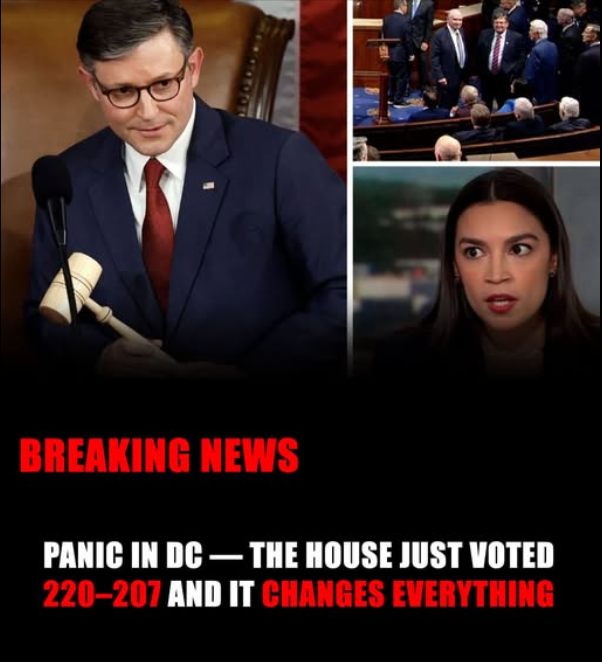
In the glare of cameras and with grieving families watching from the sidelines, seven Democrats cast votes that many in their own party had insisted would never happen. They voted to support a funding package that included money for U.S. immigration enforcement—specifically the agency known as ICE, part of the Department of Homeland Security.
For months, party leaders and activists had treated the issue as a moral line that could not be crossed. Funding the agency, critics argued, meant enabling policies and actions that many voters on the left strongly opposed. The message from progressive voices had been clear: this was supposed to be non-negotiable.
And yet, when the vote arrived, the line moved.
The decision stunned many activists and enraged parts of the Democratic base. But inside Congress, the story was more complicated. The bill itself was tied to a broader fight over government funding and the possibility of a shutdown. The House ultimately passed the measure with only a narrow margin, and those seven Democratic votes helped push it across the finish line.
For the lawmakers who voted yes, the decision was not made in ignorance. They understood exactly what the consequences might be.
They knew they would be criticized by their own supporters.
They knew activists would accuse them of betrayal.
They knew the vote would be remembered.
But they also knew something else: if the bill failed, a government shutdown could spread through parts of the federal system, affecting workers, airports, and public services.
So they made a choice that many politicians quietly fear but occasionally must face—the choice between ideological purity and practical governance.
In their view, the question wasn’t simply about ICE.
It was about whether the government should keep functioning while the fight over immigration policy continued.
Some of them framed the decision bluntly afterward. The vote, they said, wasn’t pretty. It wasn’t satisfying. But it was necessary.
They chose airports over absolutes.
Paychecks over protest.
The imperfect machinery of government over symbolic defiance.
And in doing so, they exposed something their party has struggled with for years.
Political promises often sound absolute. Words like never, no compromise, and draw the line are powerful tools for rallying supporters. But in Washington, those promises eventually collide with complicated realities—budget deadlines, legislative procedures, and the simple arithmetic of votes.
Sooner or later, every “never” meets a “but what if.”
The seven Democrats who crossed that line represented districts where elections are often close and political survival requires navigating both sides of the ideological divide. For them, the calculation was not purely philosophical—it was also strategic.
If the government shut down, they feared voters might punish them for chaos rather than reward them for standing firm.
Still, the backlash from activists was immediate.
For many progressives, the vote felt like a betrayal of principle. Immigration enforcement had become a defining moral issue within parts of the Democratic coalition, especially after controversial incidents involving federal agents and protests in cities like Minneapolis.
From that perspective, any vote that allowed continued funding looked like a retreat.
But inside Congress, the rebellion did something larger than simply passing a bill.
It changed the argument.
Before the vote, many Democrats framed the debate as a clear moral boundary: the party would not support funding unless major reforms were included. After the vote, that boundary looked less permanent.
By acknowledging publicly that the decision was “ugly” yet unavoidable, the lawmakers introduced a new tension into the debate—one between moral clarity and material urgency.
Principles remained important.
But practical consequences—like government shutdowns and unpaid workers—suddenly carried equal weight.
And once that shift happens in politics, it rarely disappears.
Even though the Senate still had the power to reshape or block the legislation, the symbolic barrier had already cracked. The precedent now existed. Future lawmakers facing similar dilemmas could point back to this moment and argue that compromise had already happened once before.
That’s why the reaction inside the party was so intense.
The anger wasn’t only about those seven names.
It was about what their decision made possible.
Political lines that once seemed immovable now looked negotiable.
And in Washington, when a line moves once, people begin to wonder how far it might move the next time.