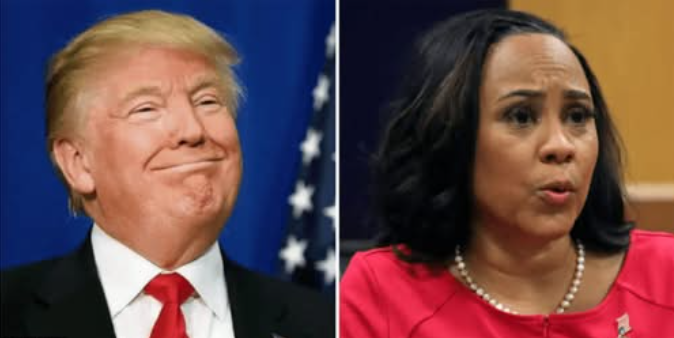
The judge’s order did not arrive quietly. It landed with the force of a hammer strike, echoing far beyond the courtroom and sending shockwaves through Georgia’s legal and political landscape. Fulton County District Attorney Fani Willis, already removed from overseeing the Trump election interference case, has now been ordered to pay tens of thousands of dollars for violating Georgia’s Open Records law. What had once been whispered behind closed doors—claims of secrecy, favoritism, retaliation, and misuse of power—has now been dragged fully into the open under judicial scrutiny.
This ruling marks a significant turning point. Willis is no longer just facing criticism from political opponents or defense attorneys; she is confronting a formal rebuke from the court itself. The judge concluded that her office failed to comply with basic transparency requirements, showing what was described as “open hostility” and a “lack of good faith” toward defense attorney Ashleigh Merchant. The financial penalty—more than $54,000 in attorney fees—is substantial, but the reputational damage may be far greater. It represents an official acknowledgment that the district attorney’s office violated the very laws designed to ensure accountability and public trust in government institutions.
For Willis, the timing could not be worse. This order comes as her once-historic prosecution of former President Donald Trump continues to unravel. Her disqualification from the case, based on the “appearance of impropriety” surrounding her relationship with former special prosecutor Nathan Wade, has left the prosecution directionless and politically volatile. What was once framed as a landmark effort to uphold democratic norms now stands on unstable ground, burdened by ethical questions and procedural setbacks.
The judge’s language in the Open Records ruling cuts particularly deep because it clashes sharply with Willis’ public persona. She has long positioned herself as a fearless advocate for transparency, accountability, and the rule of law—someone willing to confront powerful figures without hesitation. Yet the court’s findings suggest behavior that runs counter to those principles, painting a picture of an office resistant to oversight and dismissive of its legal obligations.
Meanwhile, the political consequences continue to compound. The Georgia Senate is now moving forward with mechanisms that could allow Trump’s legal team to seek reimbursement of costs if the prosecution ultimately collapses. That possibility further shifts the narrative. Instead of being the prosecutor holding powerful defendants to account, Willis now finds herself defending her own decisions, her management of the case, and her professional credibility.
What once dominated national headlines as a bold legal challenge has transformed into a cautionary tale about prosecutorial conduct and institutional restraint. Every new ruling adds weight to the perception that the case has become compromised—not only by its political implications, but by the actions of those tasked with pursuing it.
Fani Willis now stands at the center of a dual crisis. On one front, a high-profile prosecution is faltering under ethical and procedural strain. On the other, a court has delivered a clear, documented judgment that her office violated transparency laws and acted improperly toward a defense attorney. Together, these developments place her career, her office, and the future of the Trump election case in serious jeopardy.
The irony is difficult to ignore. A prosecutor who built her reputation on enforcing accountability now faces mounting questions about her own adherence to the standards she championed. As legal challenges continue and political scrutiny intensifies, the outcome may reshape not only this case, but broader public trust in how justice is pursued when politics and power collide.