In the intricate and relentless theater of human biology, few nutrients hold the quiet authority that Vitamin B12 does. Known to scientists as cobalamin, it is an unsung linchpin of life, a chemical conductor orchestrating multiple systems at once. Without it, the body falters, yet its absence rarely announces itself with fanfare. Instead, the deficiency creeps in quietly, a “bruised darkness” in the veins of modern life, manifesting as fatigue, cognitive lapses, or subtle neurological disturbances that are easily misread as stress, overwork, or aging. By March 2026, medical professionals are increasingly sounding alarms about the growing prevalence of this nutritional crisis. While we chase the next superfood or wellness trend, many overlook the simple reality that cobalamin is indispensable to red blood cell production, DNA synthesis, and the preservation of the central nervous system—the very architecture that keeps our bodies running efficiently. Because the human body cannot synthesize B12 independently, our health is a shared pilgrimage between diet, digestion, and the complex interplay of gut microbiota, all of which must cooperate to prevent deficiency.
The Hidden Paradox: Essential Yet Elusive
B12 is deceptively abundant in function yet elusive in availability. As we age, the body’s ability to absorb this essential vitamin diminishes. Hydrochloric acid and intrinsic factor, the two critical components secreted in the stomach to liberate and transport B12 into the bloodstream, naturally decline with time. For adults over 50, this subtle physiological shift can mark the beginning of what researchers in 2026 have called the “silent erosion” of nutritional vitality. Borderline deficiency may affect a substantial fraction of the global population, leaving individuals trapped in a liminal state where the body’s early warning signals are muted, misdiagnosed, or ignored. What begins as a creeping exhaustion or slight cognitive fog can escalate into a systemic problem with profound consequences for every organ system.
The Fatigue Factor: Energy as a Scarce Commodity
Perhaps the most insidious manifestation of B12 deficiency is fatigue—a lethargy that sleep, caffeine, or willpower cannot overcome. In a society conditioned to glorify constant activity, the difference between ordinary tiredness and B12-driven exhaustion is subtle but crucial. Megaloblastic anemia, the hallmark hematologic outcome of deficiency, produces red blood cells that are oversized and structurally compromised. Their primary function—oxygen delivery—is impaired, leaving muscles, organs, and especially the brain chronically hypoxic. The effect is a weighted fog over the mind, slowing recall, dampening attention, and blurring emotional responsiveness. In severe cases, patients describe their own energy as if tethered to an anchor, dragging them through hours that should be effortless. Simple tasks—grocery shopping, climbing stairs, even reading a single chapter—become monumental, a stark reminder that energy is not merely willpower, but a chemical product dependent on cobalamin’s presence.
Visible Consequences: When the Body Speaks
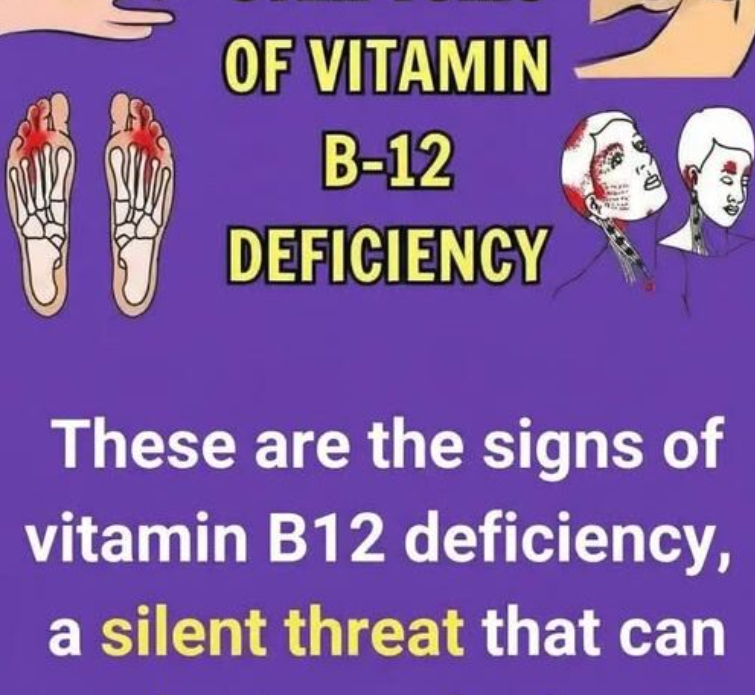
B12 deficiency does not remain purely internal; it eventually manifests visibly, a silent protest on the surface of the body. Bilirubin accumulation, caused by premature breakdown of fragile red blood cells, can tint the skin and sclera with a faint yellow hue. More pronounced physical signs appear as glossitis, where the tongue loses its characteristic papillae, taking on a smooth, fiery red texture accompanied by discomfort or taste distortion. Patients may also experience subtle tremors, balance disturbances, or a pins-and-needles sensation in extremities as the myelin sheath protecting neurons deteriorates. Neurological compromise can extend to vision, mood regulation, and fine motor control. In this sense, B12 deficiency is not merely a “dietary issue”—it is a full-spectrum assault on the body’s communication networks, leaving individuals isolated in their own physical and cognitive decline.
The Multifaceted Causes: Diet, Digestion, and Disruption
The reasons for this deficiency are as varied as the affected population. Restrictive diets such as long-term veganism or vegetarianism without supplementation are well-known culprits, but more often, the problem lies in absorption rather than intake. Gastrointestinal disorders, including Crohn’s disease, Celiac disease, and atrophic gastritis, compromise the integrity of the digestive tract, reducing the body’s ability to extract B12 from consumed foods. Medications frequently prescribed in 2026—proton pump inhibitors, H2 blockers, or metformin—can inadvertently disrupt the absorption process, creating gaps in nutrition that accumulate over years without noticeable symptoms. The modern human’s “shared, trembling pilgrimage” with cobalamin is not simply about eating the right foods, but about maintaining a digestive environment capable of extracting the vitamin efficiently.
Food Sources: Bioavailability Matters
For those consuming animal-based products, options remain robust: fish, poultry, lean meats, eggs, and dairy offer highly bioavailable cobalamin. For the plant-based consumer, 2026 provides a growing array of fortified products—from cereals to nut milks—but not all forms are equally effective. Methylcobalamin and adenosylcobalamin supplements provide the most direct route to physiological restoration, bypassing potential digestive roadblocks. Nutritionists increasingly emphasize that a diverse gut microbiome—cultivated through fiber-rich foods and prebiotics—augments B12 absorption, highlighting the interplay between digestive health and micronutrient status as a vital, often overlooked piece of the wellness puzzle.
The Path to Detection: Bloodwork and Professional Guidance
The first step toward recovery is diagnosis. Because B12 deficiency mimics a range of conditions—from hypothyroidism to depression—blood testing is essential. Serum cobalamin, methylmalonic acid, and homocysteine levels provide a multidimensional assessment, allowing healthcare providers to distinguish a subtle deficiency from unrelated fatigue. Only through such rigorous evaluation can patients receive targeted therapy: oral supplementation, sublingual formulations, or intramuscular injections. This “measured leadership” in care ensures recovery is not left to chance, but guided by evidence and ongoing monitoring.
The Reward of Restoration: Reclaiming Vitality
Restoration of B12 levels can produce what patients often describe as a near-immediate transformation. Fatigue lifts, cognitive clarity returns, and the world regains its vibrancy. Muscles regain endurance, mood stabilizes, and the nervous system gradually resumes optimal function. The subtle signals of deficiency—once a persistent hum of vulnerability—are replaced by a renewed sense of energy and agency. The body, long neglected at a cellular level, rewards those who listen and respond with meticulous care.
The Vigilance of Vitality: Beyond Supplements
Vitamin B12’s story is ultimately one of vigilance, patience, and respect for the body’s hidden chemistry. It is a reminder that health is not merely the absence of disease, but the active maintenance of the biochemical infrastructure that supports daily life. Acknowledging fatigue, cognitive slowing, or neuropathic discomfort is not weakness; it is an invitation to act, to re-engage with the foundational elements of human physiology. As we move through 2026, the imperative is clear: cultivate dietary mindfulness, support gut health, seek timely diagnosis, and honor the subtle signals that our bodies provide. Only then can we sustain our “output,” maintain our resilience, and traverse the shared pilgrimage of life with clarity, energy, and a deep appreciation for the silent giants at work within us.