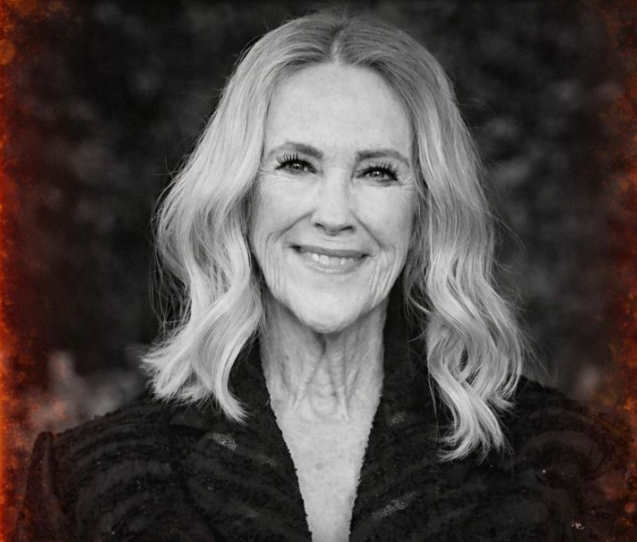
Catherine O’Hara is gone, and the silence she leaves behind is almost physically painful. It is the kind of quiet that presses against the chest, heavy with absence, as if the air itself mourns a presence that once made the world brighter. Fans, friends, colleagues, and generations who grew up laughing at her genius are grappling with a sense of loss that feels impossible to articulate. From the stages of Toronto’s theaters in the 1970s, through the improvisational crucibles of SCTV, and into the homes of families worldwide through her films and television, Catherine’s career was a remarkable string of risks, reinventions, and quietly radical choices. She never took the easy path, never sought fleeting approval, and never allowed the noise of industry trends to dictate the course of her talent. What she refused, what she embraced, and what she left behind now forms a legacy that will echo for decades, long after the spotlight has dimmed.
Her story was never simply a list of successes, though the successes themselves are monumental: SCTV, a groundbreaking sketch series that showcased her versatility and fearless comedic timing; Beetlejuice, where her wit and precision brought nuance to the bizarre and grotesque; Home Alone, a touchstone of holiday cinema; Best in Show, a masterclass in subtle, deadpan comedy; and Schitt’s Creek, where she became the matriarch whose emotional depth and comedic precision carried a generation of viewers into the world of absurdity and tenderness. But the true measure of Catherine O’Hara was not merely the iconic characters she embodied or the awards she garnered—it was the way she moved through these roles, deliberate, almost stubborn in her refusal to compromise her instincts. She turned down projects that did not align with her sensibilities, choosing instead to invest her genius only in work that resonated deeply, work she could live with long after the applause faded. In a world that often demands conformity, Catherine’s art was an act of courage, a statement that authenticity, above all, mattered more than visibility.
Offscreen, her life was equally remarkable, though it rarely made the headlines that celebrated her professional accomplishments. She cultivated a private universe that mirrored the grace and warmth she exuded in her best work. Her decades-long marriage to Bo Welch was a quiet testament to devotion and partnership, built not on grand gestures but on mutual respect, humor, and enduring companionship. Together, they raised two sons, nurturing them with the kind of grounded love that often contrasts sharply with the chaos of Hollywood. Within the walls of their home, disagreements were tempered with laughter, frustrations softened with gentle jokes, and everyday moments were approached with the same subtle intelligence and whimsy that Catherine brought to her performances. She managed to embody, in her personal life, a kind of serenity that seemed impossible for someone who could unleash such intensity, absurdity, and brilliance on screen.
What made Catherine so beloved was this very duality—the contrast between the heightened, often insane characters she inhabited and the grounded, wistful, self-effacing woman she was offstage. She allowed audiences to witness the full spectrum of human emotion: joy and melancholy, absurdity and depth, laughter that bubbled up from the soul alongside quiet vulnerability. That balance, that ability to make laughter inseparable from feeling, was her gift. It is why, even decades after her earliest performances, her work resonates with a raw immediacy, a timeless relevance that continues to inspire actors, comedians, and audiences alike. Her performances never felt forced; they felt lived, inhabited, and, above all, truthful.
Catherine’s impact was not only in the roles she played, but in the ethos she cultivated around her craft. She demonstrated that comedy was not merely about timing or delivery; it was about intelligence, empathy, and an unwavering commitment to seeing the world in all its absurdity and beauty. Her colleagues often remarked on her generosity—the way she lifted fellow performers, encouraged improvisation, and created a space in which creativity could flourish without ego. She believed that the work was bigger than any individual, yet she approached it with a meticulous care that turned every line, every pause, every gesture into something unforgettable. The legacy she leaves is a blueprint for artistic integrity, showing that one can achieve greatness not through compromise, but through dedication to authenticity and fearless self-expression.
Even in her absence, the lessons of her life ripple outward. She taught that the most enduring joy comes not from applause, but from the act of fully inhabiting a moment, of embracing both absurdity and vulnerability. She reminded us that the deepest humor is inseparable from empathy, and that art’s true power is its ability to make us see ourselves more clearly, to laugh, to cry, and to feel deeply. Catherine O’Hara did not merely entertain; she illuminated the human condition with precision, warmth, and irrepressible wit. Her work, both monumental and intimate, remains a testament to the heights of what it means to combine intellect, heart, and humor.
Now, as tributes pour in from every corner of the globe—actors she inspired, fans she delighted, writers she collaborated with—it becomes abundantly clear that Catherine O’Hara’s greatest legacy cannot be measured in awards, box office numbers, or iconic catchphrases. Her legacy is the enduring reminder that feeling deeply and laughing loudly are not separate acts but part of a single, necessary human expression. In a world too often divided between gravity and levity, she taught us that they can coexist beautifully, and that one can live with dignity, intelligence, and an unfailing sense of joy.
Catherine O’Hara’s passing leaves a silence that is both personal and collective. It is the hush of someone who changed the way we perceive humor, depth, and art itself. Her absence is felt not just by those who knew her personally, but by the millions who grew up with her voice, her timing, her heart. Yet even in this silence, her spirit speaks—through the laughter she sparked, the performances she perfected, the generations she influenced, and the quiet, steadfast example she set of a life lived on one’s own terms. The world has lost a force of unparalleled brilliance, yet the echoes of her genius will continue to resonate in every corner where humor, heart, and integrity meet.
Catherine O’Hara didn’t simply make us laugh. She made us feel, deeply and completely. She made us recognize the absurdity and the beauty of existence, often in the same breath. And now, in the absence she leaves behind, we are reminded of how rare, how precious, and how transformative it is to live a life so fully, so wisely, and so fearlessly. Her work remains, her laughter lingers, and her legacy—immeasurable in both scope and spirit—will continue to guide, inspire, and comfort for generations to come.