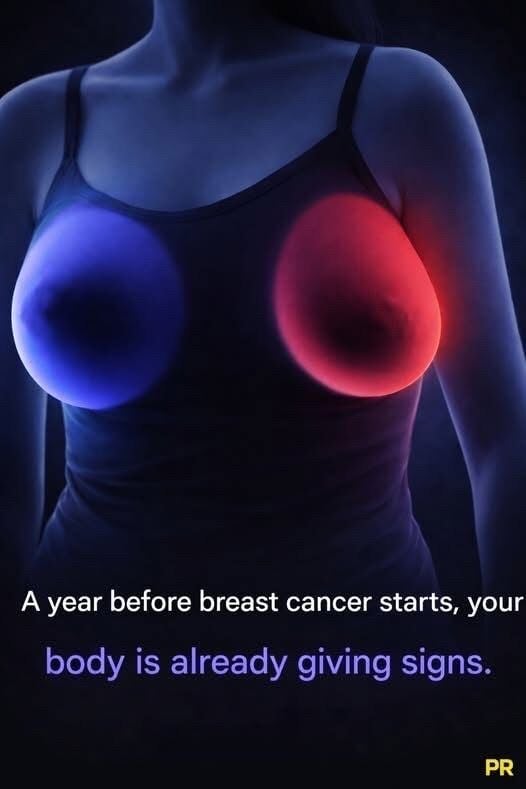
Your body rarely begins with screams. Most serious illnesses arrive quietly first — through whispers, subtle shifts, and small physical changes that are easy to dismiss when life is busy or fear makes denial feel easier than attention. A slight thickening beneath the skin. A strange tenderness that lingers longer than usual. A lump that feels different but doesn’t hurt. A faint discharge that appears once and then disappears again. These things often seem too minor to matter. People explain them away with stress, hormones, aging, or exhaustion. But sometimes, those “small changes” are the body’s earliest warning signs that something far more serious may already be developing beneath the surface.
Breast tissue and the surrounding areas can reveal problems long before illness becomes obvious anywhere else. That’s what makes these signs both frightening and incredibly important. By the time pain, severe fatigue, or visible sickness appear, a condition may already have progressed significantly. Early changes, however subtle, are often the body’s first opportunity to ask for attention before the situation becomes harder to treat.
One of the most common warning signs people notice is a lump — either inside the breast itself or in the armpit area where lymph nodes are located. Not every lump is dangerous. Many are caused by hormonal changes, cysts, or benign growths. But a firm lump that feels fixed in place, continues growing, or refuses to disappear should never simply be ignored and forgotten. The same is true for swelling beneath the arm that appears without infection or injury. Sometimes these changes are painless, which makes them even easier to overlook. Yet pain is not required for something serious to exist.
The skin itself can also begin changing in ways that seem almost insignificant at first. A patch of redness that doesn’t fade. Thickening skin that feels heavier or tighter than normal. Small dimples or puckering that make the surface resemble the texture of an orange peel. Changes like these can occur gradually enough that people stop noticing them day by day until suddenly the difference becomes undeniable. In some cases, the breast may change shape, size, or symmetry in subtle ways that are difficult to explain.
Nipple changes deserve attention too, especially when they are new or isolated to one side. Discharge that appears unexpectedly — particularly if bloody, clear, or persistent — should always be evaluated medically rather than assumed harmless. Inversion of the nipple, scaling of the skin around it, or irritation that doesn’t heal can also signal deeper issues developing inside the breast tissue.
Perhaps one of the most dangerous assumptions people make is believing that absence of severe pain means absence of danger. But breast disease, including cancer, often develops silently in early stages. Many people who later receive serious diagnoses initially describe their symptoms as “small,” “weird,” or “probably nothing.” That uncertainty is exactly why medical evaluation matters so much.
Fear causes many people to delay seeking help. Some worry they are overreacting. Others are terrified of what testing might reveal. But avoiding information does not stop a condition from progressing. It only delays the moment clarity arrives. And in medicine, time often matters more than people realize.
That’s why screenings and examinations are so powerful. Clinical breast exams, ultrasounds, mammograms, and biopsies when necessary transform uncertainty into answers. They replace silent fear with evidence. Many abnormalities turn out to be benign, treatable, or far less dangerous than imagined. But when serious conditions are found early, treatment options are often more effective, less invasive, and far more successful than when disease is discovered late.
Monthly self-examinations also play an important role, not because they replace professional care, but because they help people understand what is normal for their own bodies. Breasts naturally change during hormonal cycles and throughout aging, so familiarity matters. The better someone knows their normal baseline, the easier it becomes to notice when something genuinely feels different.
Around the age of forty, regular mammograms become especially important for many women because imaging can detect abnormalities long before they can be physically felt. In some cases, screening identifies issues years before symptoms would otherwise appear. That window of early detection can save lives.
Lifestyle choices matter too. Maintaining a healthy weight, limiting alcohol, staying physically active, and avoiding smoking all contribute to reducing overall cancer risk. But even healthy people with no family history can still develop breast disease, which is why awareness should never depend entirely on perceived risk.
Most importantly, paying attention to your body is not paranoia or weakness.
It is self-respect.
The body often warns us quietly before it cries out loudly. A strange lump. Persistent swelling. A subtle skin change. An unusual discharge. These signs may ultimately turn out to be harmless — but only proper medical evaluation can determine that with certainty.
Ignoring them does not make them disappear.
Sometimes the single most life-changing decision a person makes is simply choosing to stop dismissing what their body has already been trying to say.