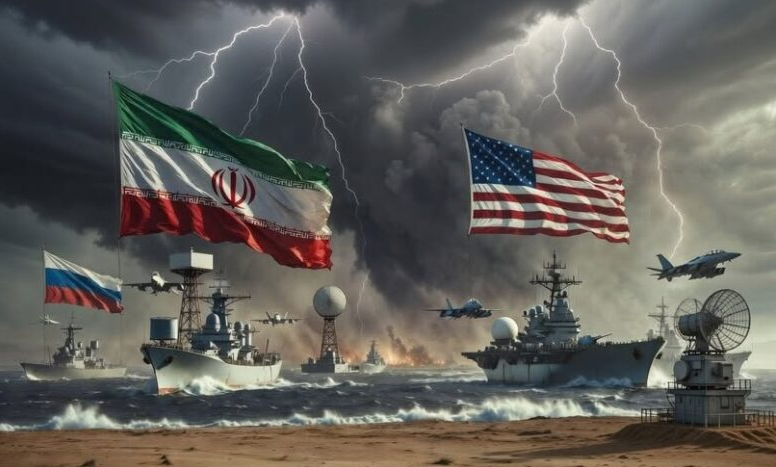
The Middle East’s geopolitical environment has entered a period of acute tension following reports from senior U.S. officials that Russia is actively providing Iran with highly sensitive intelligence on the movements and positions of American military assets. According to sources within the defense and intelligence communities, this information includes precise locations of U.S. warships, aircraft carriers, and advanced radar systems across the region. By delivering this real-time data, Russia is effectively enhancing Iran’s situational awareness, giving Tehran a level of operational insight that was previously unattainable.
For Iran, which has historically relied on its own reconnaissance capabilities and regional proxies, this assistance acts as a force multiplier. Russian satellite imagery and signal intelligence enable Tehran to circumvent some of the electronic warfare and stealth measures the U.S. employs, reducing uncertainty and improving the potential effectiveness of provocative maneuvers or planned strikes. Analysts suggest this marks a strategic shift: Russia is engaging indirectly in Middle Eastern conflicts, exerting pressure on U.S. foreign policy without committing its own forces, while preserving plausible deniability.
The implications for U.S. personnel are immediate and serious. Commanders must now operate under heightened alert, frequently changing positions, deploying decoys, and ramping up electronic countermeasures. The margin for error has narrowed; a misstep triggered by Russian-supplied intelligence could escalate into a direct confrontation with catastrophic consequences.
Interestingly, China’s approach contrasts sharply with Russia’s. While Beijing maintains strong economic and diplomatic ties with Iran, there is no evidence it is providing tactical or military intelligence. China’s priority appears to be regional stability, ensuring uninterrupted energy imports and secure trade routes, whereas Russia benefits strategically from regional disruption. This divergence highlights fractures among global powers often perceived as a unified opposition to U.S. interests.
The U.S. response is multifaceted. The State Department and Pentagon are weighing options, from sanctions targeting Russian and Iranian entities involved in the intelligence sharing to public exposure of the collaboration to increase diplomatic pressure on Moscow. Congressional discussions focus on equipping the U.S. Navy with more advanced counter-reconnaissance technology to “blind” tracking systems. Meanwhile, heightened monitoring and vigilance aim to preempt any immediate threats from Iranian-backed groups.
This intelligence leak also strains the delicate diplomatic balance in the Gulf. U.S. allies are closely observing how Washington addresses the breach. Any perceived inability to secure intelligence could embolden Iran and prompt regional partners to reassess their own security strategies. Each Russian data point potentially fuels a more aggressive Iranian posture, which in turn demands a calibrated U.S. response—creating a feedback loop of instability.
Behind the scenes, the U.S. intelligence community is racing to trace the channels of this data flow, whether through military-to-military links or covert cyber-infrastructure. Disrupting these channels or feeding misinformation could neutralize Iran’s tactical advantage. However, as long as Moscow views the Middle East as a lever to distract and drain U.S. resources, the incentive to continue supplying intelligence remains strong.
This situation underscores the “unfiltered truth” of modern geopolitics: in the digital age, a line of code or satellite coordinate can be as consequential as a missile. The revelation that Russia is acting as an intelligence enabler for Iran reshapes the rules of engagement, turning what was once a regional conflict into a global contest where information is the most critical currency. U.S. strategy must now balance the physical protection of forces with the digital security of its intelligence.
As 2026 progresses, the environment remains volatile. The shockwaves in Washington and the public anxiety generated by these reports highlight the stakes. U.S. policy aims to restore deterrence and discourage such high-risk collaborations, whether through diplomatic pressure, technological innovation, or strategic displays of force. Maintaining security in this contested space is an ongoing challenge, requiring vigilance, adaptability, and a comprehensive approach to national defense.