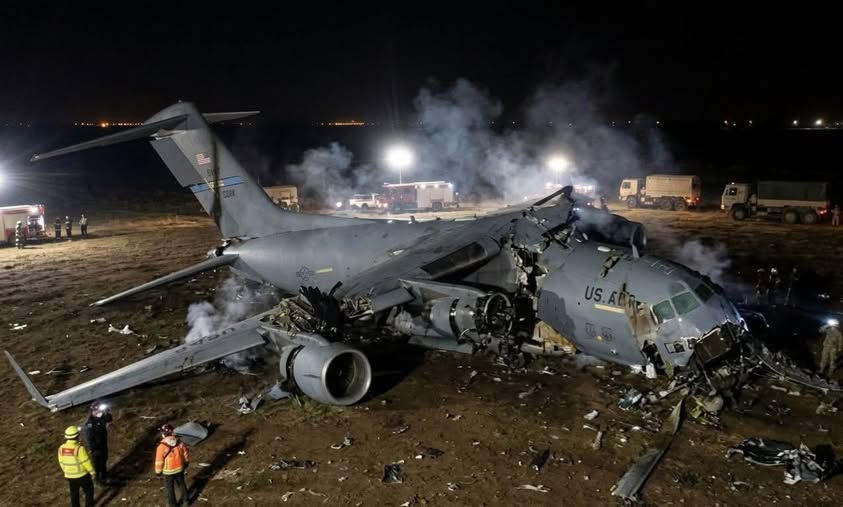
A tragic aviation incident has shaken military operations in the Middle East after a United States military aircraft crashed in Iraq, resulting in the confirmed deaths of four people. The accident occurred during what officials described as a routine mission, according to early statements from defense authorities. The sudden loss of the aircraft immediately triggered an emergency response, with rescue teams and military units rushing to the crash site while officials began gathering information to understand what had happened.
According to the first reports released by U.S. defense officials, the aircraft had been carrying out a standard operational task when communication with the crew was suddenly lost. Within minutes of losing contact, military command centers began coordinating a search operation to locate the aircraft. Emergency response teams were deployed to the area where the aircraft was last detected, and additional military resources were mobilized to assist with the recovery effort. The incident quickly drew attention from military leadership because aviation missions in active operational zones require constant coordination and safety monitoring.
Early information suggests that the aircraft went down in a remote and difficult-to-access area of Iraq. This location complicated rescue and recovery efforts, as the terrain required specialized teams and equipment to reach the crash site safely. Military personnel, along with local emergency responders, were sent to the scene as soon as possible after contact with the aircraft was lost. Helicopters and ground units were reportedly used in the search operation in order to locate the wreckage quickly. Despite the urgency of the response and the efforts of the teams involved, officials later confirmed the tragic news that four individuals who had been onboard the aircraft did not survive the crash.
Authorities have not yet released the identities of the victims, as military protocol requires that the families of those involved be notified first before any names are made public. Military officials stated that informing the next of kin is handled with great care and respect, ensuring that families receive the news privately before it becomes part of public reports. In the meantime, commanders and military representatives have expressed deep sympathy and condolences to the families and loved ones of those who lost their lives in the accident. The military community has also acknowledged the sacrifice and dedication of the individuals who were serving during the mission.
At this stage of the investigation, the United States military has not provided full details about the specific type of aircraft involved in the crash. Officials explained that it is standard procedure to wait until investigators gather sufficient evidence before releasing technical information about the aircraft and the circumstances surrounding the accident. Experts are currently examining several possible factors that may have contributed to the crash. These include mechanical failure, unexpected weather conditions, navigational or operational challenges, or other technical issues that may have occurred during the flight.
Military investigators have emphasized that determining the cause of an aviation accident is a complex process that requires careful analysis. It often involves reviewing flight data, communication records, maintenance logs, and the physical condition of the wreckage. Specialists trained in military aviation safety will examine debris from the aircraft and analyze whether any equipment malfunction or structural issue may have occurred. Investigators may also review weather reports from the time of the mission and evaluate whether environmental conditions played a role in the accident.
The loss of the aircraft has deeply affected members of the military community, particularly those serving in the region. Commanders have acknowledged the emotional impact such incidents can have on personnel who work closely together in challenging environments. Military leaders have reiterated that supporting the families of the victims and honoring their service will remain a top priority in the coming days and weeks. Counseling and support services are often made available to fellow service members following tragic incidents like this, helping them cope with the loss of colleagues and friends.
This crash also highlights the risks that military personnel face while carrying out their duties overseas. Even routine missions can involve complex conditions, especially in regions where operations are conducted across large areas with varying terrain and security considerations. Aviation crews are responsible for transporting personnel, delivering equipment, conducting reconnaissance, and supporting operations on the ground. These missions are essential for maintaining coordination and safety for troops stationed in different locations throughout the region.
United States forces continue to maintain a presence in Iraq as part of broader security and stabilization efforts. Their operations include training local forces, providing logistical support, gathering intelligence, and conducting counter-terrorism missions aimed at preventing the resurgence of extremist groups. Aircraft play a crucial role in these operations, allowing military units to move quickly across long distances and maintain communication between bases and operational areas.
Because aviation plays such an important role in military missions, any aircraft accident is taken extremely seriously. The United States military has strict safety procedures designed to investigate crashes thoroughly and identify any lessons that can help prevent future incidents. Following this crash, a formal investigation has been launched by a specialized military accident investigation team. These teams consist of aviation experts, engineers, safety analysts, and operational specialists who work together to determine exactly what happened.
During the investigation, experts will carefully analyze all available evidence. This includes reviewing flight recordings, examining the aircraft’s mechanical components, studying the wreckage pattern, and interviewing personnel who may have been involved in planning or supporting the mission. Investigators will also analyze maintenance records to determine whether the aircraft had any known technical issues before the flight. Each piece of information contributes to building a complete picture of the events that led to the crash.
The findings of such investigations are extremely important because they help the military identify potential safety improvements. If investigators determine that a mechanical issue contributed to the crash, new maintenance procedures or equipment inspections may be introduced. If operational procedures are found to have played a role, training or mission planning protocols could be updated to reduce future risks. These investigations often lead to recommendations designed to protect military personnel and improve aviation safety standards.
In the coming days and weeks, officials are expected to release additional information as the investigation progresses. However, military representatives have emphasized that the process takes time and must be conducted carefully to ensure that conclusions are accurate. Rushing to determine a cause without sufficient evidence could lead to incorrect assumptions, so investigators typically work methodically before presenting their final findings.
United States defense officials have also promised transparency throughout the investigation. While certain operational details may remain confidential for security reasons, authorities have stated that they will share updates as more verified information becomes available. Their goal is not only to understand the cause of the crash but also to maintain accountability and ensure that all necessary steps are taken to prevent similar tragedies in the future.
For now, the focus remains on honoring the individuals who lost their lives in the accident and supporting the families they leave behind. Military leaders have reiterated that the dedication and service of those who died will not be forgotten. Their contributions to their mission and their commitment to duty are recognized as part of the broader efforts carried out by military personnel serving in challenging conditions around the world.
As investigations continue and more details emerge, the incident stands as a solemn reminder of the dangers faced by those who serve in aviation and military operations. Even during routine missions, service members accept significant risks in order to fulfill their responsibilities. The loss of the aircraft and its crew has therefore become a moment of reflection within the military community, reinforcing the importance of safety, vigilance, and respect for those who dedicate their lives to service.