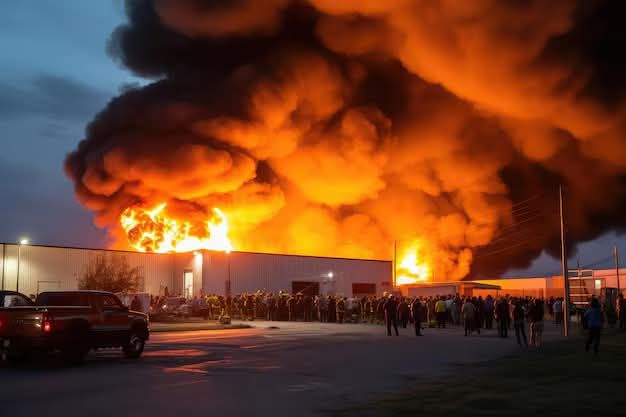
A massive fire ripped through a crowded hillside community in San Juan de Miraflores, south of Lima, on Saturday afternoon, devastating entire blocks and forcing hundreds of residents to flee with almost nothing. Authorities estimate that roughly 300 homes were damaged or completely destroyed, marking one of the most severe residential fires the district has experienced in recent years.
The fire broke out in the Pamplona Alta area, a neighborhood known for its steep slopes and densely packed, largely informal housing. What initially appeared to be a contained incident quickly spiraled out of control. Fueled by strong winds, dry weather, and highly flammable construction materials, the flames spread with alarming speed. Fire jumped effortlessly from one structure to the next, racing through narrow alleyways where access for emergency vehicles was extremely limited.
Residents described terrifying moments as thick, dark smoke engulfed the sky and loud explosions echoed through the hills. Many families had only seconds to react. Parents scooped up children, neighbors screamed warnings, and people ran downhill clutching bags, pets, and whatever possessions they could grab before the fire consumed their homes.
Firefighters from multiple units across Lima were dispatched and battled the blaze for hours under harsh and dangerous conditions. Water supplies were scarce, roads were too narrow for large fire engines, and several areas could only be reached on foot. Despite these challenges, crews worked tirelessly to stop the flames from advancing into nearby neighborhoods.
Although the fire was eventually brought under control, the destruction was extensive. Early reports varied, initially estimating damage to dozens of homes. As daylight revealed the full scale of devastation, officials revised those figures upward, with current assessments placing the number of affected homes at close to 300.
Hundreds of people are now without shelter.
Many families spent the night outdoors, wrapped in blankets or huddled together on sidewalks, sports courts, and open spaces, watching smoke rise from what had once been their homes. Emergency shelters were quickly established, while local authorities, charities, and community groups mobilized to provide food, clothing, temporary housing, and basic medical assistance.
Fire officials noted that the rapid spread of the blaze was largely due to the nature of the buildings themselves. Many homes in Pamplona Alta are constructed from wood, plywood, plastic sheeting, and other combustible materials. With houses built just feet apart, the fire faced little resistance once it gained momentum.
Investigators believe the fire may have originated at an illegal fireworks or pyrotechnics workshop operating within the neighborhood. According to authorities, flames likely reached stored explosives, triggering a series of small blasts that intensified the fire. These explosions, captured in multiple videos shared online by residents, increased the danger for both civilians and firefighters and accelerated the spread of the blaze.
Officials emphasized that the investigation is still ongoing and that the exact cause will be confirmed once conditions allow for a full inspection. However, the discovery of an unauthorized fireworks operation has raised serious concerns about safety oversight in informal settlements, where hazardous activities often go unnoticed until tragedy occurs.
Municipal authorities declared an emergency response, deploying additional resources to assist displaced families. Medical teams treated several people for smoke inhalation and minor injuries, and while no deaths had been officially confirmed at the time of reporting, officials cautioned that details could change as assessments continue.
For many families, the losses are absolute. Years—sometimes lifetimes—of work were erased in minutes. Furniture, appliances, documents, photographs, and school supplies were reduced to ash. Once residents were allowed to return, they sifted through charred debris hoping to recover something—often finding nothing salvageable.
Community leaders stressed that Pamplona Alta, like many hillside settlements across Lima, has long been vulnerable due to informal construction, limited infrastructure, and restricted access for emergency services. Saturday’s disaster has renewed calls for stronger fire prevention measures, including safety education, improved road access, regulated electrical systems, and stricter enforcement against illegal and dangerous activities.
National authorities acknowledged the magnitude of the disaster and expressed solidarity with the affected families. Plans are being developed to provide longer-term assistance, though officials warned that rebuilding will be slow and complex. In some areas, relocation may be unavoidable, particularly where the terrain has been destabilized by the fire.
As night fell over San Juan de Miraflores, the flames were gone, replaced by the faint crackle of cooling debris and the subdued voices of displaced families trying to comprehend the loss. Volunteers continued arriving with food, water, and blankets, while firefighters remained on alert to prevent flare-ups.
Though the fire has been contained, its impact will endure. For hundreds of families in Pamplona Alta, the road ahead begins in ashes, marked by uncertainty, resilience, and the daunting task of rebuilding lives from the ground up.