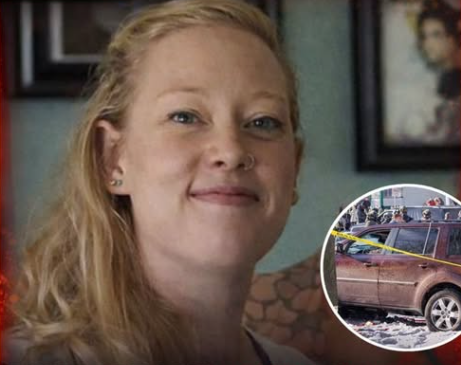
Minneapolis woke to horror that seemed almost unimaginable. A poet, a devoted mother, a beloved neighbor who baked cookies for friends and wrote verses that captured the small joys of life, lay dead in the street—killed by a federal ICE agent in front of her shattered SUV. The city froze in disbelief. Officials quickly labeled the incident as self-defense. Witnesses, however, cried murder. The raw grief of those who loved her was impossible to ignore: her wife’s screams pierced the frigid morning air, a heart-wrenching mixture of sorrow, rage, and disbelief. In that instant, the intimate tragedy of one family collided violently with a city struggling to understand what justice even meant in this moment.
In the days following the killing of Renee Nicole Good, Minneapolis has become a battleground between two starkly opposing narratives. Federal authorities insist that an ICE officer fired to protect lives, framing Renee as a domestic terror threat who had “weaponized” her vehicle. According to this account, the use of deadly force was necessary, unavoidable, and justified. Yet the videos tell a different story. Footage circulating online shows agents walking away uninjured, her SUV riddled with bullets, and the vehicle moving in a way that suggests fear rather than attack. City leaders have openly accused Washington of spinning the story, claiming that the federal government is “governing by reality TV” rather than fact. Social media, news outlets, and public discourse have erupted, reflecting a nation grappling with the tension between official narratives and the reality captured on camera.
Beneath the political drama lies the quieter, deeper devastation of a family and community forever changed. Renee was more than a headline or a political symbol—she was a person whose life touched countless others. A poet and a musician, she was a mother of three children, a wife, a friend, a neighbor who welcomed guests into her home with tea and freshly baked cookies. Her own mother, Donna Ganger, described her as “loving, forgiving, and affectionate,” painting the picture of a woman whose life was defined by care and creativity. Now, in the cold aftermath of her death, a six-year-old child faces a future without his mother, and relatives struggle to provide the stability and comfort he desperately needs. In neighborhoods where candles flicker on icy sidewalks and crowds gather in silent vigils, the grief is collective, shared, and insistent.
Amid the sorrow and outrage, one demand resonates above all others: Renee’s life must not be reduced to another contested headline, another statistic lost in political spin. Her story is more than an argument over self-defense or governmental authority—it is a call to recognize the human cost of policy, the pain of those left behind, and the need for accountability in a system that too often leaves families in the cold. Minneapolis, in its frozen streets and crowded vigils, reflects both grief and defiance: a refusal to let a vibrant life vanish quietly into contested narratives, and a determination to honor the woman who lived fully, loved deeply, and inspired those around her with every small act of kindness.