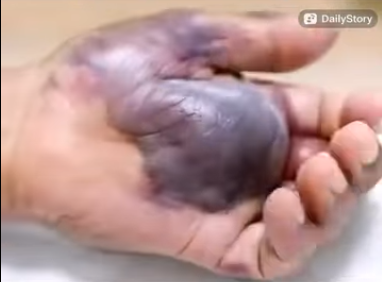
What starts as a minor irritation—a small sting, scratch, or barely noticeable wound—can, in rare but serious cases, escalate into a life-threatening medical emergency. Recent images circulating online of a severely swollen, darkened hand have highlighted the dangers of untreated infections and how quickly they can overwhelm the body if early warning signs are ignored.
Medical professionals say this case is a stark reminder that while the skin is resilient, it also serves as a gateway. Once bacteria or toxins penetrate it, consequences can escalate rapidly. What many people dismiss as a harmless insect bite or mild irritation can, under the wrong conditions, turn into a medical crisis within hours or days.
Doctors reviewing the images note that the extreme swelling and discoloration are consistent with a rapidly spreading infection. While the exact cause has not been confirmed, serious possibilities include a venomous spider bite, such as from a brown recluse, which can destroy tissue around the bite, or a severe bacterial infection entering through a small cut or puncture. Contaminated water, unsanitary surfaces, and underlying conditions that weaken the immune system—like diabetes, autoimmune disorders, or certain medications—can also increase the risk.
One of the most alarming possibilities is necrotizing fasciitis, commonly known as a “flesh-eating” infection. Though rare, it spreads quickly along connective tissue, destroying skin, fat, and muscle. Without immediate treatment, it can lead to sepsis, organ failure, and death. Even with aggressive care, patients may require surgery to remove infected tissue or, in extreme cases, amputation.
The danger lies not only in the infection itself but in how deceptively it begins. Many patients report that the initial injury seemed minor: a small bite, a gardening nick, or a blister from new shoes. Pain may be mild or absent at first, creating a false sense of security. By the time severe symptoms appear, the infection may already be advancing rapidly.
Early recognition is crucial. Rapid swelling around a wound or bite is an early warning sign. Changes in skin color—such as deep redness, purple tones, or blackened areas—are concerning. Intense pain that seems disproportionate to the injury’s size is another red flag. Pain may suddenly worsen or spread beyond the initial site.
Other symptoms requiring immediate attention include blistering, oozing fluid or pus, fever, chills, dizziness, confusion, or rapid heartbeat. These may indicate the infection is entering the bloodstream, a condition called sepsis, which progresses quickly and requires emergency treatment.
Waiting or attempting to self-treat severe symptoms can be extremely dangerous. Home remedies, over-the-counter creams, or hoping the problem resolves on its own allow infections to worsen. When swelling, discoloration, fever, or confusion appear, emergency medical care should be sought immediately.
Preventing serious skin infections begins with simple precautions. Wearing gloves while gardening, cleaning, or working outdoors can reduce exposure to bacteria and insects. Even minor cuts should be cleaned with soap and water, kept dry, and covered until healed. Insect bites should be left alone as much as possible, as scratching can break the skin and allow bacteria in.
Regular monitoring of wounds is essential, especially in the first days after an injury. Expanding redness, increased warmth, or persistent swelling should prompt a medical evaluation. People with chronic health conditions or weakened immune systems should exercise extra caution.
Doctors also warn against underestimating pain. Severe or worsening pain should not be ignored, even if the wound seems small. In aggressive infections, pain often appears before visible skin damage, making it an important early signal.
This case has renewed discussion about public awareness and the tendency to downplay symptoms. In a culture that encourages pushing through discomfort or avoiding medical visits unless necessary, serious infections can go unnoticed until critical. Seeking care early is not overreacting—it can prevent far more invasive treatments later.
Treatment for severe infections usually involves intravenous antibiotics, close monitoring, and surgery if needed to remove infected tissue. Early intervention significantly improves outcomes and can mean the difference between a short hospital stay and life-altering complications.
The broader lesson is clear: the body gives warnings, and those warnings deserve attention. Skin changes are not just cosmetic; they often signal deeper problems. Discoloration, swelling, and pain are messages, not inconveniences.
Raising awareness can save lives. Sharing accurate information helps others recognize danger early and seek help before irreversible damage occurs. Infections do not wait—and neither should those who notice something is wrong.
What seems small today can become overwhelming tomorrow. Acting quickly, trusting medical advice, and respecting the seriousness of sudden bodily changes are essential for long-term health. Early care does more than reduce suffering—it can preserve function, prevent disability, and, in many cases, save a life.