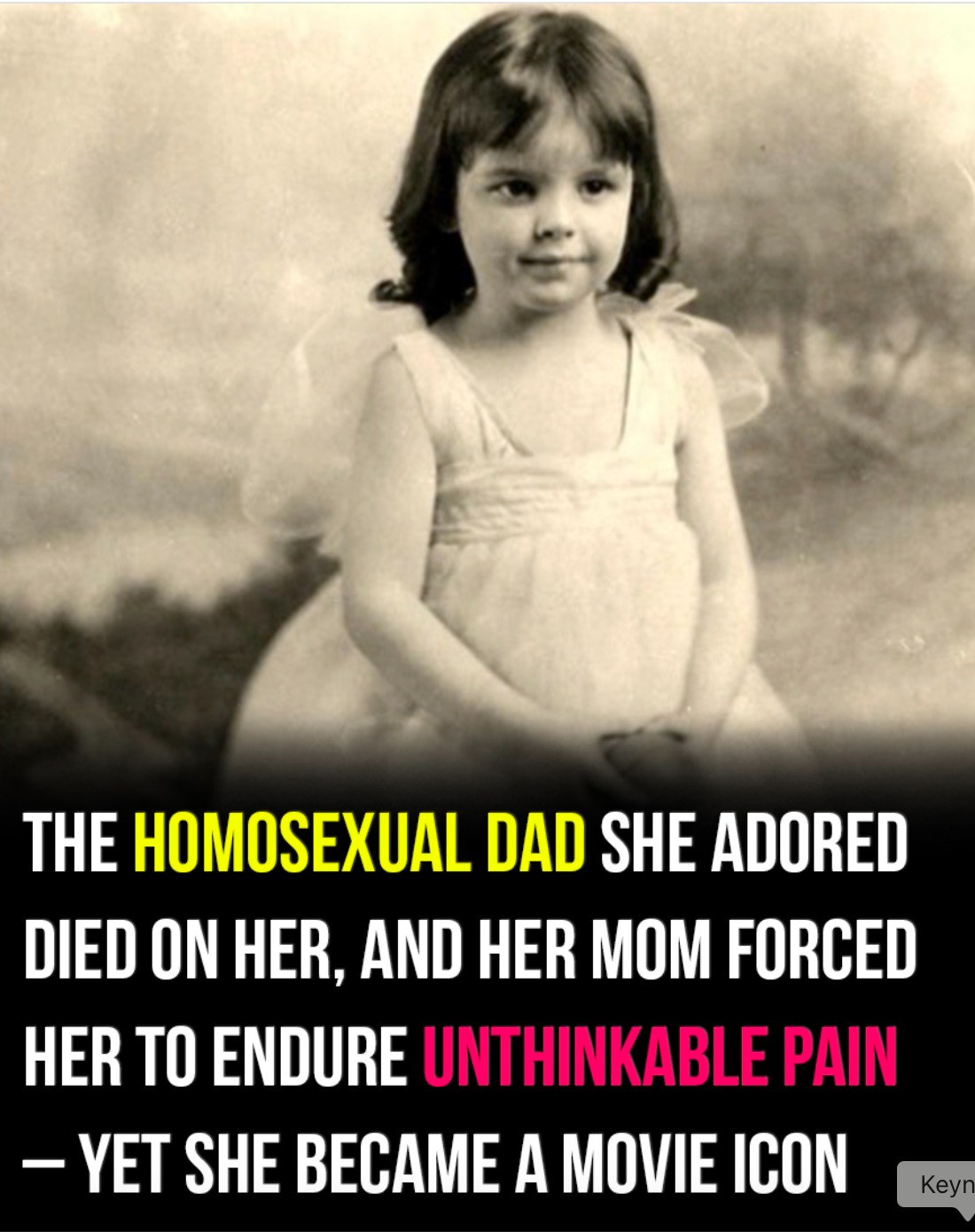
The golden age of Hollywood is often remembered through a nostalgic haze of cigarette smoke, vibrant technicolor, and the effortless elegance of its stars. Yet beneath the glittering sequins and perfectly painted smiles lay an industry as ruthless as it was profitable. Few stories capture the devastating cost of this glamour more than that of a little girl from Grand Rapids, Minnesota, who would become the world’s most luminous icon—only to be consumed by the very spotlight that immortalized her. Before she became the legend in ruby slippers, she was a child caught in a storm of adult ambition, parental neglect, and systemic exploitation: Frances Ethel Gumm, known to history as Judy Garland.
Judy’s entry into the world of performance was not a choice, but an inevitability. Born into a family of struggling vaudevillians, she was on stage before her third birthday. While other children learned to navigate playgrounds, she was learning to navigate the expectations of a live audience. The applause she received contrasted sharply with the instability of her home. Her father’s secret life and the social gossip it caused forced the family into a nomadic existence, eventually bringing them to Lancaster, California. Here, the duality of Judy’s life took root: she shone under the lights of local nightclubs while living in the shadow of a volatile marriage, marked by constant separations and toxic reconciliations.
The main architect of Judy’s early suffering was her mother, Ethel Gumm. Judy later described her mother as the “real-life Wicked Witch of the West,” a woman whose maternal instincts had been replaced by the cold calculations of a stage manager. Ethel’s control was absolute and terrifying. She allegedly threatened young Judy with physical punishment if her performances lacked “sparkle,” warning that she would be “wrapped around the bedpost and broken off short” if she did not sing her heart out. Biographers later revealed that it was Ethel who introduced Judy to the chemical dependencies that would haunt her for life. To keep her working through exhaustion, Judy was given “pep pills” (amphetamines) to stay awake and barbiturates to sleep, restarting the grueling cycle each morning.
By 1935, Metro-Goldwyn-Mayer (MGM) took over where Ethel left off. Louis B. Mayer, the studio’s tyrannical head, recognized Judy’s extraordinary vocal talent but despised her physical appearance. In a studio filled with statuesque beauties like Lana Turner and Elizabeth Taylor, Judy was cruelly labeled the “ugly duckling.” Mayer allegedly called her his “little hunchback,” a psychological blow that fueled a lifetime of body dysmorphia and insecurity. To fit the studio’s narrow ideal of a “girl next door,” she was placed on a harsh diet of cottage cheese and black coffee, supplemented with even more amphetamines to suppress her appetite and sustain her for eighteen-hour workdays.
The workload was relentless. Judy often rehearsed one film during the day while shooting another at night, her life a blur of costume changes and soundstages. Even after her father died from spinal meningitis—a loss that left her emotionally shattered—the studio allowed no time for mourning. The show, as the industry mantra dictated, had to go on. During this period, she was paired with Mickey Rooney, forming a box-office duo beloved by America. Yet behind their cheerful “let’s put on a show” personas, Judy was a teenager struggling to stay upright under the weight of the chemical cocktail prescribed by studio doctors who valued production schedules over human life.
In 1939, The Wizard of Oz propelled Judy into the stratosphere of immortality. Her portrayal of Dorothy Gale, a girl seeking a place where “troubles melt like lemon drops,” resonated with a world on the brink of war. She won a juvenile Oscar and became MGM’s greatest asset. But the ruby slippers were also a heavy burden. As she transitioned into adult roles in classics like Meet Me in St. Louis and Easter Parade, the gap between her public brilliance and private agony widened. She became the “Queen of the Comeback,” a title she carried with wit and weariness. She could move an auditorium to tears with a single note, yet often returned to a lonely room where she felt unwanted unless performing.
The 1954 production of A Star Is Born marked perhaps her greatest cinematic achievement, a raw performance reflecting her own life. She deeply identified with the story’s tragic arc, sensing her own star being extinguished by the very industry that had made it shine. Her later years became a frantic cycle of sold-out concerts and severe health crises. She attempted suicide numerous times—some biographers estimate more than twenty—each a desperate plea for rest the world refused to grant. She had been “on” since age two, and the exhaustion had finally reached her bones.
On June 22, 1969, the music finally stopped. Judy Garland was found dead in her London home at forty-seven from an accidental barbiturate overdose—a quiet end for a life so loud. The coroner noted that her body had become so accustomed to the drugs that it could no longer distinguish between sleep and death. Her passing sparked global grief, but it also served as a stark indictment of Old Hollywood, a system that had nurtured her genius while systematically destroying her spirit.
Judy Garland’s legacy is not only one of tragedy but also of remarkable, defiant resilience. She was told she was ugly yet became one of the most beautiful figures millions had ever seen. She was told she was weak yet endured a schedule that would have broken a titan. A supreme talent made to feel like a product, she imbued every performance with profound, unguarded humanity. Her daughter, Lorna Luft, once said that tragedies in life do not make a person tragic. Judy Garland was a triumph of the human spirit—a woman who kept singing, beautifully and powerfully, even as her world fell apart. She remains the girl who taught us to look beyond the rainbow, and though she left the stage too soon, her voice continues to guide us toward the place where the dreams we dare to dream can truly come true.