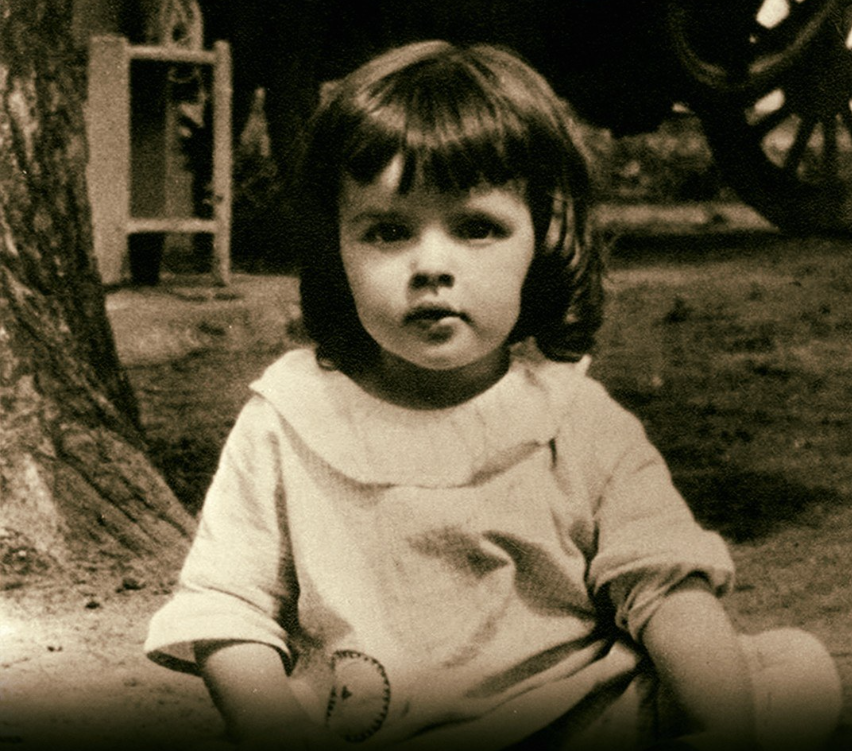
She entered the world as something of an afterthought — a child conceived during conflict and born into a home that mistook dysfunction for normalcy. From her first breath, Judy Garland was surrounded by adults drowning in their own crises: whispered infidelities, buried resentments, money troubles, and a mother whose ambition burned far brighter than her affection. Judy was never simply a daughter. She was treated as a lifeline, a way out. Before she understood what applause meant, she was placed under nightclub lights — a tiny girl with a remarkable voice, trained to smile on command while her childhood quietly slipped away behind her.
Her early years were a blur of rehearsals, packed suitcases, late nights, and the suffocating expectation to be exceptional. There was no room for uncertainty or exhaustion. If she faltered, her mother’s threats landed sharply — not in bruises, but in words that left deeper, lasting marks. Judy learned to perform everywhere, not only onstage. She learned that affection had conditions, that silence brought consequences, and that rest was a luxury meant for children whose mothers didn’t treat show business like a survival mission.
The pills came early. Little boosters to stay awake, little sedatives to force sleep between shows and endless travel. Her body became a pharmaceutical project long before it finished growing. Every smile she gave the world was forced through exhaustion and medication she never asked for. When adults applauded, they weren’t praising a child’s gift — they were celebrating her endurance.
By the time Hollywood entered the picture, Judy had already been conditioned to obey. MGM Studios didn’t need to break her spirit; her upbringing had done most of the work. She arrived with raw talent — a voice that could fill a room and a vulnerability that executives saw as something to exploit. To them, she wasn’t a girl. She was a product — a marketable miracle they could mold, shrink, starve, and manage.
They placed her on punishing diets that distorted her relationship with her own body. They ordered more pills: stimulants, appetite suppressants, sleeping aids. Each was handed to her with a rehearsed optimism — This will help you work harder. This will make you better. This is what stars do. When hunger made her weak, they mocked her. When exhaustion overtook her, they reminded her she could be replaced. She learned to laugh through humiliation, to pretend she didn’t hear executives compare her to glamorous starlets she could never be.
Her schedule was brutal: days of filming, nights of recording, publicity tours squeezed into any spare moment. She didn’t live a life — she survived one. And yet, something inside her refused to crumble. Each time she stepped in front of a camera or onto a stage, she transformed. The pain didn’t vanish; she simply channeled it. Her voice, trembling and aching, carried truths she was never allowed to speak.
The world adored Judy Garland. To millions, she was a symbol of hope, warmth, and emotional honesty. But the world never truly saw the girl terrified of stopping, the woman convinced she had to outrun failure to deserve love. Fame magnified her fears. Fans idolized her. Studios profited. Even those closest to her leaned on her ability to perform while she was quietly falling apart.
Her personal life mirrored her childhood: fast-moving, unstable, full of men who admired her talent but couldn’t understand her wounds. She married young, searching for a safety she’d never known. She divorced and remarried, chasing affection the way she once chased applause. Every relationship carried the weight of her past — the longing for security, the mistrust of love, the belief that nothing good would last.
Motherhood brought genuine joy, but even that couldn’t protect her from the relentless demands of being Judy Garland. Financial troubles haunted her — the result of poor management, exploitation, and the simple truth that she had worked all her life without ever being taught how to protect herself. Every time she tried to start over, the addictions that had begun in childhood pulled her back.
Yet she kept returning to the stage. Singing remained her one refuge — the one place she could turn suffering into beauty. Audiences felt it. They recognized that the tremble in her voice wasn’t weakness; it was truth. Her songs carried decades of longing, heartbreak, resilience, and fragile hope. Despite everything, Judy didn’t merely survive. She rose above.
Her body finally gave out at 47, worn down by years of physical punishment, chemical manipulation, emotional chaos, and unrelenting work. But her voice never faded. It lives on in recordings that shimmer with an honesty few performers have ever touched. What people hear in her voice isn’t just talent — it’s testimony. The echo of a childhood she never had, of a woman trying to escape a destiny forced onto her, of an artist who poured her entire life into her work because she had nowhere else to put it.
Behind the glamour, Judy Garland lived a life defined by everything she was denied: safety, autonomy, rest, and innocence. Yet from those losses, she created something enduring. She left behind more than films and classic songs. She left behind a voice that holds her entire story — bruised, brilliant, and profoundly human