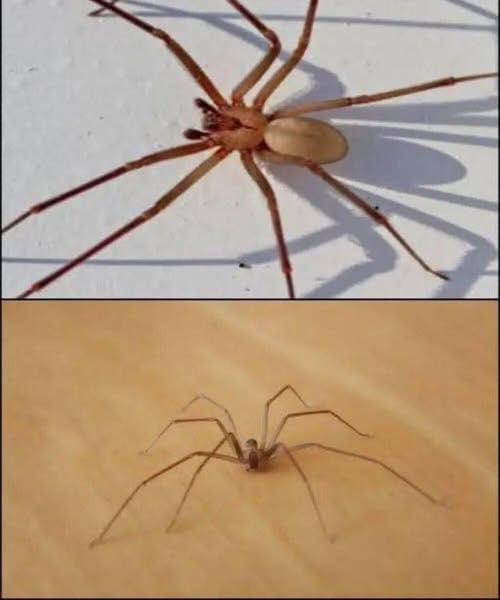
It’s often described as shy, solitary, and rarely seen, preferring to stay hidden away from human activity. Yet, despite its discreet nature, a single bite from this spider can cause serious skin damage, and in some cases, lead to significant medical complications. The brown recluse isn’t naturally aggressive—it does not hunt humans or actively seek confrontation—but when it feels threatened or cornered, it can bite in self-defense. This makes it a fascinating yet potentially dangerous member of the arachnid world.
So, who exactly is this elusive creature? Meet the brown recluse spider, a discreet and mysterious arachnid that has captured both fear and fascination for generations. Often recognized by the distinctive violin-shaped marking on its back, this characteristic gives it the nickname “the violinist spider.” While small and unassuming, usually measuring between 8 to 12 millimeters (roughly the size of a dime), the brown recluse possesses a venomous bite capable of causing serious local tissue damage.
Native primarily to the central and southern regions of the United States, the brown recluse prefers warm, dry, and undisturbed environments. It is most commonly found in secluded indoor areas such as attics, basements, closets, and behind stored boxes or furniture. Outdoors, it may inhabit woodpiles, sheds, and other quiet, sheltered spaces. Its tendency to remain hidden contributes to the perception of it being rare and difficult to spot.
The brown recluse spider’s behavior is largely nocturnal. By day, it remains in its retreat, emerging at night to hunt for small insects. Unlike social spiders, it lives alone and relies on its own skills to survive, making it both efficient and self-sufficient. Despite its solitary lifestyle, it plays an important ecological role by controlling insect populations in the environments it inhabits.
The danger to humans comes from its venom, which contains enzymes capable of destroying tissue. A bite is often painless at first, which means many people do not realize they have been bitten until symptoms appear hours later. These can include redness, swelling, blistering, and, in more severe cases, necrosis—a condition in which the skin and underlying tissue die. While rare, systemic reactions can occur, highlighting the importance of caution and prompt medical attention when a bite is suspected.
Interestingly, brown recluse bites are often misdiagnosed. Their symptoms can resemble infections, allergic reactions, or bites from other insects, leading to confusion and sometimes delayed treatment. Experts recommend cleaning the bite site, applying cold compresses, and seeking professional medical advice. Antibiotics or specialized wound care may be necessary in severe cases, but fatalities are extremely rare.
The brown recluse spider has also found its way into popular culture and folklore, where it is often portrayed as deadly and sinister. While these stories exaggerate the risk, they underscore the spider’s mysterious nature and the natural caution humans tend to exercise around venomous creatures. In reality, the brown recluse is not a hunter of humans—it is a creature of survival, only biting when provoked or accidentally threatened.
Understanding the brown recluse requires knowledge of its habits, habitats, and biology. Its shy, elusive behavior makes it rarely seen, yet awareness and respect for its presence are essential for safe coexistence. By keeping storage areas tidy, reducing clutter, and exercising caution when moving items in secluded spaces, humans can minimize encounters while appreciating the spider’s role in nature.
Despite its small size and quiet demeanor, the brown recluse spider commands attention. Its combination of stealth, venom, and solitary habits makes it one of the most intriguing arachnids in North America. For scientists, it is a subject of study for venom properties and behavioral ecology. For the general public, it is a reminder of the complex, often hidden wildlife that shares our environment.