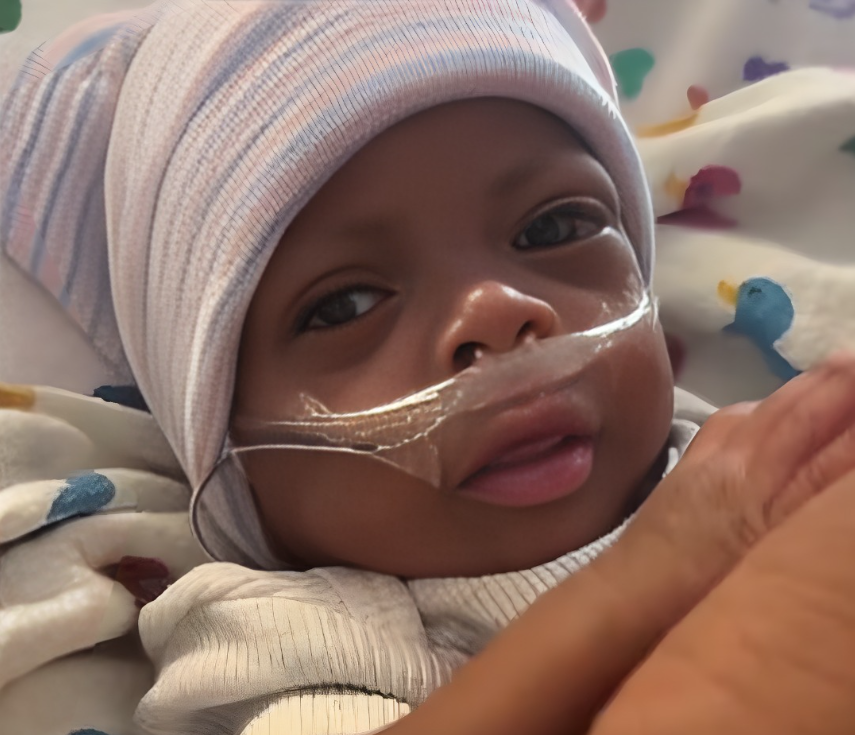
The monitors were screaming, and the doctor’s words hit Labreshia like a hammer. No heartbeat. No growth. No time. Her world, which had once been filled with excitement at the thought of a new life, collapsed in an instant. The pregnancy that had once seemed so smooth, so promising, now felt like a nightmare she could not wake from. The sterile hospital lights seemed harsher that day, reflecting off the walls in a way that magnified her panic. She felt frozen, unable to breathe, as medical staff moved quickly around her, speaking in hushed tones she could barely understand. Every second stretched endlessly as if the universe itself had paused to watch her heartbreak.
When the tiny, fragile form of her daughter was pulled into the world at just 24 weeks, weighing only 15 ounces, the reality of the situation hit Labreshia with unrelenting force. Her baby, smaller than a soda can, was swaddled in machines and tubes, each one a lifeline in the fragile dance between life and death. Nurses and doctors hovered over the incubator, adjusting tubes, checking monitors, and whispering reassurances that felt like whispers into a storm of fear. Labreshia could barely touch her daughter, and every beep from the machines seemed to echo her racing heart. The NICU, with its overwhelming tangle of wires and soft alarms, became Addisyn’s first home, a world so different from what a new mother expects.
For days, Labreshia sat at her daughter’s bedside, watching every twitch, every tiny breath, every subtle rise and fall of her chest. She memorized the sound of the machines, the soft click of the ventilator, the gentle hum of life itself. Each hour brought new fears: a drop in oxygen levels, a slight change in heart rate, a sudden alarm that made her jump as if her own heart were being tested. Yet, despite every warning and every setback, Addisyn fought. She clung to life with a stubbornness that stunned even the most experienced NICU staff. Nurses whispered that they had never seen a baby so small display such determination.
Weeks blurred into months. The NICU became a world unto itself, with its endless cycle of medications, feedings, and monitoring. Labreshia learned to navigate it, becoming fluent in the language of premature care. She understood the subtle differences between alarms, the meaning of every chart, every IV drip, every sudden change in temperature. Her nights were spent pacing the hospital corridors, her hand always hovering near the incubator, ready to comfort, ready to hope. Every ounce of weight Addisyn gained felt miraculous, every milestone a victory snatched from the jaws of despair.
The journey was not without setbacks. Addisyn had infections, struggles with feeding, and moments when her tiny lungs refused to cooperate. Each complication sent waves of fear crashing over Labreshia, threatening to undo all the progress her daughter had made. Yet, each time, Addisyn found a way to pull through. Her tiny body, though fragile, carried a resilience that seemed almost otherworldly. The nurses, initially cautious and skeptical, began celebrating her milestones as if she were their own child, their cheers echoing through the sterile halls.
Labreshia became intimately familiar with every piece of medical equipment. She learned how to adjust the ventilator in case of emergencies, how to prepare breast milk for the tiniest feeding syringes, how to soothe a baby who had never known the comfort of a womb. She became a presence that calmed her daughter as much as any machine could. Her hands, which had once trembled at the sight of so much vulnerability, now moved with careful precision and love. Every day was a balancing act between hope and fear, a delicate dance in which the stakes could not have been higher.
Time in the NICU was measured not in weeks but in milestones. Each gram of weight gained, each breath taken without mechanical help, each successful feeding marked a small victory in a battle that seemed unending. Labreshia learned to celebrate small things: a smile, a stretch, the sound of a burp. These tiny moments became the lifelines that kept her going, reminders that progress, no matter how small, was possible. Nurses documented each moment with care, often taking photographs for Labreshia, capturing memories of milestones she could barely believe her eyes were seeing.
Through it all, Addisyn remained fierce. Every beep of the monitor that once caused panic now seemed like a testament to her will to survive. Her eyes, when they finally opened, were bright and alert, as though the tiny life inside her incubator was already demanding to be seen, to be recognized, to be celebrated. The bond between mother and child grew in the sterile, humming world of machines and alarms. Labreshia whispered encouragement, sang lullabies, and spoke to her daughter as if the very power of her voice could lend strength to the tiny fighter before her.
As months passed, Addisyn began to outgrow the smallest incubators. She learned to breathe with less help, feed from bottles, and eventually tolerate gentle touch without overwhelming her fragile system. The NICU staff marveled at her progress, recounting her story to families and colleagues as a symbol of perseverance and hope. What began as a desperate struggle had transformed into a slow, steady triumph, each day adding proof that even the tiniest life could carry an incredible amount of strength.
Finally, after six months of careful monitoring, endless tubes, countless alarms, and an immeasurable amount of love, the day came for Addisyn to leave the NICU. The hallway was lined with doctors, nurses, and staff who had watched her grow from a fragile 15-ounce infant into a tiny, vibrant girl ready to take her first steps into the world beyond the machines. Labreshia held her daughter close, tears streaming down her face, as she walked through the corridor. Each cheer, each clap, each word of congratulations was a reminder that miracles could happen, even when the odds seemed impossible.
The transition home was another challenge. Labreshia had to learn how to care for a child who had spent half her life in a medical environment. Every feeding, every nap, every breath was monitored closely. There were still worries, still moments of fear, but the triumph of seeing Addisyn reach her milestones outweighed the constant vigilance. She was learning to crawl, to sit, to explore her environment, each new skill a testament to her hard-won resilience.
Friends and family marveled at the transformation. Photos of Addisyn, once a fragile, almost invisible presence in the NICU, now showed a vibrant, alert infant. Her growth was a testament to medical skill, parental dedication, and the seemingly miraculous resilience of life. Labreshia often reflected on those first terrifying days, remembering how tiny her daughter had been, how uncertain everything felt, and how every heartbeat had seemed like a victory.
The NICU experience left a mark on both mother and child. Labreshia carried the emotional weight of those months, understanding the fragility of life more deeply than ever before. She became an advocate for premature babies, speaking to other parents, supporting families, and sharing Addisyn’s story as a beacon of hope. Every step of progress for Addisyn became a symbol for what determination, love, and skilled care could achieve.
Addisyn herself grew into her personality even within those early months. Though tiny, she was already showing signs of curiosity and determination. She would reach out, grip fingers, and respond to voices. Labreshia noticed these sparks of character, little glimpses of the remarkable life that had already overcome so many obstacles. Each smile, each coo, each tentative movement carried layers of triumph built upon struggle, love, and hope.
By the time she was ready to leave her first year, Addisyn had experienced more adversity than many adults face in a lifetime. Yet, she emerged resilient, curious, and strong. The early days of alarms, tubes, and uncertainty became stories retold by Labreshia with pride, emphasizing not the fear, but the courage that carried them through. Each retelling reminded everyone that life, no matter how small, can be unimaginably powerful.
Labreshia often reflected on the lessons of those six months: patience, hope, resilience, and the boundless capacity of a human heart to love and fight for another life. Addisyn’s journey was not just medical — it was emotional, spiritual, and transformative. She had changed her mother, the staff, and anyone who heard her story, leaving a lasting mark that went far beyond the walls of the NICU.
Ultimately, Addisyn became more than just a survivor. She became a symbol: a living testament to courage against overwhelming odds, the power of parental love, and the profound strength of the human spirit. Her story resonated with nurses, doctors, families, and anyone who understood that life, no matter how fragile, is always worth fighting for. Every heartbeat, every smile, every small victory was a reminder that hope could thrive even in the most difficult circumstances.