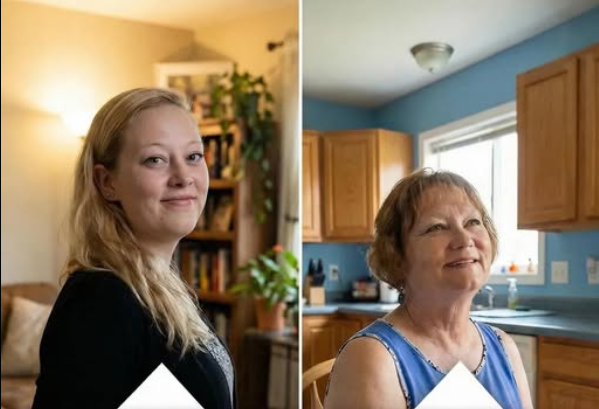
The shots came without warning, rupturing the fragile sense of safety that had lingered in the quiet Minneapolis neighborhood for decades. It was a routine evening for many, the sun dipping behind the trees, streetlights flickering to life, and neighbors settling into their homes after the day’s work. Yet in an instant, normalcy shattered. A federal immigration operation unfolded at the intersection of 34th Street and Portland Avenue, ending with the death of 37-year-old poet and mother Renee Nicole Good, who would never return home. Officials insist that the fatal shots were fired in self-defense. Witnesses, however, tell a different story—a car moving away, a woman retreating, and the sudden eruption of gunfire that no one could have anticipated. Video clips surfaced online almost immediately, capturing fragments of the moments before and after the tragedy. Social media filled with shock, grief, and anger, deepening the wounds of a city already burdened with a history of loss, tension, and mistrust of those sworn to protect it.
In the days that followed, Powderhorn Park became a shrine to remembrance, a makeshift cathedral of grief and resilience. Candles flickered against the early evening wind, their soft glow illuminating handwritten signs and posters bearing Renee’s name. Small pieces of cardboard, scraps of paper, and folded notebook pages carried fragments of her poetry, each word a testament to her presence and her humanity. Friends remembered how she would leave groceries at a neighbor’s doorstep without being asked, quietly ensuring that those struggling had what they needed. At open mic nights, she lingered long after the spotlight moved on, encouraging younger writers, offering advice, praise, or just a warm smile to those finding their voice for the first time. She managed tenderness in a world that often refused it, balancing her own instability with a generosity of spirit that seemed limitless. To those who knew her, the sterile phrases used by officials—“defensive shots fired,” “protocol followed”—felt not only inadequate but cruel, as if a lifetime of small acts of care and creativity could be erased with a single bureaucratic sentence.
The local and federal investigations that began in the wake of her death have drawn attention from multiple angles, revealing the complexity and the stakes of the moment. Minneapolis, a city that has seen repeated confrontations between residents and law enforcement, now stands at a familiar and uncomfortable crossroads. Will it accept a tightly managed narrative shaped by authorities, or will it demand a thorough accounting of events that left a life cut short? Community leaders, activists, and residents have made their demands clear. They call for an independent review to ensure that those in power are held accountable. They insist on the release of all video footage so that the public can see, unfiltered, what transpired at 34th and Portland. They urge the establishment of protocols that prioritize the preservation of human life above tactical convenience, a standard many argue has been too often ignored.
Even beyond the immediate investigations, Renee’s death has sparked conversations about systemic inequities, the treatment of marginalized communities, and the intersections of federal authority with local neighborhoods. She was more than a poet. She was a mother, a mentor, a neighbor, and a friend. She was a person who lived fully, even when the world seemed determined to make life harder. Her absence has reminded Minneapolis and the wider public that every decision made by law enforcement is a choice, and those choices have consequences that ripple far beyond the immediate moment. The tragedy has laid bare questions about accountability, oversight, and the responsibilities of institutions that wield power with the potential to harm.
The human response has been as powerful as the grief. Vigils continue in her honor, attended by people who may not have known her personally but who understand the need to bear witness. Every candle lit, every poem read aloud, every tear shed has been a statement of solidarity: that Renee’s life mattered, that the circumstances of her death must be confronted, and that the community refuses to allow her memory to fade quietly into official reports or press releases. Murals and street art have appeared near the scene of her death, bearing her name and images inspired by her poetry. Local writers’ groups and schools have held workshops to celebrate her contributions and ensure that her spirit continues to inspire others, especially young people who see in her story both tragedy and courage.
The conversations sparked by her death have also forced neighbors, community members, and city leaders to grapple with difficult questions: How can public safety truly coexist with accountability? How can federal operations in residential neighborhoods be conducted in a way that respects life? How can a city scarred by repeated instances of violence heal while ensuring that no family endures what Renee’s loved ones have faced? Every day, as investigators, journalists, and community leaders probe for answers, the people of Minneapolis watch and wait, knowing that the findings of the inquiry—whatever they may be—will be measured against the life of a woman who embodied generosity, creativity, and care.
In this way, Renee Nicole Good’s name has become more than a headline. It has become a symbol, a measure by which residents assess whether their city truly values human life, whether the systems meant to protect them are operating with transparency, and whether change—real, meaningful change—is possible. As Minneapolis moves forward, the echoes of her life and death remain present: in parks where her poems are read, in conversations about policing and policy, and in the quiet resolve of neighbors who refuse to accept that her story ends with a tragedy report. They insist that she be remembered as more than a statistic, and they demand that the official narrative reflect, at its core, the humanity that she embodied.