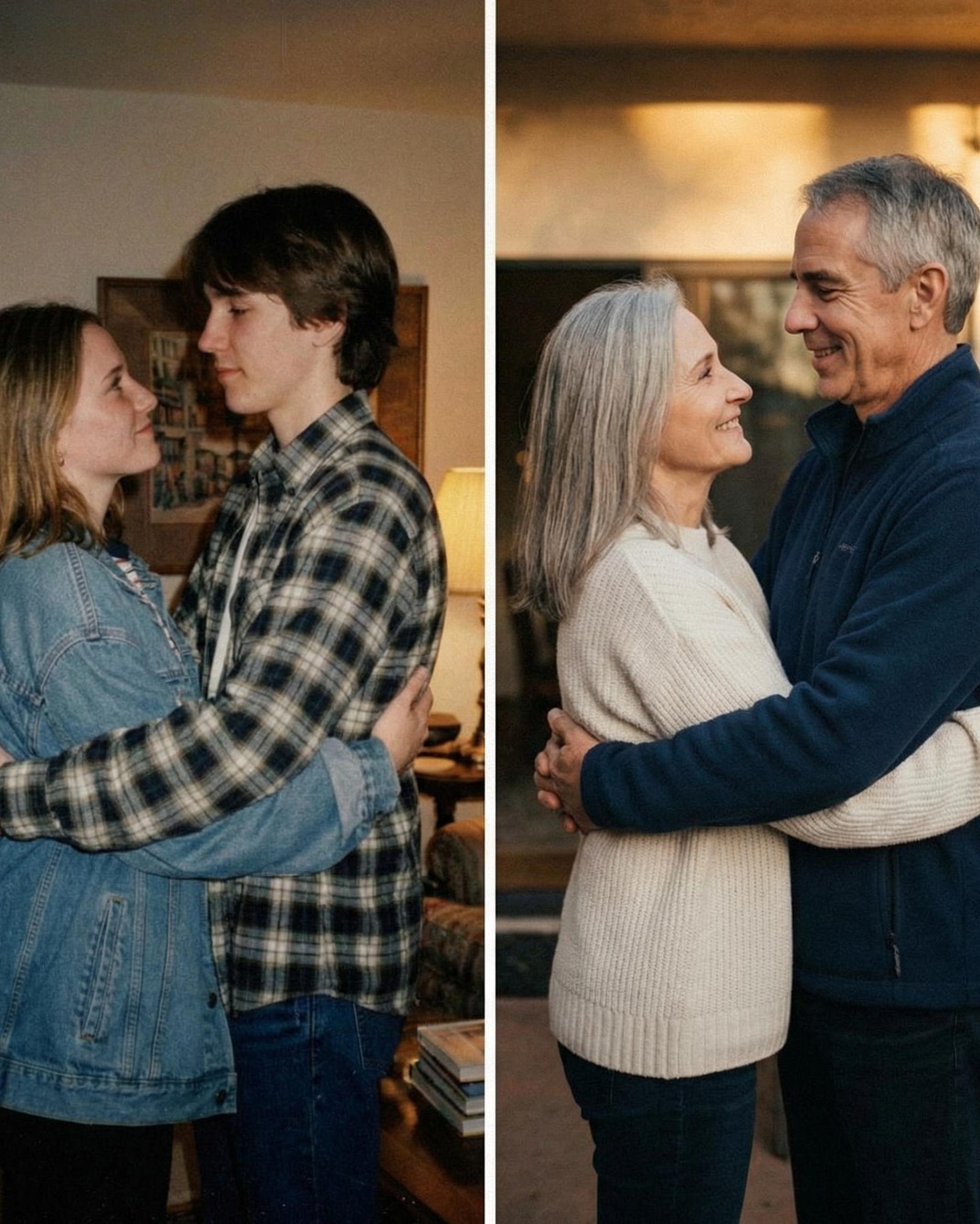
At fifty-five, the silence in a house feels almost tangible, a weight pressing against every corner. For thirty-six years, that silence had always been filled by Greg—the low hum of him in the kitchen, the soft scuff of slippers on hardwood floors, the steady rhythm of his breathing that anchored my nights. We had been together since I was nineteen, two halves of a whole so entwined that the line between us seemed to vanish. Then, one rainy Tuesday, a distracted driver on a slick highway tore my world into “before” and “after.”
The farewell service felt surreal, like walking through a fever dream. The chapel was a sea of muted greys and blacks, tinged with the scent of lilies and damp rain-soaked coats. I drifted through the crowd like a ghost, nodding at faces I barely recognized, clutching a single, thornless red rose. Grief had hollowed me out, leaving me fragile, as if a sudden gust of wind could shatter me into porcelain shards.
When I finally reached the casket, everything narrowed to just the two of us. Greg looked unnaturally still, dressed in the charcoal suit I had bought for our last anniversary—a night full of laughter and expensive wine. As I leaned down to place the rose between his cold fingers, something caught my eye: a tiny slip of white paper folded tightly beneath his thumb. Hidden so discreetly that only someone touching his hand would have noticed.
My heart raced. Greg wasn’t a man of secrets; he was as transparent as a mountain stream. With trembling fingers, I slipped the note into my black clutch. I couldn’t read it there, not with so many eyes watching.
I retreated to a quiet restroom, breath shallow, and unfolded the paper. The handwriting was elegant, feminine, and completely unfamiliar. The words struck like blows:
“I will always carry the memory of the love we couldn’t live openly. Our children will grow up knowing the man you truly were. Rest now, my love.”
The stall seemed to tilt. Years of silent grief over infertility had left a dull ache we simply lived with. Now this note hinted at a secret life, a hidden family—a betrayal threatening to erase thirty-six years of shared history.
I didn’t cry. Instead, a sharp, cold focus took hold. I needed to know who had inserted this moment of deceit. After the service, I bypassed the wake and found the chapel director, lying that I’d lost a piece of jewelry near the casket and needed to check security footage. He led me to the office, swayed by my widow’s attire and swollen eyes.
On the grainy monitor, the truth unfolded. Mourners passed until a woman appeared—tall, in a navy coat, partially veiled. Her hand lingered on Greg’s as she slid the note into place. I recognized her immediately: Susan, a high-level executive at a company Greg’s firm had recently cut ties with.
I confronted her in the parking lot, holding out the note. “You dropped this,” I said, my voice icy.
Susan didn’t flinch. “I didn’t think you’d find it so soon,” she whispered. “But he deserved the truth near him. He loved those children, Claire. Even if he couldn’t be with them publicly, he supported us.”
I drove home, stunned, the house feeling like a tomb of lies. In Greg’s study, I unlocked the bottom drawer of his desk and poured over his journals. Every night, for years, he had written the truth. If there was a secret life, it would be here.
Six hours later, the truth emerged: the journals told a different story. He wrote of frustration with Susan, her unethical business practices, and the veiled threats that followed. He lamented the stress on me from our infertility, wishing he could give me the family we deserved. His words were unwaveringly loyal, never deceptive.
The note wasn’t a confession—it was a weapon. Susan had exploited my grief to plant doubt, attempting to tarnish Greg’s memory with lies.
I called his best friend and business partner, Mark. Through sobs, I asked about Susan’s children. Mark was blunt: they were her ex-husband’s, used by her as leverage. Greg would never have touched them.
Relief washed over me violently. My marriage had never been a lie. Greg was exactly who I knew him to be: loyal, hardworking, devoted, and exclusively mine.
Before dawn, I returned to his desk, burned the cruel note in an ashtray, and opened a fresh notebook. I began writing—not just of my grief, but of the strength it took to defend the truth of our love.
Grief is a landscape filled with pitfalls, and cruelty often lurks in shadowed corners. But thirty-six years of truth cannot be toppled by six words of malice. Greg was gone, but the story of us remained intact. I chose to hold onto the man who bought me roses, hummed in the kitchen, and loved me enough to leave a trail of honest words behind. The truth hadn’t just set me free—it had returned my husband to me.