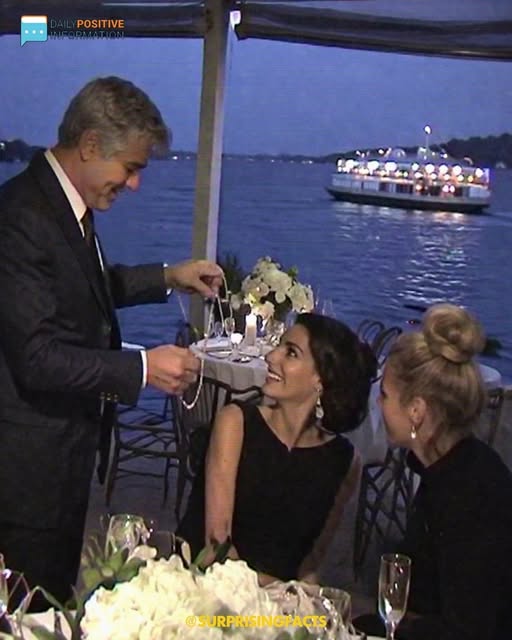
By the time I stepped through the glass doors of the Skyline Terrace Ballroom, the air was already thick with champagne, expensive cologne, and flowers that someone had ordered two weeks in advance.
Golden light streamed through the windows overlooking Puget Sound, casting everything in a warm glow that somehow didn’t reach me. White tablecloths, towering arrangements of hydrangeas, the shimmering water beyond the glass—everything was perfect. This was supposed to be my celebration, my graduation party, but the way the evening started made me feel less like the guest of honor and more like an afterthought someone had forgotten to remove.
I spotted my parents across the room immediately. Grady and Noella Kelm moved through the crowd like seasoned politicians—each handshake deliberate, each smile carefully composed. To everyone else in the ballroom, they looked like perfect hosts.
I knew better.
I smoothed the front of my dress, pulled my shoulders back, and whispered to myself, “You’ve got this.”
The words felt less like encouragement and more like armor.
How the Night Began — and the Moment My Parents Refused to Stand for Me
The MC was warm and polished, moving through the room with the ease of someone paid to make everything feel effortless. He spoke glowingly about my older sister, Sirene—her role in the family business, her community work, her impressive trajectory. My father clapped like she had just won an Olympic medal. My mother’s smile lit up the room.
Then the MC turned toward me.
“And here’s their youngest daughter, fresh from completing her degree.”
He didn’t say my name.
My parents didn’t stand.
They offered polite smiles and a few scattered claps, staying seated as if standing up to acknowledge me required more effort than I was worth. A brief silence settled over my corner of the room, followed by a thin ripple of applause that faded almost immediately.
I lifted my chin and walked forward at an even pace. In my head, I heard my Aunt Ranata’s voice—the one she had given me years ago when I was still learning how to survive this family:
Dignity is not negotiable.
Moments later, the photographer arranged us for a family photo. We stood against an elaborate floral backdrop, carefully positioned like people who had rehearsed exactly how they wanted to be seen.
As the camera focused, my mother leaned in so close I could smell her perfume.
“Smile, Leech,” she whispered, barely moving her lips.
The flash went off. The image captured what it captured—a perfectly staged family, artificial warmth, and me in the center holding it together with a smile I had practiced my entire life.
I didn’t react. That was the point. I had learned long ago that reacting was exactly what they wanted. So I stayed still and remembered Ranata’s other lesson:
Sometimes you win by letting them think you’ve lost.
The Seating Chart That Said Everything Without Saying a Word
When dinner was announced, I made my way through the crowd toward the tables. Place cards written in elegant gold script. The farther back I went, the clearer it became what my mentor had once told me:
Seating charts are quiet declarations of rank.
My table was tucked beside the double doors leading into the kitchen. Every time a server pushed through, heat rushed out along with the clatter of trays and the smell of food from the kitchen. From there, I could see the center of the room, where Sirene sat beside our parents at the largest table—perfectly placed, perfectly visible.
She was laughing at something our father said, her hair catching the light, looking entirely at home.
A server brushed past me. “Sorry, miss,” he muttered before disappearing back inside.
I shifted my chair—not away from the table, but slightly closer to it. If they wanted me invisible, I wasn’t going to help them.
That’s when I noticed Hollis across the room, my oldest friend, standing near the back wall with their camera. They caught my eye and raised an eyebrow—the silent question clear: Are you okay?
I gave a small nod.
Hollis had always been good at reading between the lines. The fact that they already had their camera out told me they were watching more than just the party.
The Magazine Article, the Credit That Wasn’t Mine, and How I Handled It
The first real blow came quietly—the way the sharpest ones often do.
A local magazine editor was at the party, a man I had met a month earlier who had shown genuine interest in my capstone project in environmental engineering. He had told me they were planning a feature on it. Two weeks of work and months of field research at a river cleanup site were supposed to carry my name.
I spotted the glossy new issue lying open on the table between him and my parents. I moved closer to take a look.
My project was there—the diagrams, the photos from the cleanup site, everything I had worked on. But the name printed in bold above it was Sirene’s.
Before I could fully process it, a voice beside me said, “Your sister’s work is really impressive. I had no idea she was interested in environmental science.”
I turned to find one of my father’s colleagues smiling at me, clearly expecting agreement.
I steadied my voice. “Yes,” I said evenly. “She’s very good at presentation.”
I let the pause linger just long enough for the words to land without turning into confrontation. Then I returned to my seat.
If I interrupted now, I would be painted as the jealous younger sister. My professor had once told me: People will steal your spotlight if you let them. But they can’t take what you know.
I was still holding onto that thought when my mother’s voice rose above the dinner conversation.
“Oh, this reminds me,” she said with a smile toward her table. “When Arlina was in her second year, she almost got herself expelled. Skipped mandatory seminars for weeks. Can you imagine?”
Polite laughter rippled through the guests. A few people glanced in my direction.
“Actually,” I said, my tone calm and easy, “I was in Europe on an academic exchange—approved and sponsored by the department chair. But I suppose that version isn’t as entertaining.”
Noella’s smile didn’t falter, though her eyes narrowed briefly before she turned back to her conversation.
I leaned back and reminded myself of Ranata’s other lesson: Never interrupt your enemy when they’re making a mistake.
The Slideshow That Cropped Me Out of My Own History
When the lights dimmed and the presentation screen flickered above the stage, I already knew what was coming. Years of family events had taught me that slideshows were never sentimental—they were curated arguments.
Soft piano music played as photographs appeared one after another. Christmas mornings, vacations, milestone dinners. I started counting.
One holiday without me. Then another. A birthday I clearly remembered attending, but the photo showed only my parents and Sirene.
Then the one that made my breath catch.
My high school graduation photo. I remembered it clearly—standing in my cap and gown with my family beside me. But on the screen, the image had been altered. Only Sirene remained, holding my diploma as if it were hers.
When they erase you from the frame, I thought, they’re telling everyone you were never part of the story.
A few guests glanced in my direction. One older cousin frowned slightly, holding her gaze on me. Others looked away. I kept my expression steady and tucked the sting somewhere out of sight.
Then my father rose for his toast.
He thanked everyone for coming. Then his tone shifted.
“We’ve worked hard as a family to support our daughters,” he said, raising his glass. “Especially covering the tens of thousands for Arlina’s education. It wasn’t always easy, but you do what you must for your children.”
At my table, two friends exchanged a quick look. One started to speak, but I stopped them with a small shake of my head.
Inside, I replayed the truth: scholarships I had earned, grants I had fought for, part-time jobs I balanced between classes. My parents had contributed, but not in the way he had just described. The number he gave was fiction—designed to make me look like a burden they had carried.
I took a slow sip of water and let my mentor’s words surface:
Never wrestle with pigs. You both get dirty, and the pig likes it.
Across the room, Aunt Ranata did not clap. Instead, she gave me a small, steady nod—one that carried more meaning than any toast.
The Envelope My Aunt Slipped Into My Hand — and What Was Inside
Later that evening, Ranata moved through the crowd toward me with quiet purpose. When she reached me, she didn’t pause for pleasantries. She brushed her hand against mine, leaving a small sealed envelope, and held my gaze just long enough to say: Later.
I slipped away to the balcony. The cool air from Puget Sound wrapped around me as I opened the envelope.
Inside were photocopies—scholarship awards, grant confirmations, receipts—all bearing my name and student ID. Every document confirmed the truth my parents had been carefully burying all night. A note in my aunt’s handwriting sat on top:
For when they push too far.
I folded the papers back, placed the envelope in my clutch, and returned to the ballroom.
Hollis found me almost immediately.
“You’ve heard about the invitations?” they asked quietly.
“What about them?”
“They printed your start time thirty minutes later. Just yours. Some guests said they thought they were early. By the time they arrived, the first photos were already done. It made it look like you showed up late to your own party.”
Everything clicked into place—the late arrival timing, the missing name, the altered slideshow, the false financial story. None of it was random. It was coordinated.
“They’re playing the long game,” Hollis said.
“Then I’ll change the rules,” I replied.
The Toast, the Champagne, and What My Father Did When He Thought No One Was Watching
The moment I had been anticipating all night arrived just as the servers began placing champagne flutes for the final toast.
I watched my parents carefully. They were no longer mingling. They were positioned, observing me with expressions fixed in practiced calm. Every time my gaze drifted toward them, they were already looking back.
When my father approached our table—ostensibly to check the place settings—I caught the smallest movement in my peripheral vision. A subtle motion. Something dropped into my champagne glass. The surface shimmered briefly with a faint fizz before settling again.
I didn’t react.
Across the room, Hollis had their phone slightly raised behind their glasses. The recording was already running.
I waited a few seconds, then stood and walked toward Sirene’s table with the ease of someone simply correcting a minor mistake.
“Oh, I think you got my glass,” I said lightly, loud enough for nearby guests to hear. “Yours is probably warmer by now.”
Sirene raised an eyebrow. “Really? You’re picky tonight.”
“You know me,” I said, smiling in a way that didn’t reach my eyes.
She laughed and switched glasses without hesitation. The surrounding guests took it as harmless sibling teasing.
I returned to my seat and lifted my now-safe glass just as Veila, the event coordinator, called for the toast. Around the room, glasses rose. Voices blended. Glass clinked.
Sirene drank deeply, laughing with the people beside her.
Then she stopped.
What Happened When Sirene’s Glass Hit the Table
Sirene set her glass down mid-sentence. Her smile froze. She tried to stand, but her legs didn’t respond properly. She reached for the table for support, missed, and knocked a plate off balance. Silverware clattered onto the floor, a fork spinning across the marble.
A wave of confusion spread through the room. Chairs scraped back as guests stood.
My father reached her instantly, one arm steadying her back. His voice was controlled, calm—measured just enough for those nearby to hear. “Sirene, look at me. You’re fine. Sit down.”
My mother arrived on the other side, placing a hand on Sirene’s shoulder with carefully crafted concern. “Sweetheart, just breathe. You probably stood up too fast.”
But I saw what others didn’t—the flicker of panic in their eyes, the silent exchange between them that didn’t match their words.
I stayed seated, calm, glass in hand.
Hollis appeared beside me, tilting their phone so only I could see.
The footage was clear: my father’s hand near my champagne glass, the faint disturbance in the liquid, me walking over to Sirene’s table, the casual exchange, her drinking without suspicion. A timestamp confirmed the sequence.
“Keep that safe,” I said quietly. “We’re not finished yet.”
The Screen That Played the Video No One Expected — and What Followed
Paramedics pushed through the crowd. The ballroom filled with confused voices and rising panic.
I stood, calm in a way that even I hadn’t expected, and walked to the AV booth at the edge of the room. I handed the technician a USB drive.
“Play this,” I said, holding his gaze until he nodded.
The screen above the stage went dark.
Then Hollis’s footage appeared.
My father’s hand near the champagne glass. The faint reaction in the liquid. Me exchanging glasses with Sirene. Her drinking. The timestamp anchoring everything in place.
The room broke open.
Gasps. Whispers. Chairs scraping. Veila went pale. My mother froze mid-motion, glass still in hand. My father’s jaw tightened.
“That’s attempted poisoning,” someone said behind me.
Phones came out everywhere. Recording. Calling. Sending.
The paramedics paused, looking between the screen and Sirene.
Then Aunt Ranata’s voice cut through the chaos.
“I have documentation proving Arlina paid her own way through college, and evidence that these two have misrepresented her entire academic record for years.”
She stepped forward, holding the opened envelope—scholarship letters, grant confirmations, financial records. Truth, exposed under the ballroom lights.
People who had stayed neutral all evening began shifting away from my parents.
I stepped forward.
“I’ve been told my whole life to stay quiet,” I said evenly. “Tonight you saw why. Silence is how they win.”
I let the words settle, then stepped back. The evidence on screen and in Ranata’s hands spoke louder than anything else.
From the entrance, uniformed officers arrived and moved toward my parents with calm precision.
What I Left on the Table Before I Walked Out
The officers separated my parents. My father spoke sharply, his composure breaking. My mother’s control finally began to fracture.
I walked to the center table. Conversations faded as I approached.
I placed the items I had been carrying: the house keys, the family crest pendant they displayed at every formal event, and an envelope containing my signed withdrawal from all shared assets.
“These belong to you,” I said. “I’m taking back my name, my time, and my life.”
From somewhere behind me: “Good for her.”
Ranata’s expression held quiet approval—the look of someone who had waited a long time for this moment.
I looked at the items one last time. They had once represented belonging. Now they felt like weight.
I turned and walked toward the exit. Not rushing. Not running. Each step steady.
In the lobby glass doors, I saw my reflection—shoulders straight, head lifted. I barely recognized her. But I liked her more than the person I had been earlier that night.
Outside, the night air met me immediately.
Hollis walked beside me. “You know this isn’t over.”
I glanced back at the glowing ballroom windows.
“I know,” I said. “But I’m still the one standing.”
What the Weeks After the Party Actually Looked Like
The video was everywhere by the next morning.
Hollis had sent it to a journalist before we even left the hotel parking lot, and by breakfast local news stations were already running the footage under headlines that made my family name feel unfamiliar to me. Strangers on the street stopped mid-step to watch their phones.
Legal action moved quickly. Charges related to attempted poisoning and conspiracy were filed before the end of the week. Sirene physically recovered, but the narrative that she had been an innocent bystander didn’t hold up under scrutiny—too many people had already seen how she benefited from my parents’ decisions over the years.
The social fallout came next. Business partners pulled out of joint ventures. Sponsors of my parents’ charity work released statements distancing themselves. Invitations that once filled their calendar simply stopped arriving.
I moved into a small apartment near the university district. Boxes along the walls, the smell of fresh paint still in the air. It wasn’t large, but it was mine—paid for entirely with money I earned without their involvement. I began consulting for an environmental engineering firm, work that didn’t require a family name to carry weight.
The final break came during a mediated settlement meeting downtown. My parents arrived with their attorney, dressed as if attending another event, still holding onto the last pieces of control they had left.
I placed a signed legal document on the table: a formal declaration renouncing any claim to the family estate, along with clauses preventing them from using my name or achievements for social or professional benefit in the future.
“This,” I said, sliding the papers forward, “is the last time you will ever profit from my existence.”
My mother’s lips parted. My father stared at the document as if it had physically burned him.
I left before they signed it.
Outside, the air was sharp and clean. I felt different—not because the past had vanished, but because it no longer had control over me.
That evening, I took the ferry across the Sound and stood at the railing as the city skyline faded behind me. The lights broke into fragments on the water, scattering with every ripple.
Justice isn’t always loud, I thought. Sometimes it’s just the sound of a door closing for the final time.
And sometimes, once you learn how to walk away, you finally discover how far you can actually go.