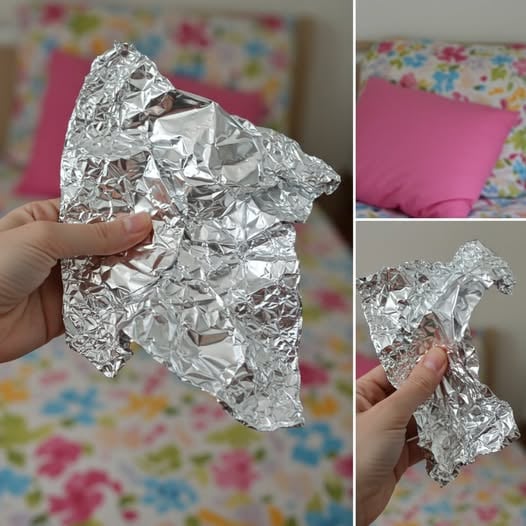
In today’s world, the quest for the perfect night’s sleep has led people down some truly bizarre and inventive paths. From high-tech weighted blankets and noise-canceling machines to special diets and soothing oils, sleep is now a multi-billion-dollar industry. Yet, among all the modern innovations, one of the most unusual and surprising trends that has recently emerged requires only a simple, common kitchen item: aluminum foil. What started as a quirky “grandma trick” has rapidly evolved into a viral sensation, with both skeptics and believers reaching for their pantry shelves. At first glance, the idea of placing foil under your pillow seems absurd, almost like something from a science-fiction comedy. However, the growing number of people claiming real benefits suggests that there might be more to this trend than just the sound of crinkling metal.
This phenomenon began quietly in online communities focused on holistic living and unconventional wellness tips. Users began sharing stories about how simply placing a sheet of aluminum foil beneath their pillowcases had transformed their sleep. The claims varied—some said it helped alleviate morning “brain fog,” while others found it created a calming effect that helped them fall asleep more easily. As the trend gained popularity, it became not just a physical hack but also a metaphorical “shield.” In an age when our bedrooms are flooded with invisible digital signals from Wi-Fi routers, smartphones, and smart devices, the foil is often described as a barrier against the overwhelming energy of the digital world.
To understand why such a peculiar practice has gained momentum, it’s helpful to consider the psychological mechanics of sleep. For many, preparing for bed has turned into a stressful ritual, often filled with worry about unanswered emails or the early alarm to come. Introducing an unconventional ritual like the “aluminum foil trick” can serve as a mental reset, a “pattern interrupt” that signals to the brain that the day is over. This simple action, although strange, acts as a cognitive anchor, diverting the mind from life’s abstract stresses and grounding it in a physical task. For those who embrace it, the foil becomes a symbol of the desire for peace—a subconscious “Do Not Disturb” sign.
However, when we move from anecdotal evidence to scientific research, the story shifts. Sleep specialists and neurologists have quickly weighed in on the trend, making it clear that there is no scientific basis to suggest aluminum foil has any effect on human sleep cycles. From a biological standpoint, sleep is controlled by our circadian rhythm and melatonin production, neither of which is influenced by the presence of household metals. Experts argue that any “interference” people claim to feel from electronics is unlikely to be resolved by a small sheet of foil. If one were genuinely attempting to block electromagnetic frequencies (EMF), a foil square under a pillow would be utterly inadequate. Despite debunking the physics, however, scientists remain intrigued by the psychological aspect of the trend.
The most plausible explanation for the perceived success of the foil trick lies in the placebo effect, though reducing it to just that diminishes how powerful this effect can be. If someone believes that aluminum foil will help them sleep better, their body’s parasympathetic nervous system (the “rest and digest” mode) is more likely to kick in, lowering anxiety and cortisol levels, which fosters deeper and more restorative sleep. In this sense, the foil isn’t directly improving sleep; rather, the belief in its effectiveness allows the body to relax and naturally perform its restorative functions. This highlights the profound connection between the mind and body, where something as simple as kitchen foil can catalyze real physiological change.
Beyond the psychological angle, this trend speaks to a larger cultural yearning for silence and stillness. We live in an era of unprecedented overstimulation, where even when our eyes are closed, we are often still “plugged in,” with devices charging close by, emitting blue light and constant vibrations. The foil-under-the-pillow trend can be seen as a modern folk remedy in response to this digital saturation. It represents a basic attempt to reclaim the bedroom as a sanctuary—a space for rest, free from the constant noise of the 21st century. Whether it works through physics or belief, the driving force behind this ritual is clear: a deep need to disconnect from the digital world and reconnect with the restorative power of sleep.
While the foil trick may provide a brief psychological boost, long-term sleep health is better built on traditional practices. Sleep hygiene—things like maintaining a consistent bedtime, optimizing bedroom temperature (ideally around 18°C), and ensuring complete darkness—remains the cornerstone of good rest. Experts note that while trying the foil trick may not be harmful, it should not replace these essential habits. If the foil leads someone to become more mindful of their sleep environment—perhaps realizing that their phone is a distraction—it has served a useful purpose. Ultimately, removing the phone from the bedroom could have a far more significant impact on sleep than any piece of aluminum.
The rise of this viral trend also reflects how we consume information today. We are constantly searching for “the one secret trick” to solve our complex problems. We tend to prefer a quick fix, like the foil, over the harder work of lifestyle changes, such as cutting out caffeine or turning off our phones an hour before bed. And yet, there’s something undeniably charming about the foil trick. It’s simple, inexpensive, harmless, and carries a sense of old-world mystery. It calls to mind a time when the world felt more magical, and when everyday objects had the power to heal or protect.
Ultimately, the aluminum foil under the pillow represents more than just the material itself—it reflects the human need for comfort. It’s a ritual we turn to in times of stress, seeking something tangible to help us feel safe and secure. Whether this trend fades into obscurity or becomes a permanent part of sleep folklore, it has already sparked a global conversation about the importance of rest. It serves as a reminder that sleep isn’t just a biological necessity; it’s an emotional one as well. If placing a piece of foil under your pillow is what helps you finally relax, let go of your worries, and find peace, then perhaps it’s not so strange after all. In the end, the best “sleep hack” isn’t found in a store or kitchen drawer; it’s found in the quiet realization that we deserve rest, and whatever ritual helps us reach that state is worth respecting. As we continue experimenting with everything from weighted blankets to kitchen foil, we’re all just searching for that elusive, perfect night of sleep.