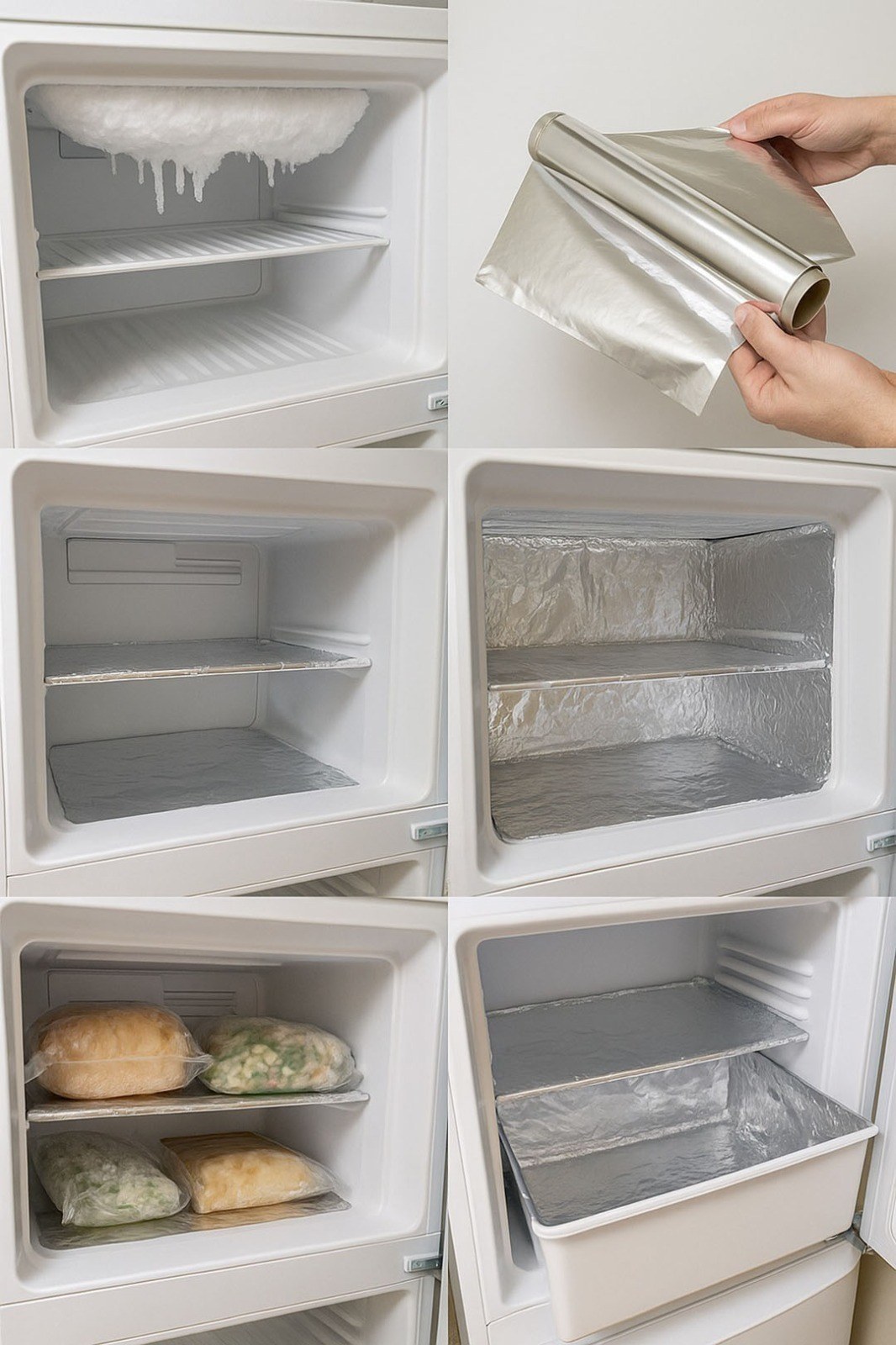
The battle against freezer frost is a universal domestic struggle—a silent invasion of ice that slowly takes over storage space and complicates daily routines. We’ve all experienced the frustration: opening the freezer to grab vegetables or meat, only to find drawers fused shut by a stubborn layer of ice. What should be a simple kitchen task becomes a fight against frozen elements. Most homeowners dread manual defrosting, postponing it until the frost is so thick that the door barely closes. Yet, the key to ending this cycle isn’t scrubbing harder or buying fancy gadgets—it’s something as simple as aluminum foil.
To see why foil works, we must first understand frost. Frost is more than an aesthetic nuisance—it signals inefficiency. Every time the freezer door opens, warm, humid air rushes in. Moisture condenses on cold surfaces and freezes. Over time, thin layers of ice accumulate into a dense mass. This ice not only takes up space but also insulates the cooling coils, forcing the compressor to work harder and more often. The result: louder operation, increased wear, and higher electricity bills.
Traditional defrosting is effective but exhausting. It requires relocating frozen goods, turning off the freezer, waiting for hours as ice melts, and cleaning the resulting puddles—a process that can consume an entire afternoon. Most people delay until frost is several inches thick, making cleanup even worse.
Here’s where aluminum foil transforms the process. After a thorough defrost and drying, line the freezer walls with heavy-duty foil, keeping it flat against the surfaces. The science is simple: aluminum is a thermal conductor, and its smooth surface gives ice little to cling to. Frost forms on the foil rather than the freezer walls, and because foil distributes cold evenly, it prevents condensation “hot spots.” The result is thinner, more brittle frost that’s easy to remove.
Months later, cleaning is effortless. Peel off the foil, and the frost comes away in large sheets, leaving the walls clean. What once took hours becomes a five-minute task: wipe down, replace the foil, and your freezer is ready.
The benefits extend beyond convenience. A frost-free or foil-protected freezer operates more efficiently, stabilizing temperatures, reducing freezer burn, and protecting food quality. Less strain on the compressor also prolongs appliance life, lowering energy bills.
Incorporating this small step reflects a broader approach to smart home management. Low-cost, chemical-free, and easy to maintain, the foil method turns a dreaded chore into minor upkeep. A clean, foil-lined freezer also provides psychological satisfaction, giving a sense of order and control over your home environment.
In conclusion, the aluminum foil hack is more than a life hack—it’s proactive maintenance. While we can’t stop frost from forming, we can control how it interacts with our freezers. A simple sheet of foil saves time, protects appliances, and preserves both money and sanity. The next time frost invades, remember: the solution isn’t more effort—it’s a smarter strategy.