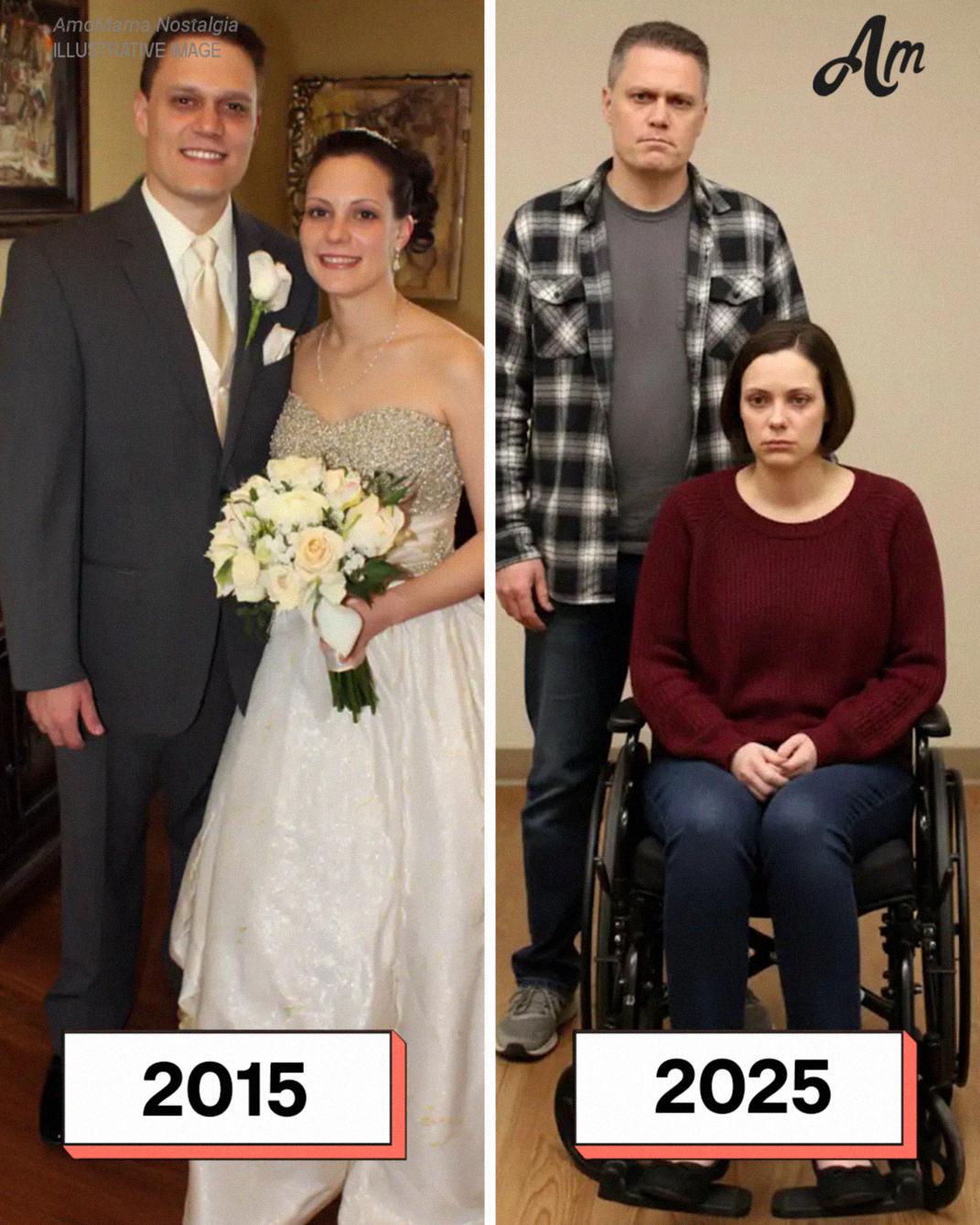
After the accident, I truly believed the hardest part would be learning how to walk again. I was mistaken. Physical therapy wasn’t the real challenge. The pain wasn’t either. Not even the humiliation of needing help for the simplest tasks. The real test came when I learned exactly how much my husband thought my care was worth.
I’m thirty-five years old. Before the crash, I was the backbone of our marriage. I covered most of the bills. I cooked. I cleaned. I managed every appointment, renewal, phone call, document, and deadline. If something needed attention, I handled it. My husband would give me that helpless grin and say, “Can you just take care of it, babe? I’m terrible with paperwork.”
Paperwork wasn’t the only thing he was bad at, but I never said that aloud.
Whenever he wanted to change jobs or “take some time to figure things out,” I’d sit down with spreadsheets and make it work. I took on extra hours. I shifted money around. I made sure rent was paid and food stayed in the fridge. I encouraged him because I believed marriage meant partnership. I believed things would balance out eventually. Ten years together had to count for something, didn’t they?
I never kept score.
Then I was in a serious car accident.
I don’t remember the crash itself. I remember a green traffic light. Then a hospital ceiling. The sharp scent of disinfectant. The haze of pain medication. A doctor’s face drifting in and out of focus as he explained that my legs had taken the worst of the damage.
I survived. My spine was unharmed. There was no permanent paralysis. But my legs were weak enough that I couldn’t stand on my own. For months, I would need a wheelchair—rebuilding strength, balance, and muscles that suddenly felt foreign.
“Six to nine months of physical therapy,” the doctors said. “You’ll need assistance at first. Transfers. Bathing. Moving around. No standing alone for a while.”
I hated hearing it. I’d always been independent. The fixer. The person who stepped in and solved things. I didn’t know how to be the one who needed saving.
When I came home, I told myself this was just a difficult chapter. That struggle would bring us closer. When my father was injured when I was young, my mother cared for him for months without ever making him feel like a burden. They joked. They were gentle. That was love to me. I assumed I had the same kind of marriage.
The first week back, my husband felt distant.
He helped me shower, but his irritation was obvious, like every minute was a chore. He’d make food, set the plate down, and vanish into his office. He left the house for hours without explanation. I excused it as stress. Caregiving is hard. He’s adjusting. He’s scared too. I fed myself those justifications like medicine.
Then one evening, he sat on the edge of the bed wearing what I soon recognized as his “serious conversation” expression.
“We need to be realistic,” he said.
My stomach sank. “Realistic about what?”
He rubbed his face as if I were draining him. “You’re going to need a lot of help. All day. Every day. And I didn’t sign up to be a nurse.”
“You signed up to be my husband,” I said.
“That’s different,” he replied. “This is basically a full-time job. My life will be on hold. My career. My social life. Everything.”
My eyes burned. “I don’t want this either. It’s temporary. The doctors think I’ll—”
He interrupted me. “If you want me to stay and take care of you, I need to be paid. One thousand a week.”
I laughed, genuinely thinking it had to be a cruel joke. No real person says that to their spouse.
He didn’t laugh back.
“You’re serious?” I asked.
He nodded like we were negotiating terms. “You’ve made more than me for years. You carried us. Now you can pay. I’m not your nurse.”
Those words lodged in my mind like shrapnel.
“I’m your wife,” I said, my voice trembling. “I was hit by a car. And you want payment to stay?”
He shrugged. “Think of it as hiring a caregiver. You’d pay a stranger, wouldn’t you? At least this way you know who’s here. I won’t resent it if there’s compensation.”
I stared at him, seeing a stranger where my husband used to be. Then reality crashed down on me: I couldn’t get out of bed alone. I couldn’t safely transfer to my wheelchair. My mother lived out of state. My father was gone. My sister worked nights and helped when she could, but she couldn’t move in yet.
I was terrified. And he knew it.
So I swallowed my pride. “Fine,” I said. “One thousand a week.”
He nodded, pleased. “Transfer it every Friday,” he said. “Keeps things simple.”
Simple—like my dignity was just another expense.
That first Friday, I moved the money from my personal savings into our joint account. He checked his phone, smiled, and patted my arm like I was a customer who’d paid on time.
“Thanks,” he said. “What do you need?”
What I received for a thousand dollars a week was the bare minimum. Showers rushed through with constant sighs. “Can you hurry? I’ve got things to do.” Meals dropped off without asking if I needed help. Hours left alone. When I used the call-button app we set up, he ignored it, later saying, “I was busy,” or “Stop acting like I’m your servant.”
I began feeling guilty for needing water in my own home.
He was constantly on his phone—texting, tilting the screen away from me. I asked once who he was messaging.
“Work guys,” he said. “I’m allowed to have a life.”
He started leaving more often, claiming errands. I’d hear the door slam while I sat stuck in my chair, staring at legs that didn’t feel like mine.
One night, I woke up around midnight desperately thirsty. He wasn’t in bed. I heard him speaking softly in the living room. I pressed the call button.
Nothing.
I called his phone. It rang in the other room.
He let it ring until it stopped.
The next morning, while he showered, his phone lit up on the nightstand. I wasn’t searching—it was right there, glowing.
The message preview froze my blood.
Jenna: “The other night was amazing. Can’t wait to see you again ”
Jenna was my friend.
My hands went numb as I opened the messages. I shouldn’t have—but I did. And I’m grateful I did, because the truth doesn’t wait for comfort.
They joked about my wheelchair. About “babysitting a cripple.” Complaints about how I “just sit there” and “expect him to do everything.” Screenshots of my weekly payments. Plans for dates, dinners, hotels.
One message made me sick: “At least she’s paying for our dates.”
There were photos too—him smiling at restaurants, sitting in Jenna’s car, her kissing his cheek while he smirked.
I put the phone back exactly where it was. When he came in, towel around his waist, he smiled like nothing was wrong.
“Sleep okay?” he asked.
I nodded. “Yeah. Thanks for taking care of me.”
His expression softened. “Of course. I’m doing my best.”
That’s when something inside me shifted—not shattered, but hardened. Focused.
That afternoon, I called my sister.
She arrived, saw my face, and sat beside me. “What happened?”
I told her everything. The ultimatum. The payments. Jenna. The messages.
Her eyes filled with fury. “I’ll bury him in the backyard.”
“Tempting,” I said. “But I want it legal.”
We planned carefully. She offered to move in. I agreed, but first we needed everything in place. She gathered evidence—screenshots, forwarded messages, timelines. Then she remembered something: weeks earlier, she’d taken photos at a street festival.
Scrolling, she froze.
There he was in the background—too close to Jenna. In the next photo, unmistakably kissing her. Her accidental pictures destroyed any lie he might invent.
So I played along.
I kept paying every Friday. Same amount. Same timing. I stopped crying in front of him. I stopped questioning. I acted grateful.
One night, as he helped me into bed, I said softly, “I don’t know what I’d do without you.”
He straightened, pleased. “Yeah. It’s a lot. But I’m here.”
“You’re such a good husband,” I added.
He practically beamed.
A few weeks later, on a Friday morning, everything was ready—the lawyer, the paperwork, the evidence. My sister moved into the guest room, boxes stacked like silent proof.
My husband entered the bedroom, checking his phone. “Is it in?” he asked.
I smiled. “I actually have something special for you.”
His eyes lit up. “Special?”
“A bonus,” I said. “For being so loving during the hardest time of my life.”
He sat eagerly as I pulled out a white ribboned box. He opened it like a child on Christmas morning.
On top sat a neat stack of documents.
He skimmed the first page and his expression changed instantly.
“What is this?” he snapped.
“Divorce papers,” I said. “Very real.”
He flipped further and hit the photos. The screenshots. The jokes. Jenna’s cruelty.
His face drained of color.
“Where did you get these?” he demanded.
“My sister has excellent timing,” I replied.
He slammed the box shut. “After everything I’ve done for you, this is how you repay me?”
I looked at him calmly. “You charged me to stay. You took my money. Then you used it to cheat on me and mock me.”
“I was stressed!” he yelled. “I panicked!”
“You panicked every Friday,” I said. “When you accepted the transfer.”
He dropped to his knees, grabbing for my hands. “Please. I’ll stop. I’ll take care of you for free. I’ll change.”
I pulled away.
“I survived a car crash,” I said. “I survived losing my independence. I survived paying my husband to tolerate me while he laughed behind my back. I’ll survive this too.”
I nodded at the box. “That was your final paycheck.”
I pressed the call button.
My sister entered like a storm. “Time to pack,” she said.
He stared at me. “You’re throwing away ten years?”
“No,” I said. “You did when you put a price on loving me.”
He left furious. He cried only when he realized the deal was over.
My sister stayed.
She cared for me without counting minutes or money. She joked through the hard parts. She celebrated every small victory. When I stood for the first time in therapy, she cried. When I crossed the kitchen with a walker, she filmed it like a championship win.
Months later, when I crossed the living room with just a cane, we sat on the floor laughing until we sobbed.
Somewhere along the way, I learned the difference between performance and love.
Love doesn’t send invoices.
If someone only stays when you’re easy and useful, they never loved you—they loved what you provided.
And when the accident took away what I could give, it showed me exactly who he was.