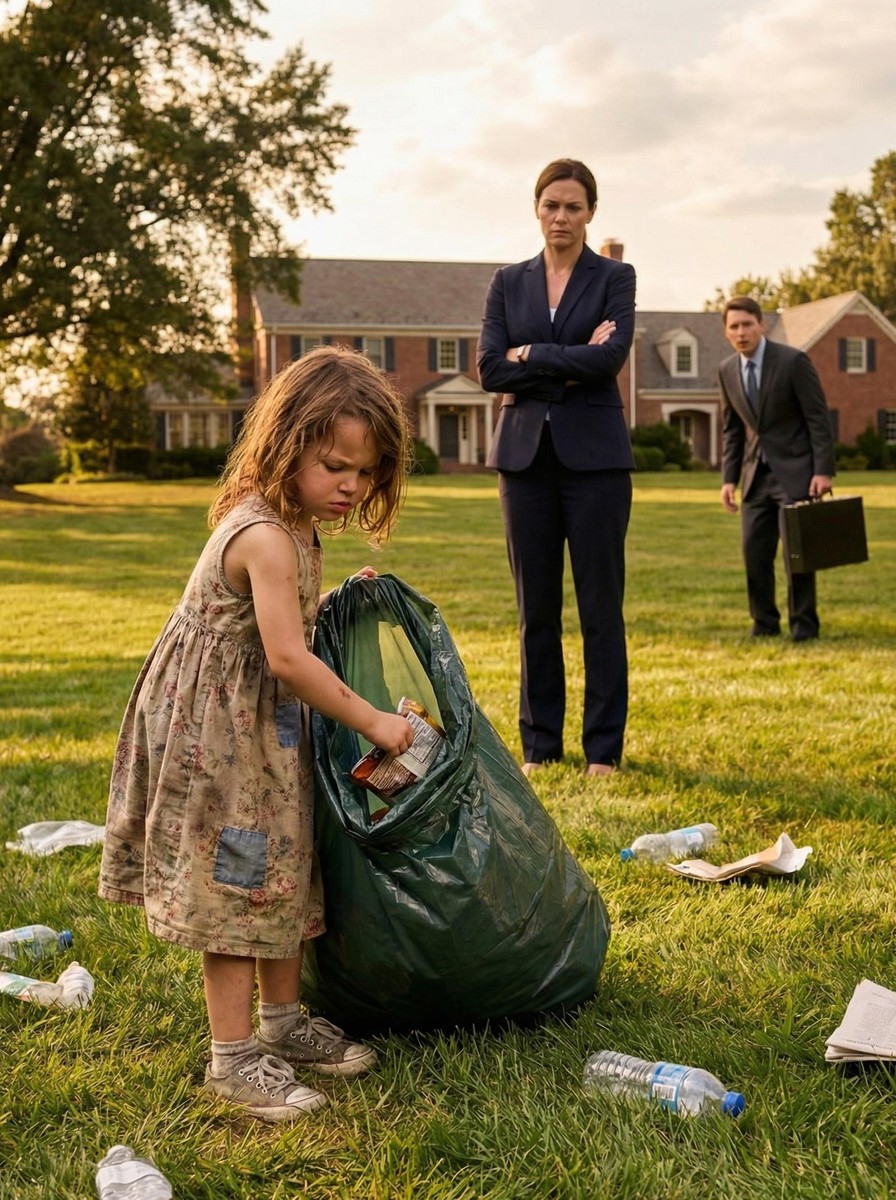
After three long months overseas finalizing a critical business partnership, Adrian Cole finally returned home, his mind alive with anticipation. He had counted the days, imagined every detail of his reunion with his eight-year-old daughter, Hannah. Each night, thoughts of her laughter and curiosity had anchored him amid long negotiations and endless meetings. He pictured her running across the lawn, her small arms reaching for him, eager to proudly show her newest drawings or recount stories from her school day. The very idea of her warmth kept him going through exhausting flights and sleepless nights in foreign cities.
As Adrian’s car approached the family estate, relief washed over him, mingled with excitement. But something felt off. The air itself seemed quieter than usual. There was no joyful squeal of a child, no welcoming bark from the family dog, no faint hum of household activity. His heart quickened. Pulling up to the driveway, he noticed an unusual stillness in the garden and the windows. Stepping inside, the house looked immaculate—clean, polished, almost perfectly organized—but the energy was missing. It felt more like a museum than a home. A large portrait of his wife, Vanessa, now dominated the living room wall, replacing the family photograph that had once captured their three smiles together. Adrian paused, unease creeping in. He called out for Hannah, but there was no answer. The housekeeper, standing quietly near the staircase, seemed hesitant. With a subtle gesture, she pointed toward the garden.
Rushing outside, Adrian discovered his daughter hard at work on a project far beyond her age and strength. Hannah struggled with pruning, raking, and tidying, sweat beading on her forehead. She moved carefully, almost mechanically, as though fear and obligation were guiding her motions. Vanessa, seated nearby, watched silently, explaining in a calm tone that she was teaching Hannah discipline and responsibility during Adrian’s absence. Adrian’s heart sank. Seeing his daughter overwhelmed, exhausted, and anxious stirred something deep in him—a protective instinct that overrode any formalities. He knelt beside her, brushing stray strands of hair from her face, and gently reassured her. Hannah’s eyes, wide and glistening, reflected both relief and lingering worry. That night, in the quiet intimacy of Hannah’s room, she confided how frightened she had been by the strict new rules and how much she had missed her father. Adrian held her hand, promising that she was safe and that he would take steps to ensure she felt secure, heard, and loved from that moment forward.
The following day, Adrian faced further complications, both personal and professional. During his absence, his accounts had been temporarily restricted due to legal filings and administrative actions he had not anticipated. His longtime attorney, Evelyn, contacted him with urgent instructions, emphasizing the need for careful, deliberate action to untangle the confusion. Misleading reports, false claims, and misunderstandings had grown into a small crisis, threatening not just his business but also his ability to manage parental responsibilities effectively. Adrian spent hours reviewing documents, photographs, and communications. With Evelyn’s guidance, he meticulously compiled evidence that corrected inaccuracies, clarified timelines, and restored his authority over his affairs. Throughout this intense period, he remained mindful of Hannah’s emotional state, shielding her from unnecessary stress and keeping routines familiar so she could feel a sense of stability and normalcy.
Once the challenges had been addressed, Adrian realized it was time to reevaluate his life priorities. He scaled back professional obligations, refusing to allow business pressures to eclipse his role as a father. Slowly, the house began to feel alive again. Laughter returned to the rooms, echoes of creativity spread across the dining table covered in art supplies, and shared meals became opportunities for conversation, teaching, and bonding. Adrian also initiated a small community program dedicated to children’s well-being and education, inspired by the lessons he had learned from witnessing how fragile a child’s sense of security can be. Through these acts, he found a deeper purpose: to create stability and joy for not just his family, but others in his neighborhood who might be navigating similar struggles.
Watching Hannah thrive once more reminded Adrian that true success was never about wealth, recognition, or career milestones. Success lay in presence, care, and trust—the simple but profound acts that make life meaningful. Their home, once clouded by tension and uncertainty, blossomed again into a place of warmth, safety, and love. Even small moments—a shared cup of cocoa, a story read aloud before bed, an afternoon planting flowers—became markers of the stability and happiness that Adrian was determined to preserve. In the end, he understood that patience, attentiveness, and unwavering love could rebuild even the most fragile beginnings, and that life’s greatest rewards were often measured not in contracts won or deals closed, but in the quiet, persistent nurturing of those we hold most dear.