Cooked rice can turn dangerous long before it looks wrong. One missed step, one warm kitchen counter, and bacteria can begin multiplying without leaving any obvious warning. Most people never notice a problem until someone becomes sick. The rice may still look perfectly normal, smell fresh, and have the same familiar texture. There may be no visible mold, no unusual color, and no unpleasant odor. Yet hidden risks can develop while the food sits quietly at room temperature.
Rice is one of the most common foods in kitchens around the world. It is inexpensive, versatile, easy to prepare, and often cooked in large quantities so there will be enough for more than one meal. Leftovers are frequently saved for lunch the next day, added to fried rice, or served alongside another dish. But while saving rice can be convenient, storing it incorrectly can create a food safety problem that many people underestimate.
The reason has to do with a bacterium called *Bacillus cereus*. Its spores can naturally be present in uncooked rice and may survive the cooking process. Cooking kills many harmful microorganisms, but it does not necessarily destroy every bacterial spore. If cooked rice is then left sitting in warm conditions, surviving spores can develop into bacteria and multiply.
Under certain conditions, these bacteria can produce toxins that cause food poisoning. One type of toxin is particularly concerning because it can remain active even after the rice is reheated. This means that putting questionable leftover rice back into a hot pan or microwave does not necessarily make it safe to eat.
The danger is that contaminated rice often gives no obvious warning. People naturally rely on their senses when deciding whether food is still good. They look for changes in color, check the smell, or take note of unusual textures. Those checks can be useful for identifying some forms of spoilage, but they cannot reliably detect the toxins associated with *Bacillus cereus*.
That is why proper handling matters from the moment the rice finishes cooking.
One of the most important steps is cooling it quickly. Leaving a large pot of freshly cooked rice on the kitchen counter for several hours gives bacteria an opportunity to multiply. Instead, divide the rice into smaller portions and place it in shallow containers. This allows heat to escape more quickly than it would from a deep pot or tightly packed container.
Once portioned, the rice should be refrigerated promptly, ideally within one hour when following specific rice-safety guidance, and certainly within two hours under general food safety recommendations. If the surrounding temperature is particularly hot, the safe window can be shorter. The refrigerator should be kept at approximately 4°C (40°F) or below.
Using shallow, airtight containers also helps keep the rice organized and reduces exposure to other foods and odors inside the refrigerator. It is a simple habit, but it can make a meaningful difference. Rather than leaving the entire pot out until it reaches room temperature, separate the rice and refrigerate it while it is still cooling.
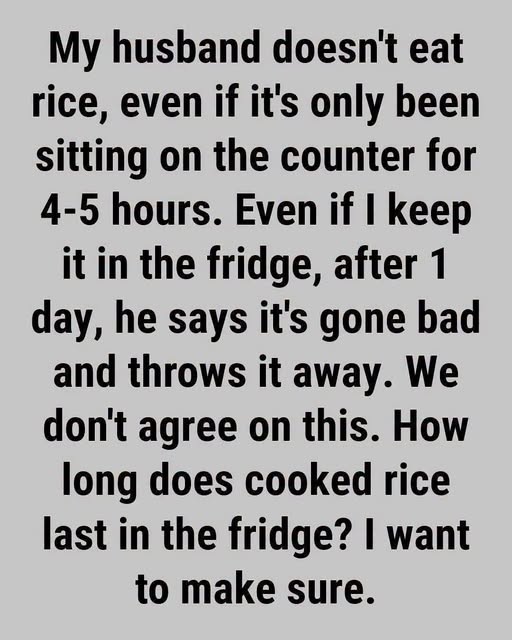
How long should cooked rice stay in the refrigerator? Recommendations can vary depending on the food safety authority and local guidance. A cautious approach is to use refrigerated rice within one day, particularly when following specialist advice for cooked rice. Some general leftover-food guidelines allow three to four days under properly controlled refrigeration, but keeping rice for four to six days should not be treated as a universal safety recommendation.
If you know you will not use the leftovers soon, freezing is a better option. Divide the rice into meal-sized portions, place them in suitable freezer containers or bags, and freeze them promptly. This makes it easier to take out only what is needed and avoids repeatedly warming and cooling the same batch.
Reheating requires attention as well. Rice should be heated until steaming hot throughout, ideally reaching an internal temperature of 74°C (165°F). If it has become dry in the refrigerator, adding a small splash of water before reheating can help restore moisture and improve its texture. Stirring during microwave reheating is also useful because it helps distribute heat more evenly.
Another important rule is to avoid reheating the same portion multiple times. Each cycle of cooling and warming creates another opportunity for unsafe handling. It is better to take out only the amount you plan to eat and leave the remaining portions properly refrigerated or frozen.
Rice that has been left at room temperature for too long should be discarded, even if it looks and smells completely fine. Reheating cannot reliably remove toxins that may already have formed. Tasting a small amount is not a safe way to determine whether it is suitable to eat.
Food poisoning caused by *Bacillus cereus* can produce symptoms such as nausea, vomiting, abdominal cramps, and diarrhea. Depending on the type of toxin involved, symptoms may begin within a few hours or later. Most cases are relatively short-lived, but severe symptoms, dehydration, or illness in vulnerable individuals should be taken seriously and may require medical attention.
The problem is not that rice is naturally unsafe. Properly cooked and handled rice is a normal part of a healthy diet enjoyed by millions of people. The risk comes from allowing cooked rice to remain in conditions where bacteria can multiply and potentially produce toxins.
A few small habits can prevent unnecessary problems: prepare only what you need, divide leftovers into shallow containers, refrigerate them promptly, use them within a sensible period, and reheat each portion thoroughly. When in doubt about how long rice has been sitting out, it is safer to throw it away than to take a chance.
The most important lesson is simple: never judge the safety of cooked rice by its appearance or smell alone. Food does not always show visible signs when it becomes unsafe. A bowl of rice may look exactly as it did when it was first prepared, but proper storage is what determines whether those leftovers are still safe to enjoy.