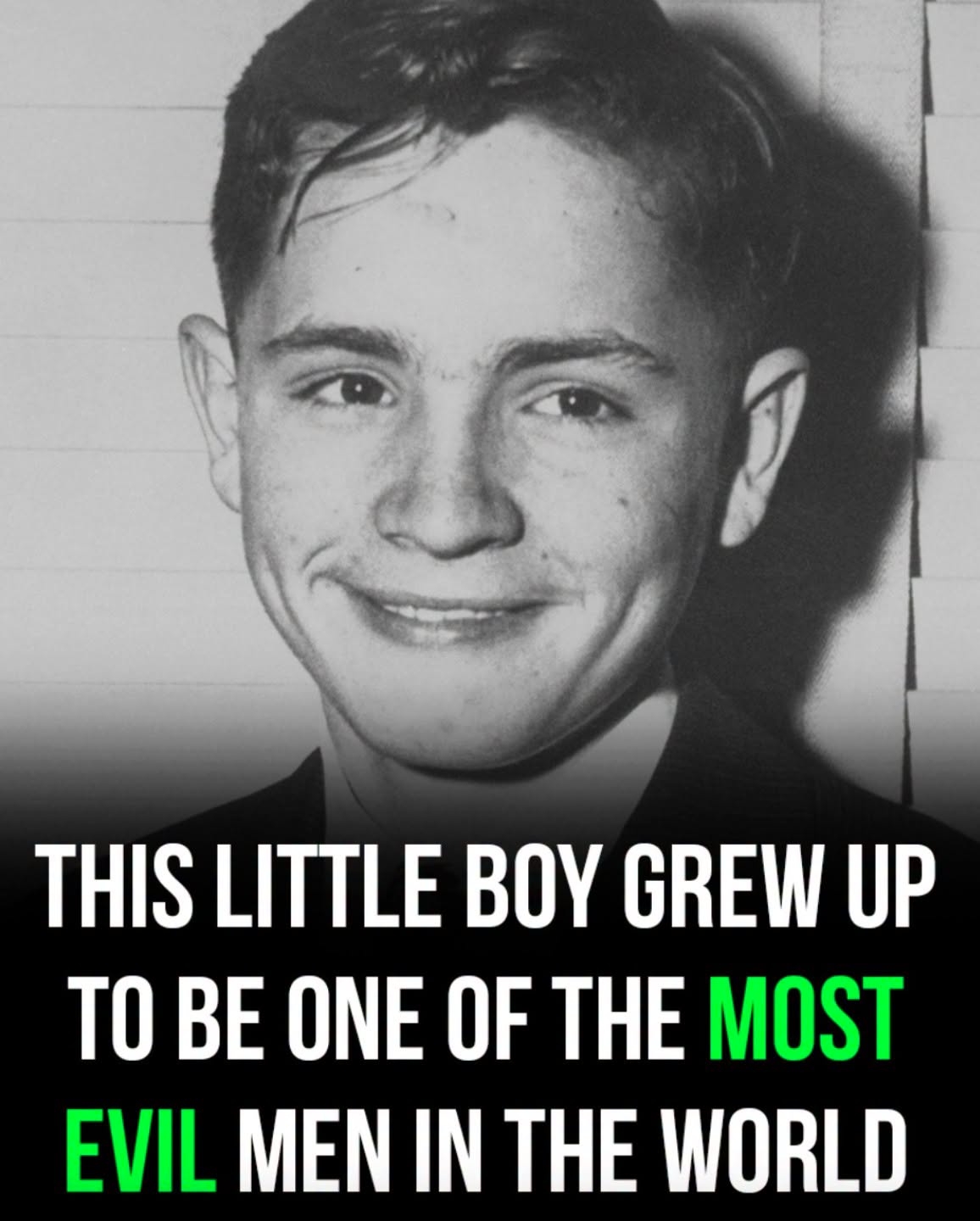
Long before Charles Manson became one of the most infamous names in American criminal history, his life was already marked by instability, abandonment, and a childhood without the security most children depend on. Before the cult, before the murders, and before his face became internationally recognized, there was a young boy growing up in circumstances that would shape his understanding of relationships, authority, and the world around him.
His story is disturbing not only because of the crimes he eventually inspired, but also because of the long series of events that preceded them. Manson’s childhood was filled with uncertainty, and the people who should have provided stability were often absent. Yet understanding where his life began does not excuse the violence he later encouraged or the suffering inflicted on his victims. Instead, it provides context for examining how a troubled childhood, repeated criminal behavior, and deliberate manipulation became part of one of America’s most notorious criminal stories.
Charles Manson was born on November 12, 1934, in Cincinnati, Ohio. His mother, Kathleen Maddox, was a teenager when she gave birth to him. His biological father was largely absent from his life, leaving his mother to raise him under difficult circumstances. Kathleen’s personal life was unstable, and her struggles with the law further complicated the boy’s early years.
Manson experienced periods of separation from his mother and was sometimes cared for by relatives. The lack of a consistent home environment meant that the people responsible for looking after him changed repeatedly. For a young child, this kind of instability can make it difficult to develop a sense of safety and trust.
One of the most frequently discussed episodes from his childhood involved his mother’s imprisonment for robbery. During this period, Manson was placed in the care of relatives. His relationship with his mother remained complicated, and the emotional consequences of their separation became part of the broader history of his early development.
As he grew older, his behavior became increasingly difficult for the adults around him to manage. He struggled with school, repeatedly violated rules, and began engaging in criminal activities while still very young. Rather than developing a stable routine, he moved through a succession of institutions and temporary living arrangements.
His first serious encounters with the juvenile justice system began during adolescence. He was sent to reform schools and other facilities where authorities attempted to control his behavior. However, these experiences did little to establish a lasting sense of direction. Instead, his life became increasingly defined by institutional confinement, escape attempts, and further offenses.
Manson later spent time in federal correctional facilities as his criminal activities continued. Theft, fraud, and other offenses gradually became recurring parts of his life. By adulthood, he had developed a long criminal record and had spent considerable periods behind bars.
Prison became an important part of his personal development, although not in the way authorities might have hoped. During his years of confinement, he encountered different personalities, learned how to navigate institutional environments, and became increasingly interested in gaining influence over other people.
His ability to communicate persuasively and present himself as someone with unusual insight would later become central to his public notoriety. He was interested in music, religion, philosophy, and unconventional ideas, often combining them in ways that attracted people searching for identity or direction.
When Manson was released from prison in 1967, the United States was experiencing major cultural changes. The counterculture movement was expanding, young people were questioning traditional institutions, and communities associated with alternative lifestyles were becoming increasingly visible.
California, particularly the San Francisco area, attracted people interested in music, communal living, experimentation, and different approaches to social life. Manson entered this environment at a time when many young people were searching for belonging and meaning.
He quickly began attracting followers.
Some were young women and men who had become disconnected from their families or traditional social structures. Others were looking for acceptance, adventure, or a sense of purpose. Manson presented himself as someone who possessed special knowledge and could offer answers to their questions.
Gradually, the group that became known as the Manson Family developed around him.
Despite the name, it was not a traditional family. It was a group organized around Manson’s authority, with members living communally and increasingly accepting his personal beliefs. Drugs, psychological pressure, manipulation, and isolation played important roles in maintaining his influence.
Manson used a mixture of religious language, distorted interpretations of popular music, racial ideas, and apocalyptic predictions to influence his followers. He encouraged them to view him as an extraordinary figure and gradually weakened their connections to people outside the group.
What made the situation particularly dangerous was the way ordinary relationships were replaced by unquestioning loyalty. Members increasingly organized their lives around Manson’s instructions, beliefs, and demands.
His interest in music also became part of the group’s identity. Manson wanted to become a successful musician and believed he could establish himself within the entertainment industry. He spent time attempting to make connections with people in the music business and became increasingly frustrated when his ambitions did not develop as he expected.
But his growing influence over the group was moving in a much darker direction.
By 1969, Manson had become associated with a series of horrifying murders that shocked the United States. The killings in August of that year brought national attention to the group and exposed the extent of the violence surrounding his followers.
Among the victims were actress Sharon Tate, who was eight months pregnant, and several other people at her home in Los Angeles. The following night, Leno and Rosemary LaBianca were murdered in their residence.
The brutality of the crimes, combined with the apparent randomness of the victims, created widespread fear. Investigators initially faced the challenge of understanding why these individuals had been targeted and whether the killings were connected.
As the investigation developed, authorities uncovered the involvement of Manson and members of his group. The murders became associated with Manson’s apocalyptic beliefs and his distorted interpretation of the Beatles song “Helter Skelter.”
Prosecutors argued that Manson had encouraged and directed his followers to commit the killings as part of an imagined racial conflict that he believed was approaching. His ideas combined conspiracy theories, racial hatred, and increasingly irrational predictions about the future.
The expression “Helter Skelter” became central to the prosecution’s explanation of the murders. It was presented as the name Manson used for the violent social upheaval he believed would occur.
The investigation and subsequent trials revealed a disturbing picture of manipulation and control. Manson did not need to personally carry out every act of violence to exercise enormous influence over the people who followed him. His authority within the group and the beliefs he promoted became central issues in the legal proceedings.
The trials attracted extraordinary media attention. Journalists, photographers, and television crews followed developments closely, while Manson’s unusual behavior in court made him an increasingly recognizable figure.
He frequently interrupted proceedings, made strange statements, and attempted to turn the courtroom into a stage for his own performance. His followers also attracted attention through their behavior outside the courthouse.
In 1971, Manson was convicted of first-degree murder and conspiracy to commit murder in connection with the Tate-LaBianca killings. Several of