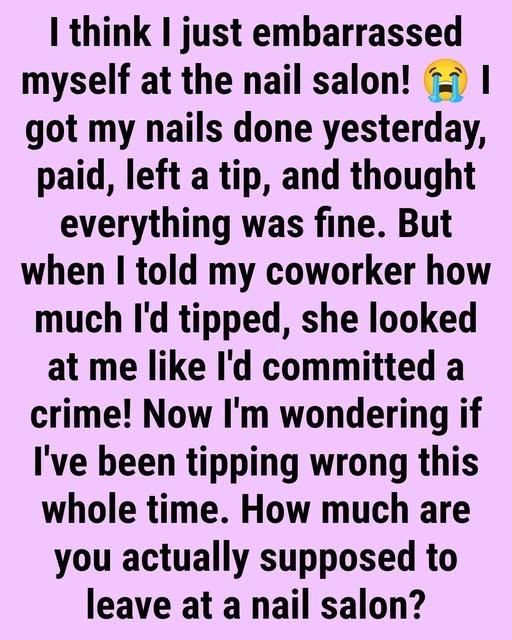
A simple trip to the nail salon can sometimes turn into an unexpectedly awkward experience, especially when the appointment is finished and the final bill arrives. You have enjoyed the manicure, your nails look beautiful, and everything seems straightforward until you notice the tipping question. Suddenly, you may find yourself wondering how much you are supposed to leave, whether a certain percentage is expected, and whether giving too little could make the situation uncomfortable.
For many customers, tipping at a nail salon is one of those everyday social expectations that seems simple until the moment arrives. Unlike the price of the manicure itself, which is usually displayed before the service begins, the appropriate tip can feel less clearly defined. Some people automatically leave a percentage, others choose a fixed amount, and some are unsure whether tipping is necessary at all.
The good news is that there is a widely accepted guideline that can make the decision easier. At many nail salons in the United States, a tip of 15% to 20% is customary for satisfactory service. This range provides a practical starting point for customers who want to show appreciation without feeling pressured to guess.
For example, if your manicure costs $40, a 15% tip would be $6, while a 20% tip would be $8. If the service costs $60, the corresponding tips would be $9 and $12. These amounts are not rigid rules, but they offer a useful reference when the appointment is finished and you are deciding what feels appropriate.
The reason tipping is common in nail salons goes beyond the final appearance of your nails. A professional manicure often requires considerable attention, patience, and technical skill. Nail technicians may spend a significant amount of time preparing the nails, shaping them, caring for the cuticles, applying polish, and making sure every detail looks clean and even.
Some services are considerably more involved than others. A basic manicure may be relatively quick, while gel applications, acrylic extensions, intricate designs, and detailed nail art can require much more time and concentration. Technicians must work carefully, often using small tools and precise movements to achieve the desired result.
That is why some customers choose to leave more than the standard 15% to 20% when the service involves additional effort. Intricate nail art, complicated designs, lengthy appointments, or exceptional attention to detail may justify a more generous tip for someone who is satisfied with the result.
For example, creating detailed floral patterns, carefully applying decorations, or matching a complicated design from a photograph requires more than simply applying a coat of polish. The technician must combine creativity with precision, and the process can take considerably longer than a standard manicure. A higher tip can be one way to acknowledge that additional work.
Another factor is the overall experience. Customers may consider whether the technician was attentive, professional, patient, and careful throughout the appointment. Did the technician listen to what you wanted? Were they willing to make adjustments? Did they take the time to ensure the final result met your expectations? These details can influence how much someone chooses to leave.
However, tipping should also remain realistic and within your financial means. It is easy to feel uncomfortable when other customers appear to leave generous tips, but your decision should not be based entirely on what someone else can afford. A reasonable tip that fits your budget is better than feeling pressured to spend more than you can comfortably manage.
Regular salon customers may find it helpful to establish a consistent tipping habit. If you visit the same technician every two or three weeks, leaving a similar percentage for comparable services can make the process easier. It also helps build a positive professional relationship based on mutual respect and appreciation.
Some customers prefer to tip the same technician directly whenever possible, particularly when they have developed a long-term relationship with someone who understands their preferences. Over time, the technician may become familiar with the shape, length, colors, and styles the customer prefers. That consistency can make each appointment feel more personal and comfortable.
There are also situations in which customers may be uncertain about how tips are handled. Some salons allow tipping through a credit or debit card, while others may prefer cash. In certain establishments, customers may pay at a front desk rather than directly to the technician. If you are unsure whether the technician receives the tip, it is perfectly reasonable to ask politely.
A simple question such as, “Can I add the tip to my card, or would you prefer cash?” can prevent confusion. There is no need to feel embarrassed about asking. Salon employees are familiar with these questions, and knowing how the payment system works can help customers make sure their appreciation reaches the person who provided the service.
It is also worth remembering that tipping expectations can vary depending on location, salon policies, and local customs. In the United States, the 15% to 20% guideline is widely recognized, but practices may differ in other countries. Some salons include service charges in the bill, while others operate in places where tipping is less common. Checking local expectations is always helpful when visiting an unfamiliar salon.
If the service does not meet expectations, the situation can become more complicated. Customers should not feel obligated to pretend they are satisfied when something has gone wrong. If the polish is uneven, the requested design has not been completed, or the result is significantly different from what was agreed upon, it is reasonable to raise the concern politely and give the salon an opportunity to address it.
Good communication is important in these situations. A calm explanation can often resolve a misunderstanding without creating an uncomfortable atmosphere. Tipping is generally intended to recognize service and effort, not to prevent customers from expressing legitimate concerns.
Ultimately, the most important thing is to understand that tipping is a way of showing appreciation for professional service. It recognizes the time, skill, and attention that nail technicians bring to their work. A beautiful manicure may last for days or weeks, but the care required to create it happens during a relatively short appointment.
The next time you sit in a salon chair and watch the technician carefully finish the final details, you will have a better idea of what to expect when the bill arrives. A tip of 15% to 20% is a common guideline in many U.S. salons, with additional generosity appropriate when the work deserves it and your budget allows.
There is no need to turn a simple manicure into a stressful calculation. Be considerate, understand the local customs, and choose an amount that feels fair. In the end, a thoughtful tip is a small gesture that can make a difference to the people whose skill and patience help customers leave the salon feeling confident and looking their best.