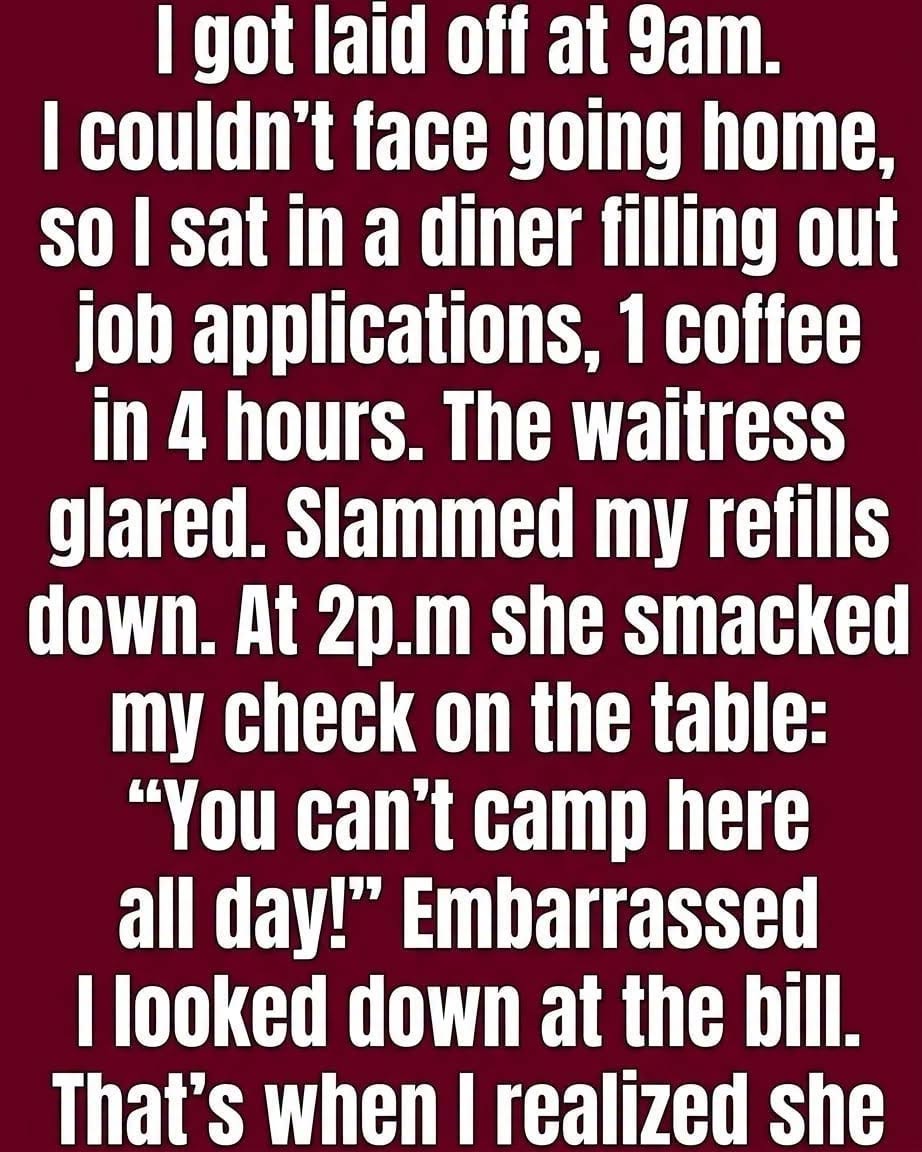
I lost my job at nine in the morning and went to a diner because I could not face going home. With one coffee and a stack of applications, I sat at the table trying to imagine how I was supposed to explain my morning to anybody. The longer I stayed, the more conspicuous I felt. The waitress came back with refills and I took her impatience personally. I already had enough reason to think I was in the way.
By two in the afternoon she was ready for me to leave. She told me I could not camp there all day and put the check in front of me. I looked down expecting to work out how much I owed for the coffee. The amount was zero. She had returned my money and written that the diner needed a dishwasher. I could come to the kitchen door at three, ask for Rosa and get paid by the day.
For hours I had believed her only concern was getting her table back. She had also seen the papers that covered it. Her solution was practical enough that I could decide what to do immediately. I did not have to explain the details of my firing or promise I could stay forever. She had told me there was a shift available and shown me exactly how to begin it.
I went back to the kitchen door. During the six weeks I washed dishes, the work gave me a schedule while I continued looking for an office job. I still had applications to send and calls to wait for. The difference was that the whole day was no longer organized around waiting. There were dishes to get through, people who expected me to turn up and a reason to stop measuring each afternoon by how many replies I had received.
I eventually found another office job, and Rosa still keeps a table for me on Fridays. Coming back as a customer reminds me how much I misunderstood the day we met. I remember the sound of the check hitting the table because I expected it to confirm that I had stayed too long. Then I saw that she had used it to write the information I needed.
That was the kindness in what she did. Rosa had a job that needed doing and I had a day I did not know how to get through. She found a way to make those two things meet. An offer of a shift could look small to somebody who already had work to go to the next morning. At the table that afternoon, it meant I could put down the applications and be useful somewhere.
I still think about her decision to put the offer on the back of the check. Anyone passing the table could have assumed we were finishing an ordinary transaction. I was free to turn the slip over, take a minute to understand it and decide what to do in my own time. The person who seemed most ready for me to leave the diner was the one who had quietly given me a reason to walk back through its door.