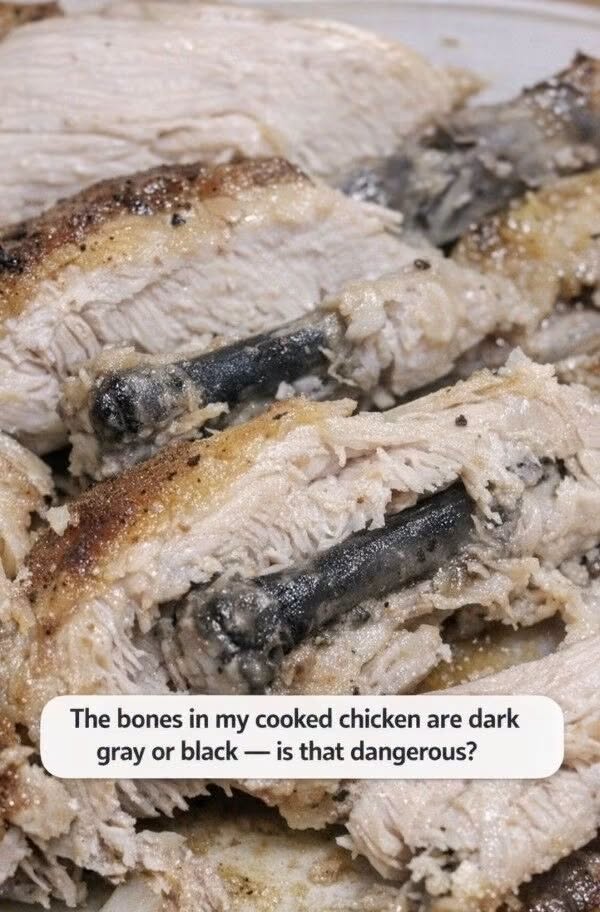
One dark chicken bone can turn an ordinary dinner into a moment of concern. You cut into a piece of chicken expecting tender, familiar-looking meat, only to notice that the bone has turned gray or almost black. Suddenly, you begin wondering whether the food is spoiled, whether it was cooked incorrectly, or whether eating it could make you sick.
Although the appearance can be unsettling, a dark chicken bone does not automatically mean the meat is unsafe. In many cases, the discoloration has a natural explanation involving the bone marrow and the way chicken bones develop.
A common reason for this change is pigment from the bone marrow passing through the porous structure of the bone. This is particularly noticeable in younger chickens because their bones have not yet fully hardened. Their developing bones can allow marrow pigments to move through the surrounding tissue more easily, sometimes leaving dark marks on the bone and nearby meat.
Freezing can also contribute to the appearance. During freezing and thawing, changes in the tissues may allow more pigment to escape from the marrow. When the chicken is cooked, heat can darken these pigments, making the discoloration even more noticeable. In some cases, the meat close to the bone may appear darker as well.
The result can look alarming, especially when someone encounters it unexpectedly. However, this type of discoloration is generally harmless by itself. It does not necessarily indicate that the chicken has spoiled or that it is unsafe to eat.
The important distinction is that color alone cannot determine whether poultry is safe. A dark bone may be harmless, while chicken that looks perfectly normal can still contain harmful bacteria if it has been undercooked or handled improperly.
That is why food safety experts recommend using a food thermometer rather than relying on appearance. Chicken should reach an internal temperature of 165°F (74°C) in its thickest part. When checking the temperature, make sure the thermometer’s probe does not touch the bone, because that can affect the reading.
Other familiar kitchen signs can also be misleading. Clear juices do not guarantee that chicken is fully cooked, and the absence of pink meat does not prove that it has reached a safe temperature. Properly measuring the internal temperature is a much more dependable way to check.
It is equally important to recognize signs that chicken may have spoiled. An unpleasant or unusual odor, a slimy surface, or visible mold are reasons to discard it. Do not taste questionable poultry to determine whether it is safe. Cooking cannot reliably make spoiled food safe again, because some hazards may remain even after heating.
Storage matters just as much as cooking. Raw and cooked chicken should be refrigerated promptly, generally within two hours of being left at room temperature. In particularly hot conditions, that safe window can be shorter. Keeping poultry properly chilled, avoiding cross-contamination, and washing hands and utensils after handling raw chicken all help reduce the risk of foodborne illness.
Another important point is that harmful bacteria do not always change the smell, texture, or appearance of food. Chicken can look and smell normal while still being unsafe because of improper handling or storage. This is why visual inspection should never replace proper food-safety practices.
So, the next time you cut into chicken and notice a dark bone, there is no need to assume the worst based on color alone. It may simply be the result of natural marrow pigments, the age of the bird, freezing, and cooking. What matters most is whether the chicken was stored correctly, handled safely, and cooked to the recommended internal temperature.
A strange-looking bone may catch your attention, but it is not the most reliable warning sign. When it comes to poultry, safe preparation and proper temperature are far more important than whether the bone looks white, gray, or black.