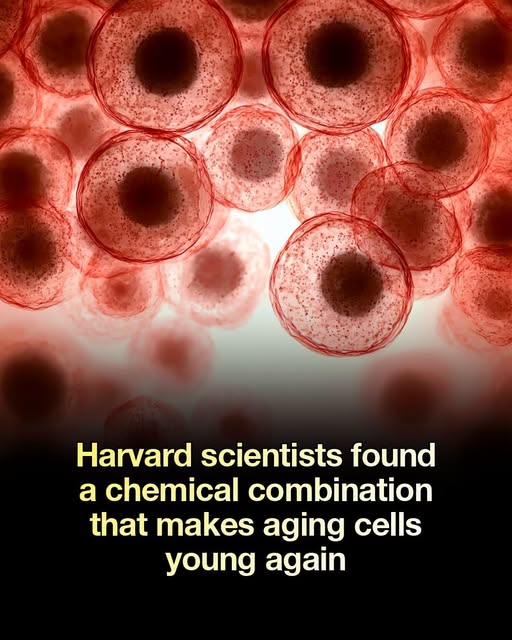
Old cells made younger again in less than a week. In a discovery that attracted attention from scientists around the world, a team at Harvard Medical School led by researcher David Sinclair identified six chemical cocktails capable of making aging human cells display younger characteristics. The findings raised exciting questions about whether the biological effects of aging could one day be reversed rather than simply slowed down.
Until recently, attempts to rewind a cell’s biological age relied heavily on genetic reprogramming techniques, which can be complicated, expensive, and difficult to apply widely. Sinclair and his colleagues explored a different approach, using chemical combinations instead of introducing genetic instructions. Their goal was to restore youthful characteristics without changing the cells into a completely different type.
One particularly interesting part of the research was that the treated cells appeared to maintain their original identity. In other words, the scientists were looking for a way to make older cells behave more like younger versions of themselves without turning them into stem cells or erasing what made them unique. The experiments showed promising changes in gene activity and other cellular markers associated with aging.
The research was published in the scientific journal *Aging* on July 12, 2023. The team reported that the six chemical cocktails produced measurable changes in less than a week, with some effects appearing after only four days of treatment. These findings suggested that chemical reprogramming could become an important area of research for scientists searching for new ways to understand and potentially address the aging process.
David Sinclair has expressed optimism about the possibility of reversing aspects of biological aging. He has suggested that discoveries like this could eventually lead to treatments that help restore youthful functions in aging cells. The long-term vision is ambitious: instead of developing medicines that only slow down age-related decline, scientists may one day be able to target some of the underlying processes responsible for it.
However, there is still a major distance between making cells appear younger in a laboratory and safely reversing aging in an entire human body. The 2023 findings were early-stage laboratory research, not proof that a pill can make people younger or extend human life. Further experiments and carefully designed clinical studies will be needed before these discoveries can become medical treatments.
Still, the research represents an intriguing direction in the science of aging. What once seemed like something possible only through complicated genetic techniques may eventually be approached through carefully designed chemical treatments. Sinclair believes that one day, this research could help scientists move closer to a future in which certain effects of aging can be reversed, perhaps even through a single pill.