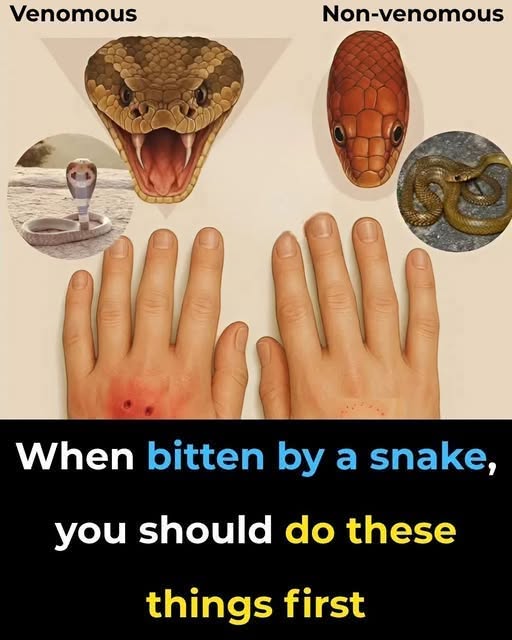
Snake Bite – Don’t Panic, Do the Following
A snake bite can be a medical emergency. Knowing how to respond quickly and correctly can help save a life.
A snake bite can cause fear and panic, especially when the type of snake is unknown. However, staying calm and taking the right steps is essential to reduce the risk of further complications. Some snake bites are harmless, while others can involve dangerous venom that requires immediate medical treatment. For this reason, every suspected venomous snake bite should be treated as an emergency.
The first and most important step is to call emergency services immediately. Do not wait for symptoms to appear, as the effects of venom may take time to become noticeable. While waiting for medical assistance, move away from the snake to prevent another bite and help the affected person remain as calm and still as possible. Unnecessary movement can increase the spread of venom through the body.
If the bite is on an arm or leg, keep the affected limb as still as possible and support it with a splint if one is available. Remove rings, watches, bracelets, and tight clothing near the bite before swelling develops. The person should avoid walking if possible and should not drive themselves to the hospital.
It is equally important to understand what not to do after a snake bite. Never attempt to suck out the venom, cut the wound, apply ice, or use chemicals or traditional remedies. Do not apply a tight tourniquet or tie a cord around the affected limb, as this can cause additional damage. Avoid trying to catch, kill, or handle the snake, because doing so could lead to another bite. If it is safe to do so from a distance, take a photograph of the snake or remember its general appearance to help medical professionals identify it.
Symptoms of a venomous snake bite may include pain, swelling, redness, bruising, nausea, vomiting, dizziness, weakness, or difficulty breathing. In some cases, the person may experience bleeding, changes in vision, or loss of consciousness. However, the absence of immediate symptoms does not necessarily mean the bite is harmless. Medical evaluation is essential even when the wound appears small.
If the person becomes unresponsive or has difficulty breathing, inform the emergency dispatcher immediately and follow their instructions. If the person is not breathing normally, begin CPR if you are able and follow the dispatcher’s guidance.
Medical professionals may monitor the patient’s condition, provide supportive treatment, and administer antivenom when indicated. Early medical assessment can be critical in preventing serious complications.
Remember: Stay calm, move away from the snake, keep the victim still, avoid dangerous first-aid methods, and seek emergency medical assistance without delay. Knowing these basic steps can make a significant difference when every minute matters.