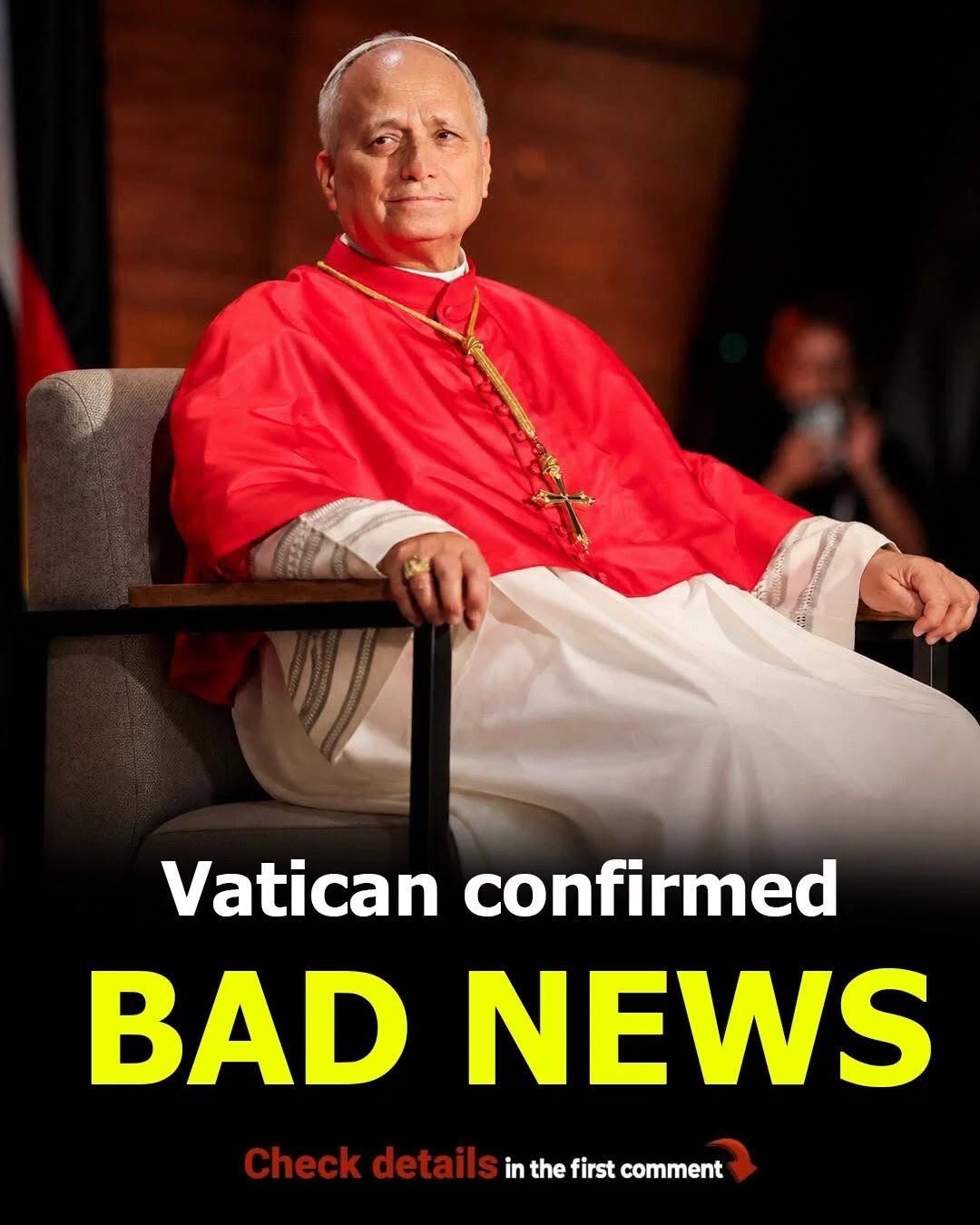
VATICAN CITY, October 22, 2026 — A serious medical diagnosis involving Pope Leo XIV has drawn international attention after Vatican officials confirmed that the 71-year-old leader of the Roman Catholic Church underwent surgery in Rome to remove a cancerous growth from his right lung.
The diagnosis, identified as lung adenocarcinoma, was confirmed during an operation at the Agostino Gemelli University Hospital on October 13, 2026. Surgeons removed the lower lobe of the pontiff’s right lung in a procedure designed to eliminate the localized tumor.
The Pope spent approximately three hours in the operating room, although the surgical procedure itself lasted around 90 minutes. Doctors subsequently confirmed that the operation had been completed successfully without complications.
For Catholics around the world, the announcement raised immediate concerns about the health of a spiritual leader whose responsibilities extend far beyond Vatican City.
The Pope is not simply a ceremonial figure. He oversees the spiritual direction of a global religious community, receives world leaders, participates in international diplomacy, presides over major religious celebrations, and maintains a schedule that can be physically demanding even for someone considerably younger.
A serious illness affecting the Bishop of Rome therefore carries both personal and institutional significance.
Yet the medical updates released in the days following the operation have provided considerable reassurance.
Pope Leo XIV was discharged from the hospital on October 17, returning to his Vatican residence to continue recovering. He subsequently appeared publicly, thanked those who had prayed for him, and began gradually resuming his responsibilities.
Then came another important development.
On October 21, Vatican officials reported that the final post-operative examinations had confirmed that the cancer was localized and had not spread. Following an oncology assessment, doctors concluded that no additional cancer treatment was necessary at that time.
The announcement represented an encouraging turning point in a medical episode that had initially created uncertainty about the pontiff’s immediate future.
Although recovery from major lung surgery requires time, the latest findings suggested that the cancer had been identified early enough for surgery to provide the necessary treatment.
For the Pope, the experience has also become an opportunity to reflect publicly on illness, vulnerability, gratitude, and the importance of solidarity with people facing serious medical challenges.
A Routine Medical Examination Led to an Unexpected Discovery
The events leading to Pope Leo XIV’s operation began not with a dramatic medical emergency, but with an unexpected finding during routine examinations.
According to information subsequently provided by his medical team, doctors discovered a small abnormality near the lower portion of his lung while conducting tests for another purpose.
The discovery was particularly significant because the Pope had reportedly not been experiencing symptoms that would ordinarily suggest a serious lung problem.
This distinction matters.
Lung cancer is often associated with persistent coughing, chest discomfort, difficulty breathing, unexplained weight loss, or fatigue. However, some people with early-stage lung cancer experience few noticeable symptoms or none at all.
In certain cases, a suspicious lung nodule is discovered incidentally when medical imaging is performed for an unrelated reason.
That appears to have been the situation in Pope Leo XIV’s case.
His surgeon, Professor Stefano Margaritora, later explained that the abnormality became visible during routine abdominal examinations because imaging of the abdomen can also capture the lower portions of the lungs.
Had the suspicious spot been positioned slightly higher, it might not have appeared during the same examination.
The incidental discovery illustrates an important reality of modern medicine: serious conditions can sometimes be detected before they produce obvious warning signs.
Nevertheless, an unexpected lung nodule does not automatically mean cancer.
Small pulmonary nodules can develop for many reasons, including previous infections, inflammation, benign growths, or scar tissue.
Doctors generally consider several factors when evaluating them, including their appearance, dimensions, location, growth pattern, and the patient’s overall medical history.
Additional imaging and diagnostic assessments may help determine whether a particular nodule requires observation, further investigation, or removal.
In the Pope’s case, the medical findings raised sufficient concern that specialists recommended surgical intervention.
The final diagnosis would be established through examination of the affected tissue.
For a man carrying the responsibilities of the papacy, this discovery introduced an unexpected challenge into an already demanding period of leadership.
It also placed him in a situation familiar to countless patients and families around the world: facing a potentially serious medical finding while awaiting more definitive answers.
The Pope Personally Announced His Upcoming Surgery
One of the most notable aspects of this medical episode was the Pope’s decision to publicly acknowledge his condition before undergoing surgery.
On Sunday, October 11, during his traditional Angelus appearance, Pope Leo XIV told those gathered that doctors had discovered a small, localized nodule in his lung.
He explained that the abnormality had been identified at an early stage and that medical specialists believed surgery was the appropriate course of action.
Rather than allowing speculation to dominate the conversation, the pontiff chose to disclose the essential medical information himself.
He also thanked the faithful for their concern and requested their prayers.
The announcement was significant because the health of popes has historically been surrounded by varying degrees of institutional privacy.
Public information about a pontiff’s physical condition can affect church administration, diplomatic scheduling, international travel, and broader discussions about the continuity of leadership.
Consequently, Vatican communications concerning papal health are frequently scrutinized.
Leo XIV’s decision to speak directly about the forthcoming operation offered an unusually personal glimpse into a medical situation that could otherwise have remained largely private until after surgery.
His statement also conveyed an important distinction between discovering a suspicious lesion and determining its precise nature.
At that point, the Pope discussed the localized nodule and his doctors’ recommendation to remove it.
The diagnosis of adenocarcinoma was confirmed during the subsequent medical procedure.
His willingness to discuss the surgery before entering the hospital helped establish a clearer public timeline.
It also encouraged a response centered on prayer, concern, and respect for the medical process rather than speculation about an undisclosed emergency.
Inside the Three-Hour Surgical Procedure
On October 13, Pope Leo XIV was admitted to Rome’s Agostino Gemelli University Hospital for the planned operation.
The hospital has a long history of treating senior Vatican figures and possesses specialist facilities for complex medical procedures.
The operation was performed by a thoracic surgery team led by Professor Stefano Margaritora.
According to the medical information released afterward, surgeons removed the lower lobe of the Pope’s right lung using a video-assisted surgical technique.
This type of procedure is commonly described as a lobectomy.
A lobectomy involves removing one of the sections, or lobes, that make up the lungs.
The right lung normally has three lobes, while the left lung has two.
Removing a lobe may be recommended when a cancerous tumor is confined to a particular region and the surgical team determines that resection offers an appropriate treatment approach.
In the Pope’s case, doctors removed the entire lower right lobe rather than attempting to remove only the visible nodule.
The decision was intended to achieve a sufficiently complete removal of the affected tissue.
Video-assisted thoracic surgery allows surgeons to operate through smaller incisions using specialized instruments and a camera.
Compared with some traditional open surgical approaches, minimally invasive methods may offer benefits for selected patients, including reduced surgical trauma and improved recovery experiences.
However, even when performed using modern techniques, the removal of a lung lobe remains a major operation.
Patients require anesthesia, close monitoring, careful management of breathing, and post-operative assessment for potential complications.
The total time spent in the operating room also includes preparation, anesthesia-related procedures, and other aspects of surgical care.
This helps explain why the Pope remained in the operating room for approximately three hours while the operation itself lasted about 90 minutes.
Following the procedure, Vatican officials reported that the surgery had been successful and that no complications had occurred.
The pontiff awakened normally and was transferred back to his hospital room after an initial period of observation.
Doctors continued monitoring his breathing, vital signs, and overall recovery.
The successful completion of surgery was an important first milestone, but it was not the end of the medical assessment.
The removed tissue still needed detailed examination to establish the full characteristics of the disease and determine whether any additional treatment would be recommended.
Doctors Confirmed Lung Adenocarcinoma
During surgery, medical specialists examined tissue from the affected area and confirmed that the suspicious lesion was lung adenocarcinoma.
The diagnosis was consistent with concerns raised during examinations conducted before the operation.
Adenocarcinoma is a type of cancer that develops from glandular cells or cells with gland-like characteristics.
When it develops in the lungs, it is classified as a form of non-small cell lung cancer.
Non-small cell lung cancers account for the majority of lung cancer diagnoses, and adenocarcinoma is one of the most frequently identified subtypes.
The disease can occur in different regions of the lung and affects people with a range of medical and environmental histories.
Although tobacco exposure is an important risk factor for lung cancer generally, adenocarcinoma can also occur in people who have never smoked.
Other factors that researchers have associated with lung cancer risk include exposure to secondhand smoke, radon, certain occupational substances, air pollution, and inherited susceptibility.
Importantly, none of these general risk factors should be interpreted as an explanation for Pope Leo XIV’s individual diagnosis.
Vatican medical announcements have not established a specific cause of his cancer.
It would therefore be inappropriate to assign responsibility to any particular habit, exposure, or medical history without evidence.
Understanding the disease also requires recognizing that the word cancer describes an enormous range of medical conditions.
Two people with the same general cancer subtype may have very different clinical circumstances depending on the tumor’s location, size, biological characteristics, and whether it has spread.
The presence of adenocarcinoma does not, by itself, establish the patient’s prognosis.
Doctors must consider the full results of imaging, surgery, tissue analysis, and other relevant examinations.
This is why the follow-up testing performed after the Pope’s operation was so important.
It helped determine whether the cancer had remained confined to the original area or whether further medical treatment might be required.
Why Early Detection Can Make an Important Difference
The discovery of Pope Leo XIV’s tumor at an apparently early stage is one of the most significant features of the case.
Cancer treatment becomes more complex when malignant cells spread beyond the original tumor.
For lung cancer, physicians consider whether the disease has reached nearby lymph nodes or more distant organs.
When a tumor is small and localized, complete surgical removal may offer a strong possibility of successful treatment.
In some patients, surgery alone is sufficient.
Other patients may need additional therapies depending on the results of pathological examination and the characteristics of the tumor.
The Pope’s doctors initially reserved judgment about whether further treatment would be necessary.
That uncertainty was medically appropriate.
An operation can remove the visible tumor, but microscopic examination of the removed tissue provides additional information that imaging alone cannot always establish.
Pathologists may examine the cancer’s boundaries, nearby tissues, and lymph nodes where relevant.
Specialists also consider whether there are features that suggest a greater risk of recurrence.
These findings help guide decisions about chemotherapy, radiation treatment, targeted therapies, immunotherapy, or continued observation.
The details vary substantially from one patient to another.
Following the Pope’s surgery, doctors completed the necessary assessments and reached a reassuring conclusion.
The final reports confirmed that the disease was localized, without evidence that it had spread.
An oncology evaluation subsequently determined that additional cancer treatment was not required at that time.
This was an important update because the original announcement left the possibility of further treatment open.
It also demonstrates why health reports should distinguish between an initial diagnosis and the medical conclusions reached after complete testing.
The term early detection should not be understood as a guarantee that every patient will experience the same outcome.
Nevertheless, identifying a treatable cancer before it spreads can substantially influence the options available to doctors.
The Pope’s case illustrates the value of careful medical assessment, while also reminding readers that decisions about screening and diagnostic testing must be individualized.
The First Days After Surgery
The days immediately following a lobectomy are especially important for monitoring respiratory recovery.
A patient’s body must adapt to the loss of the removed lung tissue while the remaining portions of the lungs continue functioning.
Doctors monitor oxygen levels, breathing patterns, blood pressure, heart activity, and signs of infection or other complications.
Pain management is also essential because discomfort around the chest can make deep breathing and movement more difficult.
Patients are often encouraged to begin carefully supervised movement and respiratory exercises as soon as their medical condition permits.
These activities can help support lung expansion, circulation, and physical recovery.
For Pope Leo XIV, the initial medical updates were encouraging.
Vatican officials reported that he had recovered from anesthesia normally and was resting in his hospital room.
He was able to eat and interact with those around him.
By the following days, medical staff reported that he was walking, participating in respiratory therapy, and gradually resuming ordinary activities.
A chest X-ray performed during the recovery period showed satisfactory progress in the operated lung.
Routine medical examinations also produced results consistent with an uncomplicated recovery.
On October 15, doctors described his overall postoperative progress as normal.
Such updates were important because the absence of complications immediately after surgery does not mean that recovery is complete.
The first several days still require attention to respiratory function, mobility, wound healing, and general physical strength.
A patient may feel considerably better while still needing time to recover from the physiological effects of major surgery.
The Pope’s medical team therefore continued evaluating him before deciding when he could safely leave the hospital.
The fact that he was able to walk independently and participate in rehabilitation activities was reassuring.
It suggested that he was making the expected early progress after the operation.
However, the broader recovery process would continue beyond his hospital stay.
Returning Home Earlier Than Initially Expected
Before the operation, Vatican officials indicated that Pope Leo XIV would probably need to remain hospitalized for approximately one week.
This was a preliminary estimate based on the anticipated demands of lung surgery.
His actual hospital stay proved shorter.
On Saturday, October 17, doctors concluded that the Pope was medically fit to leave Gemelli Hospital.
Blood tests and chest imaging performed that morning supported the decision.
The Vatican announced that he would return to his residence in the Apostolic Palace.
He was discharged just four days after undergoing the operation.
The decision was an encouraging development, but it did not mean that his recovery was finished.
Discharge from hospital generally indicates that the treating medical team believes a patient can continue recovering safely outside the hospital environment.
It does not necessarily mean that normal physical activity should resume immediately.
Following a lobectomy, patients may require gradual rehabilitation, periods of rest, and follow-up examinations.
The speed of recovery varies according to age, general health, surgical technique, and individual circumstances.
Doctors often recommend balancing gentle activity with adequate rest while avoiding physical demands that could place unnecessary stress on the body.
The Vatican therefore prepared for a gradual return to normal duties rather than an immediate restoration of the Pope’s full schedule.
His discharge marked the end of the hospital phase of treatment and the beginning of a different phase of recovery.
For the millions of Catholics following the news, the sight of their spiritual leader leaving the hospital provided a visible sign of progress.
The more significant medical questions, however, still concerned the final examination of the cancerous tissue and the longer-term treatment plan.
Those questions would receive answers several days later.
A New Medical Update Brings Greater Reassurance
On October 21, the Vatican announced the results of the final medical assessments performed after surgery.
The Pope’s personal physician, Dr. Luigi Carbone, and his surgeon, Professor Stefano Margaritora, confirmed that examinations of the removed tissue supported the original diagnosis of adenocarcinoma.
More importantly, the reports established that the cancer had remained localized.
The doctors indicated that there was no evidence of spread that would require additional treatment.
After reviewing the findings, oncology specialists concluded that further cancer therapy was unnecessary.
This distinction is essential for understanding the medical situation accurately.
The Pope had undergone major surgery to remove a malignant tumor.
That diagnosis was serious.
However, the cancer had apparently been discovered at a point when surgical treatment could address the localized disease without an immediate need for chemotherapy, radiation, or another oncology regimen.
Medical specialists interviewed in connection with the case noted that the available findings were consistent with an early-stage cancer, although an exact pathological stage should not be asserted without the complete clinical report.
Early-stage lung cancers can sometimes be treated effectively with surgery alone.
The fact that additional treatment was not recommended does not eliminate the importance of future medical monitoring.
Patients who undergo surgery for lung cancer commonly receive follow-up care to assess recovery and watch for potential recurrence.
The exact schedule and methods depend on the patient’s medical circumstances.
Nevertheless, the October 21 announcement substantially changed the understanding of the situation.
What had initially been a diagnosis accompanied by uncertainty became a documented case of localized cancer treated successfully through surgery.
For an individual carrying the responsibilities of an international religious office, this was both a medical and personal development of considerable significance.
How the Diagnosis Affected the Vatican’s Schedule
The operation required immediate adjustments to the Pope’s public commitments.
The Prefecture of the Papal Household announced the cancellation of papal audiences through October 20.
These changes affected meetings and events that would ordinarily form part of the pontiff’s regular schedule.
A papal calendar is not limited to religious ceremonies.
It frequently includes conversations with bishops, meetings with diplomats, encounters with charitable organizations, administrative discussions, pastoral events, and public appearances.
Some engagements involve considerable preparation by both Vatican officials and international visitors.
Consequently, temporarily suspending public activities can affect numerous individuals and institutions.
Nevertheless, medical recovery took priority.
The Pope’s doctors had recommended an operation, and the Vatican adjusted his schedule accordingly.
The cancellations also reflected the uncertainty that accompanies the early days after major surgery.
Even when a procedure is completed without complications, doctors cannot always predict precisely how quickly a patient will regain sufficient strength for demanding public responsibilities.
For this reason, planning a period of reduced activity was a practical precaution.
Following his discharge, the Pope began returning to selected activities.
On October 18, he appeared at the window of the Apostolic Palace for the traditional Sunday Angelus.
He thanked the people who had supported him during his hospitalization and expressed particular appreciation for the medical professionals who had cared for him.
Vatican officials subsequently confirmed his participation in the October 21 general audience.
His return was gradual rather than abrupt.
That approach allowed him to resume visible responsibilities while continuing the recovery process.
It also reinforced the distinction between a temporary interruption to papal activities and an inability to fulfill the office.
The medical episode demonstrated how the Vatican can modify its operations to accommodate the health needs of its leader.
A Public Appearance Filled With Gratitude
One of the most meaningful moments following the Pope’s discharge came during his Sunday appearance on October 18.
Speaking to the faithful, Leo XIV expressed gratitude for the prayers and messages of support he had received.
He also thanked the doctors, nurses, and hospital personnel involved in his treatment.
His remarks emphasized that the experience had deepened his awareness of people living with illness and physical limitations.
For a religious leader who regularly speaks about compassion and human dignity, the personal experience of hospitalization gave those themes a different context.
The Pope had moved from offering pastoral concern to others facing medical challenges to becoming a patient himself.
He had depended on surgeons, nurses, technicians, medical assistants, and others whose work often takes place outside public attention.
The experience provided an opportunity to acknowledge their contributions.
Healthcare frequently involves much more than a single surgical intervention.
Successful treatment depends on coordination among specialists who evaluate test results, prepare operating rooms, administer anesthesia, monitor recovery, provide medication, assist with mobility, and support patients during moments of uncertainty.
In a prominent medical case, attention naturally focuses on the patient and the leading surgeon.
Yet the daily work of a broader medical team is essential.
The Pope’s expression of gratitude recognized that collective effort.
It also connected his personal recovery to a broader message about the importance of caring for people who are vulnerable.
For believers, his words carried a spiritual significance.
For others, they offered a familiar human response to a frightening medical experience: appreciation for the people who provided care and support.
The Unique Responsibilities of a Modern Pope
The medical condition of a pope receives widespread attention because the papacy combines spiritual, administrative, diplomatic, and public responsibilities.
The Bishop of Rome serves as the central figure of the Roman Catholic Church and holds a distinctive position in international religious life.
His decisions and public statements are followed by Catholics, religious leaders, governments, and international institutions.
The role also involves substantial physical activity.
A typical week can include public audiences, meetings, ceremonies, administrative work, and personal correspondence.
Major religious celebrations may require prolonged periods of standing, speaking, or participating in liturgical events.
International journeys can be especially demanding.
Papal travel often involves long flights, repeated transfers between locations, public gatherings, formal ceremonies, and meetings with officials from different countries.
These obligations require energy, concentration, and physical stamina.
Age alone does not determine an individual’s capacity to perform them, but recovery from major surgery naturally requires careful planning.
In the case of Pope Leo XIV, his medical team and Vatican officials must balance the demands of leadership against appropriate recovery.
This balance is not unique to religious figures.
People in positions of public responsibility frequently face similar challenges when serious illness interrupts their work.
The difference is the international visibility attached to the papacy.
A change in the Pope’s schedule can become news across continents within minutes.
It can also prompt questions about institutional continuity and future commitments.
However, a medical procedure does not automatically create a constitutional or ecclesiastical crisis.
The Vatican possesses administrative structures that continue functioning while a pontiff is temporarily unavailable for some activities.
Routine institutional responsibilities can be adjusted, meetings can be rescheduled, and public events can be modified.
The October hospitalization illustrates this practical flexibility.
Although several engagements were suspended, the Pope’s recovery proceeded alongside the continued functioning of the Holy See.
Who Is Pope Leo XIV?
Pope Leo XIV, born Robert Francis Prevost in Chicago, became the first American-born pope when he was elected in May 2025.
His election followed the passing of Pope Francis and represented a significant moment in the history of the Catholic Church.
Before becoming pontiff, Prevost developed an international religious career that included extensive missionary and pastoral service in Peru.
His experiences across North and South America helped shape a perspective that combined familiarity with the United States and deep engagement with Latin American communities.
He also served in leadership roles within the Augustinian religious order and later undertook major responsibilities within the Vatican.
These experiences introduced him to different aspects of church life.
Missionary service involves close contact with local communities, often including people facing poverty, limited access to resources, or social hardship.
Religious leadership requires administration, pastoral judgment, and collaboration across diverse cultures.
Work within the Roman Curia brings additional responsibilities concerning the organization and governance of the wider Church.
By the time of his election, Prevost had developed a background spanning local pastoral ministry and international ecclesiastical administration.
His selection as pope attracted particular attention in the United States because of his Chicago origins.
It also resonated strongly in Peru, where he had spent significant portions of his ministry.
For many observers, his biography reflected the increasingly international character of the Catholic Church.
His papacy has been shaped by the responsibilities of guiding a global religious institution during a period of complex social and geopolitical challenges.
The unexpected cancer diagnosis therefore interrupted a pontificate still in a relatively early stage.
It presented an intensely personal medical challenge while also requiring careful management of public responsibilities.
Why the Memory of Pope Francis Matters
Concerns about Pope Leo XIV’s health have also been influenced by recent memories of Pope Francis.
Francis experienced a number of significant health problems during the later years of his life, including respiratory difficulties and repeated hospitalizations.
His medical circumstances frequently required adjustments to public engagements and travel plans.
As those episodes unfolded, Catholics became accustomed to watching Vatican announcements for information about their spiritual leader’s condition.
The experience highlighted how the physical demands of the papacy can become more challenging when a pontiff faces illness.
It also showed the importance of communicating medical developments clearly.
The situations involving Francis and Leo XIV should not be treated as medically equivalent.
Different diagnoses, procedures, and underlying conditions produce different recovery patterns.
Pope Leo’s operation involved removal of a localized cancerous lesion from the right lung, followed by reports that further cancer treatment was unnecessary.
That specific medical information should remain central to any discussion of his health.
Still, the broader historical context helps explain the intensity of public interest.
Catholics who followed the difficult medical experiences of Pope Francis naturally recognize the seriousness of respiratory illness in an aging religious leader.
At the same time, responsible reporting requires avoiding assumptions that one pontiff’s medical history predicts another’s.
The present evidence concerning Leo XIV indicates successful surgery and favorable post-operative findings.
Those are the facts on which public understanding should be based.
The Medical Meaning of Removing a Lung Lobe
For readers unfamiliar with thoracic surgery, the removal of an entire lung lobe may sound particularly alarming.
Understanding the procedure helps explain why doctors sometimes recommend it.
The lungs contain branching airways that transport air into smaller structures where oxygen enters the bloodstream and carbon dioxide is removed.
Although each lobe contributes to breathing, lung tissue is organized so that a person can often continue breathing adequately after one lobe has been removed.
The degree of remaining respiratory capacity depends on several factors.
These include the condition of the remaining lung tissue, cardiovascular health, preoperative lung function, and the patient’s overall physical fitness.
Before recommending a lobectomy, surgeons typically assess whether the patient is likely to tolerate the procedure.
They consider both the expected cancer-related benefit and the potential effect on breathing.
For localized lung cancer, removal of an affected lobe has long been an established treatment option.
In some clinical situations, smaller surgical resections may be appropriate.
In others, a lobectomy offers a better approach to ensuring sufficient removal of the cancerous area.
The specific choice depends on individual medical findings.
Following surgery, patients may initially notice changes in breathing, physical endurance, or comfort during movement.
The remaining lung tissue and respiratory muscles can adapt over time.
Rehabilitation may include walking, breathing exercises, and gradual increases in activity.
The body’s adaptation should not be confused with regeneration of the removed lobe.
The missing portion does not simply grow back to its original structure.
Instead, the remaining respiratory system adjusts to the altered anatomy.
Modern surgical techniques and rehabilitation methods have improved the recovery experience for many patients.
Nevertheless, the procedure remains significant and requires appropriate follow-up.
For Pope Leo XIV, the favorable recovery updates indicated that his immediate postoperative progress was proceeding as expected.
The Importance of Postoperative Monitoring
When the Pope returned to the Vatican, he entered a stage of recovery that would continue outside the hospital.
This period remains important even when the operation has been successful.
A patient recovering from lung surgery may require periodic medical assessments to evaluate breathing, wound healing, physical endurance, and overall well-being.
Doctors may also monitor for symptoms that could indicate complications.
The recovery process can vary considerably.
Some patients regain everyday independence relatively quickly, while others require a longer period of rehabilitation.
Factors such as age, general physical condition, other illnesses, and the extent of surgery can influence progress.
It is therefore difficult to predict an individual’s complete recovery timeline from the name of the procedure alone.
In the Pope’s case, the Vatican’s medical updates indicated that the early results were reassuring.
His blood tests and chest imaging supported discharge, and he was able to resume selected activities.
Those observations provide information about his immediate recovery.
They do not establish that every aspect of healing has already concluded.
Another important distinction concerns cancer surveillance.
Even after a tumor has been successfully removed, patients may receive ongoing follow-up to monitor their long-term health.
The absence of a recommendation for additional oncology treatment does not necessarily mean that no future medical examinations will be necessary.
Rather, it indicates that the available evidence did not justify further treatment at the time of the assessment.
This approach is common in medicine.
Doctors aim to provide sufficient treatment while avoiding interventions that offer little additional benefit.
For a patient whose cancer was localized and completely removed, surveillance may be more appropriate than immediate chemotherapy or radiation.
The details of Pope Leo XIV’s future monitoring remain matters for his medical team.
A Planned Journey to South America Raises New Questions
One of the practical issues arising from the Pope’s surgery involves international travel.
Leo XIV has a scheduled journey to Uruguay, Argentina, and Peru from November 6 through November 17.
The itinerary carries particular significance because of his longstanding connections to Latin America, especially Peru.
A papal journey of this kind involves substantial logistical preparation.
Organizers must coordinate transportation, public events, security, meetings with local church leaders, and official ceremonies.
Such visits can also involve multiple flights and changes in altitude.
For a patient recovering from lung surgery, the physical demands of travel require careful medical consideration.
Air travel can introduce particular concerns because of changes in cabin pressure, prolonged periods of sitting, fatigue, and the overall demands of movement.
However, the medical implications depend on the patient’s individual condition and the time elapsed since surgery.
Professor Stefano Margaritora addressed the question publicly after the Pope’s operation.
He indicated that the Pope’s recovery was proceeding well and that he saw no clinical reason preventing the planned South American journey.
This was an encouraging assessment from the physician directly involved in the surgical procedure.
Nevertheless, the final management of a demanding travel schedule remains dependent on medical follow-up and practical planning.
It would be premature to assume that every activity will necessarily proceed without adjustment.
Equally, there is no basis for claiming that the planned trip has been canceled because of the cancer diagnosis.
The available information supports a more balanced conclusion: the Pope’s doctors have reported favorable recovery and have not identified a medical reason requiring cancellation.
For Catholic communities expecting his visit, that assessment provides grounds for optimism.
The Emotional Weight of a Cancer Diagnosis
Cancer is not solely a medical event.
It often brings uncertainty, fear, questions about the future, and difficult conversations among family members and caregivers.
Even when a tumor is detected early, the diagnosis can have a profound emotional impact.
Patients may experience anxiety while awaiting surgery, pathology reports, or decisions about additional treatment.
A successful operation can bring relief, but the adjustment to illness does not always end immediately afterward.
The experience can also change how people think about health, vulnerability, and ordinary daily life.
Pope Leo XIV occupies an unusual position because his personal medical condition became a matter of international attention.
Most patients experience their diagnosis within the relative privacy of family, friends, and healthcare professionals.
The Pope faced his illness while millions of people followed the news.
The pressure associated with that visibility should not be exaggerated without evidence about his personal feelings.
Nevertheless, the situation illustrates the tension between public responsibilities and individual medical privacy.
As a religious leader, he has reasons to communicate about matters affecting his work.
As a patient, he also retains legitimate interests in confidentiality and personal dignity.
The Vatican’s public updates attempted to address essential questions while leaving detailed medical decisions to specialists.
His public remarks after surgery focused on gratitude and solidarity.
He used his recovery to acknowledge people experiencing illness and the professionals responsible for their care.
That response allowed a personal medical event to become a moment of broader reflection.
It also emphasized something that remains true regardless of religious belief: serious illness can remind people of their dependence on others.
The Role of Medical Teams Behind a Successful Operation
The attention surrounding Pope Leo XIV’s surgery naturally centered on the pontiff.
Yet the event also highlights the complexity of modern healthcare.
A major thoracic operation depends on collaboration among multiple medical specialties.
Radiologists help identify and characterize suspicious abnormalities.
Surgeons evaluate whether an operation is appropriate and determine the most suitable technique.
Anesthesiologists manage anesthesia and monitor patients during surgery.
Nurses prepare the operating environment, assist with procedures, and provide care during recovery.
Pathologists examine tissue to establish diagnoses and evaluate disease characteristics.
Respiratory therapists and rehabilitation professionals support breathing and mobility after surgery.
Oncology specialists assess whether additional cancer treatment is indicated.
Each contribution forms part of a larger medical process.
In this case, the Pope’s medical team also needed to communicate findings to Vatican officials, who then conveyed relevant information to the public.
The combination of clinical care and public communication created an additional layer of responsibility.
Medical professionals had to explain complex findings without reducing them to misleading headlines.
The difference between a suspicious lung nodule, a confirmed cancer diagnosis, successful surgical removal, and a final determination that no further treatment was needed is medically important.
Each stage represents new information.
The Pope’s case demonstrates why accurate reporting requires attention to the sequence of events.
A headline based solely on the original surgical announcement may no longer describe the situation completely several days later.
The most responsible account includes both the seriousness of the diagnosis and the favorable findings that followed.
What the Pope’s Case Teaches About Lung Cancer Awareness
Although the circumstances surrounding Pope Leo XIV’s illness are unusual, the underlying medical lessons are relevant to a much wider audience.
Lung cancer remains a major global health concern.
Its impact is influenced by the fact that some cases are diagnosed only after symptoms have developed or the disease has advanced.
The Pope’s tumor was detected incidentally while doctors were examining another area of his body.
This does not mean that everyone should undergo unrestricted medical scanning in the hope of finding hidden disease.
Medical tests have benefits, limitations, and potential risks.
Unnecessary imaging can lead to false alarms, additional procedures, radiation exposure, and anxiety.
Evidence-based lung cancer screening is therefore generally directed toward people who meet defined risk criteria rather than the entire population.
In countries where low-dose CT screening programs are available, eligibility commonly considers factors such as age and smoking history.
Guidelines vary between countries and medical organizations.
People concerned about their risk should discuss appropriate screening and prevention strategies with qualified healthcare professionals.
Several broader health principles remain important.
Avoiding tobacco use is one of the strongest measures available for reducing lung cancer risk.
People who smoke can benefit from evidence-based support for quitting.
Reducing exposure to secondhand smoke and recognized environmental hazards can also help.
Awareness of persistent respiratory symptoms is useful, although symptoms alone cannot reliably determine whether cancer is present.
Ongoing coughing, unexplained shortness of breath, coughing up blood, or other concerning changes warrant medical attention.
At the same time, these symptoms can have many causes unrelated to cancer.
The appropriate response is evaluation rather than self-diagnosis.
The Pope’s experience also illustrates why routine medical care can matter even when a person feels well.
In his case, an unexpected finding led to timely investigation and treatment.
That outcome reflects the importance of clinical judgment and access to appropriate medical services.
Why Accurate Health Reporting Matters
Public figures often become the subjects of dramatic headlines when they experience serious illness.
The temptation to emphasize frightening details can be especially strong when the individual is internationally recognized.
A diagnosis of cancer naturally attracts attention.
So does the removal of a portion of the lung.
But an accurate account must place these facts within the full medical timeline.
The original announcement established that Pope Leo XIV had undergone surgery and that tissue examination confirmed adenocarcinoma.
At that moment, questions about additional treatment remained unresolved.
Subsequent medical updates established that his early recovery was progressing well.
His discharge on October 17 confirmed that doctors considered him sufficiently stable to return to the Vatican.
His public appearances on October 18 and October 21 demonstrated that he had begun resuming some responsibilities.
Finally, the oncology announcement on October 21 clarified that further cancer treatment was not required.
These developments do not erase the seriousness of the original diagnosis.
They do, however, significantly change the overall picture.
A headline suggesting that the Pope remains hospitalized or faces an unresolved cancer treatment plan would now be incomplete.
Similarly, describing the operation as an emergency without acknowledging that it had been scheduled following earlier examinations would create a misleading impression.
The facts support a more precise account.
Doctors discovered a suspicious lung nodule, recommended an operation, and removed the affected lobe.
The procedure confirmed lung adenocarcinoma.
The Pope recovered sufficiently to leave the hospital within days.
Final testing found no spread of the cancer, and specialists concluded that additional oncology treatment was unnecessary.
This is a serious medical story with a substantially encouraging development.
Both parts deserve attention.
A Moment of Reflection for the Global Catholic Community
The Pope’s hospitalization prompted concern among Catholics in many parts of the world.
For believers, the Bishop of Rome represents spiritual unity and continuity.
His illness therefore carries emotional meaning beyond the medical facts.
The request for prayers made during his October 11 Angelus gave communities a clear way to express support.
Such responses are part of a longstanding religious tradition in which illness is met with prayer, companionship, and practical care.
The experience also connects with a central theme in Christian teaching: the dignity of people who are sick, elderly, or vulnerable.
Religious communities have historically played important roles in establishing hospitals, providing charitable healthcare, and supporting people facing illness.
The relationship between faith and medicine is sometimes discussed as though the two must be opposed.
Yet many religious patients and caregivers understand medical treatment and spiritual support as complementary aspects of care.
In the Pope’s case, surgery, clinical monitoring, pathology, and oncology assessments formed the basis of his medical treatment.
Prayer and expressions of solidarity provided spiritual and emotional support.
Recognizing this distinction respects both medical evidence and religious practice.
The Pope’s appreciation for healthcare workers also reinforced the importance of professional care.
His recovery was not presented as a replacement for medicine.
Instead, he publicly acknowledged the people whose expertise and dedication helped him through surgery.
For Catholic communities, this combination of faith, gratitude, and medical responsibility carries an understandable resonance.
Looking Ahead: Recovery, Leadership, and Continuing Medical Care
As of October 22, 2026, the publicly available information concerning Pope Leo XIV’s health is substantially more reassuring than the initial surgical announcement suggested.
Doctors have confirmed successful removal of the affected lung lobe.
The operation was completed without reported complications.
His early postoperative recovery proceeded normally.
He was discharged from Gemelli Hospital on October 17.
He subsequently returned to public appearances, beginning with the Sunday Angelus and followed by his general audience on October 21.
Most importantly, the final medical assessments established that the cancer was localized and that no additional cancer therapy was required at that time.
These findings provide a clearer understanding of the pontiff’s medical situation.
They also make it possible to distinguish what is known from what remains uncertain.
His medical team has provided reassuring information about the operation and the tumor.
The exact details of future surveillance and the full pace of physical recovery have not all been publicly specified.
That is not unusual.
Medical care continues after hospitalization, and some details appropriately remain between the patient and his physicians.
The Pope’s public responsibilities will likely continue to be organized with attention to his recovery.
Planned international engagements, including the journey to South America, remain subjects of practical and medical preparation.
His surgeon’s favorable assessment of his ability to travel is encouraging, but ongoing medical judgment remains essential.
For now, the most significant development is that the Pope has moved beyond the immediate surgical crisis and begun returning to his duties.
A Serious Diagnosis Followed by Encouraging News
The story of Pope Leo XIV’s lung cancer operation is ultimately one of a serious medical diagnosis, timely intervention, and a favorable early treatment outcome.
The discovery began unexpectedly during routine medical examinations.
The Pope publicly disclosed the suspicious nodule and explained his decision to undergo surgery.
On October 13, a specialist team removed the lower lobe of his right lung.
The procedure confirmed adenocarcinoma, a form of non-small cell lung cancer.
Although the diagnosis initially raised questions about his future health and responsibilities, the following days brought a series of encouraging developments.
Doctors reported an uncomplicated recovery.
The pontiff began walking, eating, and participating in respiratory rehabilitation.
He returned to the Vatican after four days in the hospital.
He thanked medical workers and those who had prayed for him.
And after final pathological evaluation, his medical team confirmed that the cancer had not spread and that additional oncology treatment was not necessary.
For a man whose office carries immense spiritual and international responsibilities, the experience has been a reminder of an essential human truth: leadership does not eliminate vulnerability.
Like millions of other people facing medical uncertainty, the Pope depended on careful diagnosis, skilled healthcare professionals, and the support of those around him.
His experience also illustrates the importance of giving serious health stories their full context.
A cancer diagnosis deserves attention, but so do the findings that follow treatment.
An operation may be frightening, but its outcome cannot be understood from the procedure alone.
And while recovery requires patience, encouraging medical evidence should be reported with the same accuracy as the initial diagnosis.
For now, Pope Leo XIV is continuing his recovery in the Vatican, gradually returning to public responsibilities, and doing so with an outlook that his doctors have described in reassuring terms.
The broader significance of his experience extends beyond the walls of the Vatican.
It is a story about the value of attentive medical care, the possibilities created by early detection, the skill of modern surgical teams, and the resilience that people can demonstrate while confronting serious illness.
Above all, it is a reminder that even amid uncertainty, responsible medicine and timely treatment can sometimes bring genuinely hopeful news.
Sources and Further Reading
Vatican News — October 11, 2026: Pope Leo XIV publicly announces surgery to remove a localized lung nodule.https://www.vaticannews.va/en/pope/news/2026-10/pope-leo-xiv-to-undergo-surgery-remove-nodule-lung.html
Vatican News — October 13, 2026: Official reporting on the Pope’s successful lung operation at Gemelli Hospital.https://www.vaticannews.va/en/pope/news/2026-10/pope-leo-surgery-gemelli-hospital-successful.html
Vatican News — October 14, 2026: Details of the surgical procedure, confirmed adenocarcinoma diagnosis, and immediate recovery.https://www.vaticannews.va/en/pope/news/2026-10/pope-leo-gemelli-hospital-holy-see-press-office-update-14-0ctobe.html
Vatican News — October 17, 2026: Confirmation of the Pope’s discharge from hospital.https://www.vaticannews.va/en/pope/news/2026-10/pope-leo-xiv-discharged-from-hospital-lung-surgery.html
Vatican News — October 18, 2026: The Pope thanks those who supported him during hospitalization.https://www.vaticannews.va/en/pope/news/2026-10/pope-at-angelus-i-have-truly-felt-your-support.html
Associated Press — October 21, 2026: Doctors confirm that the cancer was localized and no additional treatment is necessary.https://apnews.com/article/pope-leo-lung-cancer-operation-c03a9973ecd529a17193c23ac7585050
Vatican News: Interview with Professor Stefano Margaritora discussing the incidental discovery and the Pope’s recovery.https://www.vaticannews.va/en/pope/news/2026-10/pope-leo-xiv-interview-surgeon-stefano-margaritora.html
Medical information in this article is provided for general educational purposes. Individual cancer diagnosis, treatment, and recovery depend on personal clinical circumstances.