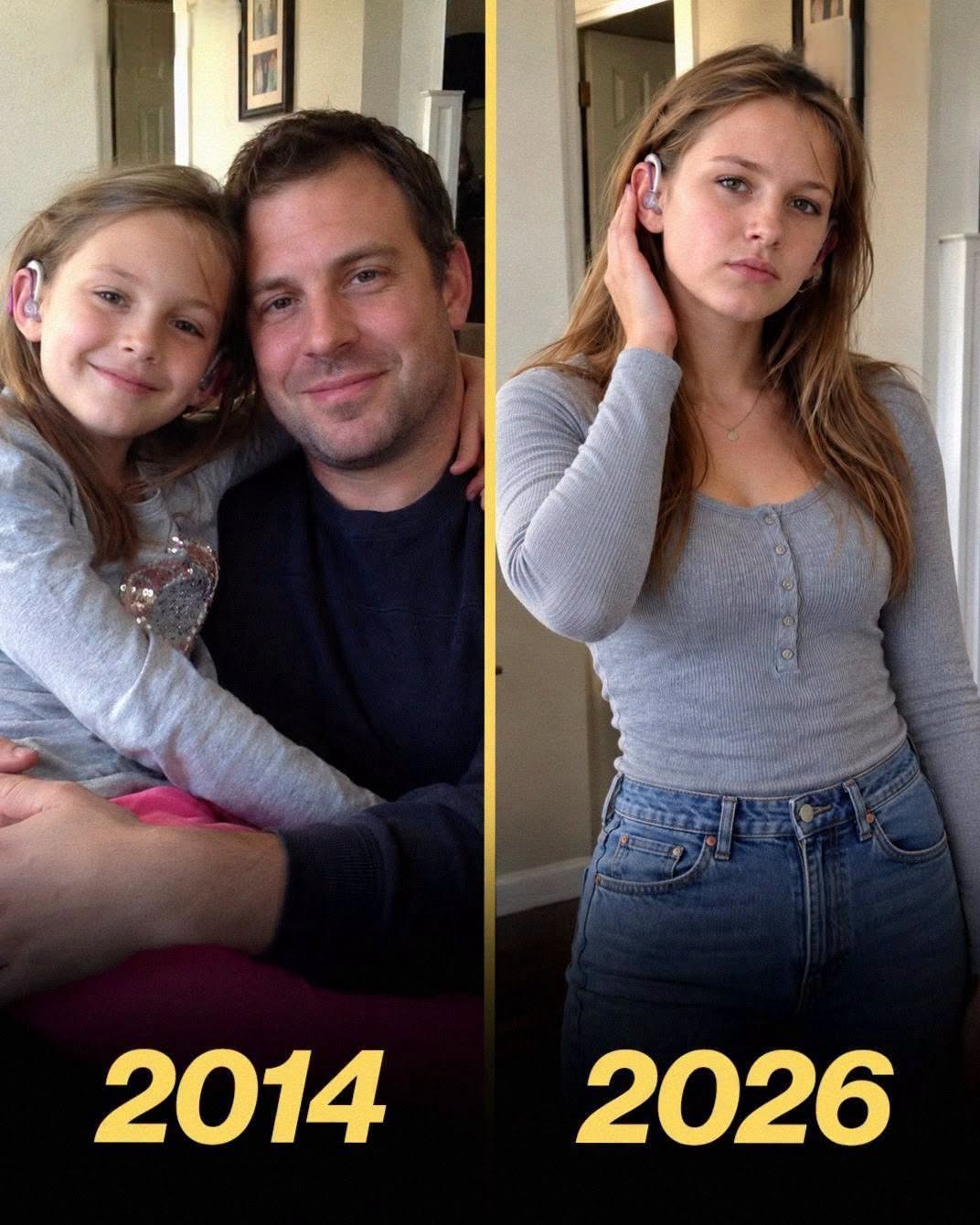
A Teen Girl’s Stepmom Hid Her Hearing Aids Before Her Dream College Interview and Said, “Maybe This Is Where You Belong.” Then a Box Arrived With the Girl’s Name on It…
At seventeen, Emily Carter had one dream that kept her going through the hardest days of her life: getting accepted into her dream college and becoming an architect.
She had spent three years preparing for the opportunity. She stayed up late working on designs, filled notebooks with sketches of buildings, and studied whenever she could find a quiet moment.
But Emily faced a challenge that most of her classmates never had to consider. She was hard of hearing and relied on hearing aids to understand conversations clearly, especially in unfamiliar environments.
Her hearing aids were not a weakness. They were tools that helped her navigate a world that often moved too quickly for her.
Unfortunately, not everyone in her home understood that.
And on the morning of the most important interview of her life, Emily discovered just how cruel someone could be when they believed another person’s dreams were too big.
The Dream She Refused to Abandon
Emily had lost her mother when she was eleven years old.
Her father, Michael, had done everything he could to raise her alone, working long hours while making sure she never felt forgotten. He attended school meetings, learned how to maintain her hearing aids, and sat beside her during difficult homework assignments.
Whenever Emily doubted herself, he reminded her of something her mother used to say.
“Your circumstances may shape your journey, sweetheart, but they do not get to decide your destination.”
Those words became Emily’s personal motto.
Two years after her mother’s death, Michael married a woman named Vanessa.
At first, Vanessa seemed kind. She bought Emily new clothes, prepared elaborate family dinners, and told everyone how happy she was to become part of a family.
But behind closed doors, her attitude slowly changed.
She complained that Emily needed too much attention. She became irritated when Emily asked people to repeat themselves and insisted that the girl was using her hearing difficulties as an excuse whenever something went wrong.
Michael often dismissed the arguments as ordinary adjustment problems.
He wanted his new marriage to work, and he struggled to recognize how deeply Vanessa’s comments were hurting his daughter.
Emily learned to stay quiet.
She concentrated on school, worked hard on her college applications, and kept her biggest ambitions to herself.
Until the letter arrived.
The Interview That Could Change Everything
Emily had applied to the prestigious Northbridge School of Architecture, a fictional institution known for its competitive admissions process and demanding academic program.
When the invitation arrived, she read it so many times that the paper began to crease along the edges.
She had been selected for a final interview.
It was the opportunity she had worked toward for years.
She immediately showed the letter to her father, who lifted her into a hug.
“I knew you could do it,” he told her, his eyes shining with pride.
For the next two weeks, Emily practiced answering questions about her designs, her inspirations, and the challenges she had overcome.
She prepared a portfolio featuring a community center designed for people with different physical abilities. The building included clear visual signage, accessible entrances, quiet spaces, and layouts that helped people communicate comfortably.
Her design was inspired partly by her own experiences.
She wanted to create buildings that made people feel welcome rather than excluded.
The night before the interview, Emily laid out her clothes, organized her portfolio, and placed her hearing aids beside her bed.
She barely slept.
The next morning, she woke before sunrise and dressed carefully.
She was ready to leave when Vanessa appeared in the doorway.
“You’re going to wear that?” her stepmother asked, looking at her outfit.
Emily glanced down at her navy-blue dress.
“Yes. I thought it looked professional.”
Vanessa gave a thin smile.
“Well, I suppose you should try to look the part.”
Emily ignored the comment and reached for her hearing aids.
But the small case was empty.
She checked the bedside table, opened her backpack, and searched through the drawers.
Nothing.
Her stomach tightened.
“Have you seen my hearing aids?” she called.
Vanessa remained in the doorway.
Then she reached into the pocket of her cardigan and produced the missing case.
Emily stared at her.
“Give them to me, please. My interview starts in less than an hour.”
Vanessa held the case just beyond her reach.
“I’ve been thinking,” she said calmly. “Perhaps this college is expecting someone who can handle the real world without special treatment.”
Emily felt her face grow hot.
“What are you talking about?”
Vanessa’s expression hardened.
“Maybe this is where you belong, Emily. Somewhere more realistic. Somewhere that understands your limitations.”
Then she slipped the hearing aids into her own pocket.
Emily could hardly believe what was happening.
“Please,” she whispered. “I need those. I can’t hear the interviewers properly without them.”
“Then perhaps you should explain that to them,” Vanessa replied.
She turned and walked away.
Emily stood motionless in the hallway, fighting tears.
For three years, she had imagined this morning. She had pictured herself entering the college building, answering questions confidently, and walking out knowing she had given everything she could.
Now she felt as though the future had been taken from her before she had even left home.
The One Person Who Believed Her
Emily’s father had already left for work.
She called him twice, but he did not answer.
She considered calling the college to request another interview time, but she feared that explaining what had happened would make her sound unprepared.
For a moment, she thought about giving up.
Then she remembered her mother’s words.
Your circumstances may shape your journey, but they do not get to decide your destination.
Emily wiped her eyes, picked up her portfolio, and went downstairs.
Vanessa was sitting at the kitchen table, drinking coffee.
“You’re still going?” she asked.
“Yes.”
“Without your hearing aids?”
Emily swallowed hard.
“I’ve worked too long to let anyone decide that I don’t deserve this opportunity.”
Vanessa laughed quietly.
“Don’t say I didn’t warn you.”
Emily walked out without answering.
She took a taxi to the college, holding her portfolio tightly against her chest.
During the journey, she rehearsed possible questions in her mind. She knew she might struggle to hear the interviewers, so she decided she would explain her situation and ask them to accommodate her communication needs.
She would not pretend everything was fine.
She would simply do her best.
When she arrived, a staff member greeted her at reception.
Emily explained that she was hard of hearing and had been prevented from bringing her hearing aids. She asked whether the interviewers could face her directly, speak clearly, and repeat questions when necessary.
The staff member responded kindly and informed the admissions team.
No one laughed.
No one told Emily she did not belong.
Instead, they made reasonable arrangements to help her participate.
For the first time that morning, Emily felt her shoulders relax.
She entered the interview room and sat down.
There were three interviewers.
One of them opened her portfolio and studied her designs carefully.
“Emily,” she began, speaking clearly, “tell us why you want to study architecture.”
Emily took a breath.
And she began to speak.
The Interview Nobody Expected Her to Survive
At first, Emily was nervous.
She occasionally asked the interviewers to repeat themselves, and she had to concentrate carefully to follow the conversation.
But as the questions turned to her designs, her confidence returned.
She explained why public spaces should be accessible to people with different needs. She described how sound, lighting, movement, and visual cues could influence a person’s experience inside a building.
One interviewer leaned forward.
“You’ve clearly thought about accessibility in a way that goes beyond meeting basic requirements,” she observed.
Emily nodded.
“Because accessibility isn’t just about whether someone can enter a building. It’s about whether they can feel comfortable, independent, and included once they’re inside.”
The interviewer exchanged a glance with her colleagues.
Then she asked Emily what had inspired her to think so deeply about inclusion.
Emily paused.
For a moment, she considered hiding the truth.
Instead, she decided to be honest.
“I know what it’s like to enter a room and feel as though everyone else understands something you can’t,” she said. “I also know that the right support can make a huge difference. I want to design places where people don’t have to fight just to feel that they belong.”
The room became quiet.
One of the interviewers closed the portfolio gently.
“Thank you, Emily,” she said. “That is a thoughtful answer.”
Emily left the interview exhausted but relieved.
She had not been able to control everything that happened that morning.
But she had shown up.
And she had allowed her work, rather than her stepmother’s cruelty, to speak for itself.
The Box That Arrived Three Weeks Later
Three weeks passed.
Emily returned to school, completed her assignments, and tried not to obsess over the admissions decision.
Her father eventually discovered that her hearing aids had gone missing that morning. When Emily explained what Vanessa had done, he was horrified.
He retrieved the devices and apologized for not having recognized the seriousness of the situation sooner.
For the first time, he confronted Vanessa directly and made it clear that interfering with Emily’s hearing aids or undermining her education would not be tolerated.
The household became tense, but Emily felt a small sense of relief.
At least her father finally understood.
Then, one rainy afternoon, the doorbell rang.
A delivery driver stood on the porch holding a large cardboard box.
Emily’s name was printed across the shipping label.
She signed for it and carried it inside.
There was no obvious return address, only the name of the college and a note marked Admissions Office.
Her hands began to tremble.
“Dad?” she called.
Michael came running from the kitchen.
“What is it?”
“I think it’s from Northbridge.”
They stood together in the hallway as Emily carefully opened the box.
Inside was a navy-blue folder, a letter, and a small envelope containing information about the college’s accessibility services.
She unfolded the letter.
The first sentence made her gasp.
“Dear Emily Carter, we are delighted to offer you admission to the Northbridge School of Architecture.”
She read it again.
Then a third time.
She had been accepted.
Michael pulled her into his arms, laughing and crying at once.
“You did it, sweetheart!”
Emily clutched the letter against her chest.
For the first time in weeks, she allowed herself to believe that the future she had dreamed about might actually become real.
But the letter contained something else.
The admissions committee had selected her portfolio for a special student recognition award for its thoughtful approach to inclusive design.
The college also offered her a financial aid package that would help cover her educational expenses.
Emily could hardly speak.
The dream she had nearly abandoned that morning was now within reach.
The Message Inside the Box
At the bottom of the box, Emily found a second envelope.
Inside was a handwritten note from the admissions director.
It read:
Dear Emily,
Your interview impressed us not because your journey has been easy, but because you demonstrated curiosity, preparation, and a clear understanding of the responsibility that comes with designing spaces for others.
Your portfolio showed us how personal experience can lead to thoughtful solutions. We hope you continue asking difficult questions, challenging assumptions, and creating places where people feel they belong.
We look forward to welcoming you to Northbridge.
Emily read the note silently.
She had spent years worrying that her hearing difficulties would cause people to underestimate her.
Now a group of educators had evaluated her work and recognized her potential.
She looked at her father.
“I thought not having my hearing aids would ruin everything.”
Michael shook his head.
“You shouldn’t have had to face that situation in the first place.”
He was right.
Emily’s success did not make Vanessa’s actions acceptable, and it did not mean she should have been forced to overcome an unnecessary obstacle.
What mattered was that Emily had received support when she asked for it, and that her abilities had been judged fairly.
Her determination was part of her achievement.
So were the people who helped make the interview accessible.
She understood that success was not about proving she never needed help.
It was about having the opportunity to demonstrate what she could do.
When Her Stepmother Saw the Letter
Vanessa returned home that evening and noticed the open box on the living room table.
She picked up the admissions letter.
For several seconds, she said nothing.
Then she looked at Emily.
“You got in?”
Emily nodded.
Vanessa placed the letter down.
“Well, I suppose you were lucky.”
Emily felt the familiar sting of those words, but something inside her had changed.
For years, she had hoped that if she worked hard enough, achieved enough, and stayed quiet enough, Vanessa would finally approve of her.
Now she understood that she did not need to earn permission to pursue her future.
“I wasn’t lucky enough to have my hearing aids that morning,” Emily replied calmly. “I had to ask the college for help, and they gave me a fair chance. I did the interview, and they judged my work.”
Vanessa looked away.
Emily continued.
“You told me that morning that I should go somewhere I belonged. I think I finally found it.”
Her father stood beside her, visibly proud.
He did not need to raise his voice or turn the moment into an argument.
He simply made it clear that Emily’s future would be supported and that her hearing aids would never again be used as a way to control or humiliate her.
Vanessa left the room without another word.
Emily returned to the letter.
She had no way of knowing whether Vanessa would ever acknowledge what she had done.
But she no longer needed that acknowledgment to believe in herself.
A New Beginning
Months later, Emily arrived at Northbridge with her hearing aids, her portfolio, and the same determination that had carried her through the application process.
The first weeks were challenging. She had to learn a new campus, meet unfamiliar classmates, and adjust to a demanding academic schedule.
But she also found professors who valued accessibility, students who shared her passion for design, and friends who understood that asking for accommodations was a normal part of making education work for everyone.
Her first major assignment was to design a community learning center.
Emily created a space with clear sightlines, excellent lighting, quiet study areas, and flexible rooms where people could communicate in different ways.
When she presented the design, one of her professors smiled.
“You haven’t simply designed a building,” the professor told her. “You’ve thought about the people who will use it.”
Emily thought about her mother, her father, and the morning she had stood in the hallway believing her dream was slipping away.
She wished her mother could have seen her there.
But she carried her mother’s words with her, and she had learned something important.
Being strong did not mean never being hurt.
Being capable did not mean never needing assistance.
And belonging did not depend on convincing everyone to approve of you.
Sometimes, belonging began the moment you stopped allowing someone else’s prejudice to define your possibilities.
The Lesson Emily Never Forgot
Years later, Emily became an architect who specialized in accessible public buildings.
She designed libraries, schools, and community centers intended to welcome people with different needs and abilities.
Whenever she spoke to young students who doubted themselves, she shared a lesson from her own life.
“Never let someone convince you that needing support means you don’t belong,” she would tell them. “The right support doesn’t make your achievements less meaningful. It gives you a fair chance to show what you can do.”
She never forgot the box that arrived with her name on it.
It represented more than an acceptance letter. It reminded her that one person’s attempt to diminish her future could not determine what others would recognize in her.
Her stepmother had hidden her hearing aids because she believed Emily’s limitations would define her.
But the college had seen something else: a talented young woman with a thoughtful perspective, a strong portfolio, and the potential to make a difference.
Emily’s story was not about proving that she could succeed without the tools she needed.
It was about proving that she deserved the same opportunity as everyone else.
And when she finally walked across the campus on graduation day, her hearing aids in place and her diploma in hand, she remembered the words Vanessa had spoken that morning.
Maybe this is where you belong.
Emily smiled.
For once, she agreed.
She belonged somewhere that valued her mind, respected her needs, and gave her the chance to build the future she had imagined.
Because no one should have to surrender their dreams to make someone else comfortable. And no disability, family conflict, or cruel word should ever be allowed to decide how far a person’s future can reach.