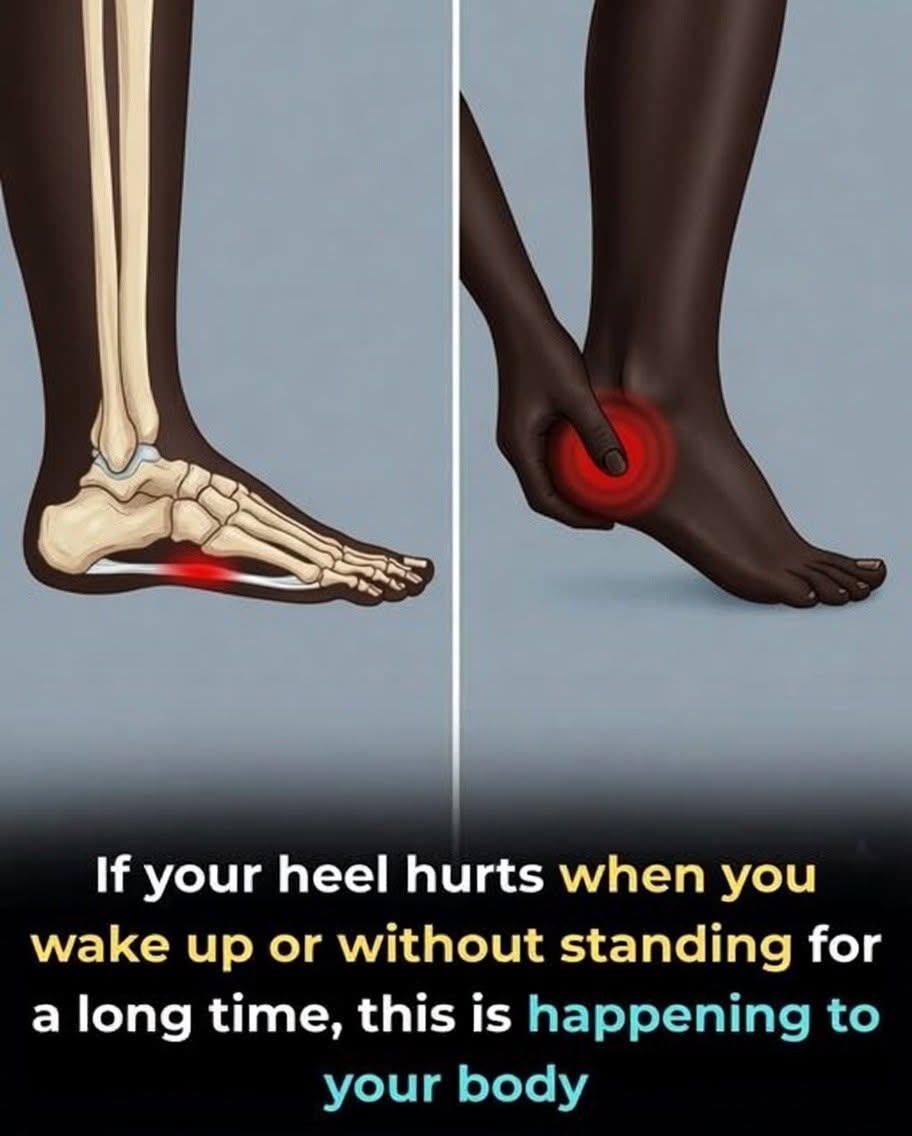
Morning Heel Pain or Pain Without Standing Long? This Could Be a Sign of Something You Shouldn’t Ignore!
Do your heels hurt when you take your first steps in the morning? Or do you experience a sharp, uncomfortable pain even when you haven’t been standing or walking for very long? Your body may be telling you something deserves attention.
For many people, heel pain begins quietly. One morning, getting out of bed feels unusually uncomfortable. The first few steps across the bedroom cause a sharp sensation in the bottom of the foot, but after walking for a few minutes, the discomfort seems to ease.
At first, it may seem like a minor problem caused by tired feet, uncomfortable shoes, or sleeping in an awkward position. However, when the pain keeps returning, interferes with daily activities, or appears without an obvious reason, it is worth investigating.
Heel pain is common and often has a manageable cause. One of the most frequent explanations is plantar fasciitis, a condition involving the thick band of tissue that connects the heel bone to the front of the foot. Nevertheless, several other conditions can produce similar symptoms, and the location and timing of the pain can provide important clues.
Understanding these warning signs can help you decide when home care may be reasonable and when it is time to seek professional advice.
1. Why Does Your Heel Hurt When You First Get Out of Bed?
One of the most recognizable patterns of heel pain is discomfort during the first few steps after waking up.
You may place your feet on the floor and immediately feel a sharp or stabbing sensation beneath one heel. After moving around for several minutes, the pain may gradually decrease, only to return after sitting for a long time.
This pattern is commonly associated with plantar fasciitis.
The plantar fascia is a strong band of connective tissue that supports the arch of your foot and helps absorb forces during walking. Repeated stress can irritate this tissue, particularly where it attaches to the heel bone.
During periods of rest, the affected tissue may become less flexible. When you begin walking again, the sudden loading of the foot can trigger discomfort.
People who spend long hours standing, increase their walking or running suddenly, or regularly wear footwear with inadequate support may be more susceptible.
However, morning heel pain does not automatically mean you have plantar fasciitis. A healthcare professional can assess the symptoms and determine whether another explanation is more likely.
2. Heel Pain Even When You Haven’t Been Standing Long
What if your heel starts hurting after only a short walk or after standing for a few minutes?
This symptom can have several possible explanations.
Plantar fasciitis may cause discomfort during ordinary daily activities, even when you have not been on your feet for very long. The pain may become more noticeable after prolonged sitting or after getting up from a desk.
Other possibilities include irritation of the fat pad beneath the heel, Achilles tendon problems, nerve irritation, or a stress injury involving one of the bones in the foot.
The exact location matters.
Pain beneath the heel may be associated with plantar fasciitis or irritation of the heel’s protective fat pad.
Pain at the back of the heel may suggest irritation of the Achilles tendon or nearby structures.
Burning, tingling, or electric-shock sensations may point toward nerve irritation.
Deep pain that worsens with activity and becomes progressively more persistent can sometimes indicate a bone stress injury.
These patterns are clues, not definitive diagnoses.
If heel pain begins affecting your normal walking, repeatedly returns, or becomes progressively worse, arranging a medical assessment is a sensible next step.
3. The Difference Between Plantar Fasciitis and a Heel Spur
Many people who experience heel pain eventually hear the term heel spur.
A heel spur is a small bony growth that can develop on the underside of the heel bone. It may appear on an X-ray, but its presence does not necessarily mean it is causing the pain.
In fact, many people have heel spurs without experiencing any symptoms.
Plantar fasciitis, on the other hand, involves irritation of the plantar fascia and is frequently associated with pain near the underside of the heel.
The two conditions can occur together, but they are not the same thing.
This distinction matters because treating a heel spur as the sole cause of pain may overlook the actual source of the problem.
A clinician will usually consider the pattern of symptoms, examine the foot, and determine whether imaging is needed. X-rays are not necessary for every case of typical plantar fasciitis, but they may be useful when another condition is suspected.
4. Could Your Shoes Be Making the Pain Worse?
Footwear can play an important role in heel comfort.
Shoes that lack adequate cushioning or support may increase discomfort in people whose feet are already irritated. Worn-out soles, abrupt changes in footwear, and spending long periods barefoot on hard surfaces can also aggravate symptoms in some individuals.
This does not mean that one particular shoe type is responsible for every case of heel pain. Foot structure, activity levels, previous injuries, and individual comfort all influence how the foot responds to daily stress.
If your heels hurt regularly, consider wearing comfortable shoes with appropriate cushioning and support.
Avoid suddenly increasing your walking or running distance, particularly if the pain began after a change in activity.
If a new pair of shoes consistently makes the pain worse, switching to a more comfortable option may help while you determine the underlying cause.
5. Simple Steps That May Help Relieve Heel Pain
For many people with mild heel pain, a few conservative measures can help reduce discomfort.
Rest from activities that aggravate the pain. You may not need to stop all movement, but temporarily reducing running, jumping, or prolonged standing can give irritated tissues time to recover.
Apply a cold compress. Wrap an ice pack in a thin towel and apply it to the painful area for approximately 15–20 minutes. Do not place ice directly against the skin.
Stretch the calf muscles gently. Tight calf muscles can contribute to increased tension through the foot. Gentle calf stretching may help, provided it does not increase your pain.
Try a gentle plantar fascia stretch. While seated, carefully pull your toes back toward your shin until you feel a mild stretch along the sole of your foot. Stop if the movement causes sharp or worsening pain.
Choose supportive footwear. Shoes with comfortable cushioning and appropriate arch support may reduce pressure on the heel during everyday activities.
Increase activity gradually. If you are returning to exercise, build up your walking or running distance progressively instead of making sudden increases.
These measures are not a substitute for diagnosis, particularly when pain is severe, persistent, or accompanied by other concerning symptoms.
6. Warning Signs That Deserve Medical Attention
Most heel pain is not an emergency, but certain symptoms should never be ignored.
Arrange a medical appointment if:
The pain persists for more than a couple of weeks despite reasonable self-care.
The discomfort is getting worse rather than gradually improving.
Heel pain repeatedly interferes with walking, work, sleep, or daily activities.
You experience numbness, tingling, or reduced sensation in the foot.
You have diabetes, poor circulation, or a weakened immune system and develop new foot pain.
The pain began after a sudden increase in exercise or repeated high-impact activity.
Seek urgent medical care if you cannot walk or bear weight on the foot, the pain follows a significant injury, or you develop marked swelling, substantial bruising, redness, or warmth.
A hot, red, swollen foot accompanied by fever or feeling seriously unwell also requires prompt assessment because infection or another significant condition may be responsible.
Do not assume that severe pain is simply plantar fasciitis without an appropriate evaluation.
7. Why Persistent Heel Pain Should Not Be Ignored
When heel pain continues for weeks or months, people may unconsciously change the way they walk to avoid discomfort.
They might place more weight on the other foot, shorten their stride, or shift pressure toward the toes. Over time, these compensations can contribute to discomfort elsewhere in the foot, ankle, knee, or hip.
Persistent pain can also reduce physical activity, making it harder to maintain normal exercise habits.
The underlying condition matters, too. While plantar fasciitis often improves with appropriate conservative treatment, other causes of heel pain may require different management.
A stress fracture, nerve problem, inflammatory condition, or infection cannot be treated effectively simply by assuming the pain comes from the plantar fascia.
Getting the cause right is therefore an important part of recovery.
8. What Will a Doctor Check?
If you seek medical advice for heel pain, the clinician will usually ask when the symptoms started, where the pain is located, and what makes it better or worse.
They may examine the heel, press on specific areas, assess ankle movement, and check how you walk or bear weight.
Your medical history can also be important. Recent changes in exercise, previous injuries, underlying health conditions, and any associated numbness or swelling may help narrow down the possibilities.
Imaging is not always necessary. Depending on the symptoms, a clinician may recommend an X-ray, ultrasound, or another investigation to assess a suspected alternative diagnosis.
Treatment will depend on the cause and may include stretching exercises, activity modification, footwear changes, physical therapy, or other targeted interventions.
For persistent plantar fasciitis, a structured treatment plan can often help improve function and reduce pain over time.
9. How to Protect Your Feet in Everyday Life
Healthy foot habits can help reduce unnecessary strain.
Wear footwear that fits properly and feels comfortable.
Replace heavily worn shoes when their support or cushioning has deteriorated.
Warm up before strenuous exercise.
Increase running and walking distances gradually.
Include appropriate calf and foot mobility exercises in your routine.
Avoid pushing through sharp or worsening heel pain.
Seek advice early if discomfort repeatedly returns.
People who stand for long periods at work may benefit from comfortable shoes, opportunities to change position, and short breaks when practical.
Remember that prevention is not always possible. Heel pain can develop even in people who exercise carefully and wear appropriate footwear.
The goal is to recognize problems early and respond appropriately rather than blaming yourself for developing symptoms.
The Bottom Line: Listen to What Your Feet Are Telling You
Morning heel pain, discomfort after sitting, or pain that appears after only a short period of standing can be signs of plantar fasciitis or another foot condition.
The timing and location of the pain provide useful clues, but they cannot establish a diagnosis on their own.
If the symptoms are mild, reducing aggravating activities, using comfortable footwear, and trying gentle stretches may help. If the pain persists, worsens, or interferes with normal movement, seek professional advice.
Your feet support you through thousands of steps every day. When they repeatedly hurt, paying attention early can help you protect your mobility and find the right treatment.
Medical disclaimer: This article is for general educational purposes only and does not replace professional medical advice, diagnosis, or treatment. Seek urgent care for severe pain, inability to bear weight, significant injury, or signs of infection.